Get Full Government Meeting Transcripts, Videos, & Alerts Forever!
Get email alerts on the Tax Increment Financing topic
No spam. Unsubscribe anytime.
Council hears updates on proposed London Gateway TIFs; ratifies petition sufficiency for new community authority
Summary
Developers and city and outside counsel updated council on residential and commercial tax increment financing (TIF) proposals. Council ratified a resolution that the petition to form the London Gateway New Community Authority (NCA) is sufficient; TIF ordinances were left on for further readings.
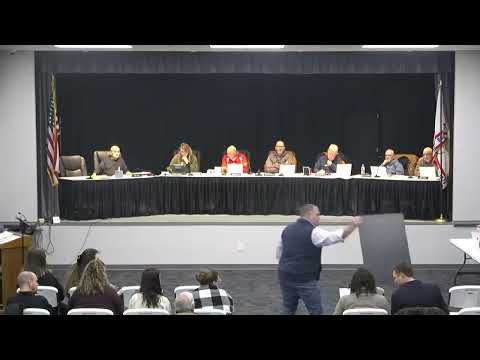
Wes Smith, a representative for the development team, told the London City Council on Feb. 20 that the residential tax increment financing plan in ordinance 207-24 has Madison County approval and could move to a vote if the city is ready. He also described revisions to language in the commercial TIF area to make the London City School District "made whole" if a future multifamily use reduced school tax receipts and said the change and inclusion of a previously excluded 20-acre parcel had been sent to the city attorney for review.
The council held a public hearing on the TIF ordinances and related paperwork and later voted to adopt Resolution 210-24, a sufficiency finding for the petition to establish the London Gateway New Community Authority. The resolution states the petition complies with Section 349.03 of the Ohio Revised Code and sets the time and place for a hearing on the petition; council voted to adopt the resolution at the meeting.
Why it matters: The TIF ordinances under consideration would create incentive districts, designate improvements as a public purpose, and require the affected property owners to make service payments in lieu of taxes; those service payments feed tax increment funds and may include payments to the London City School District and local career-technical centers. Formation of an NCA is a multi-step statutory process: council must (a) determine petition sufficiency, (b) hold and record hearings, and (c) later consider formation legislation. The developer team and outside counsel described the resolutions before council as procedural steps required before final TIF adoption.
Developers and counsel described the near-term sequence: a conveyance/transfer ordinance (208-24) to allow a temporary transfer of title to the city and back, followed by the commercial TIF legislation and a separate formation ordinance for the NCA. Outside counsel described the transfer ordinance and the ratification resolution as procedural, not the TIF itself. Smith said he expects additional review and a compensation agreement with the school district after the city attorney approves the revised language.
Council action and status: Council did not adopt the TIF ordinances at this meeting; members moved to keep those ordinances on for further readings while negotiations and attorney review continued. Resolution 210-24 (sufficiency/ratification) was moved, seconded and adopted by roll-call vote.
What officials said: "If the city was so inclined, I think we're at this point where it could be voted on," Wes Smith said of the residential TIF (statement during public hearing). Outside counsel described the transfer ordinance and NCA sufficiency resolution as procedural: "Neither of them are a TIF ordinance. So neither of them establish an exemption or create any tax change," counsel said during the hearing.
Next steps: Council left ordinances 207-24, 208-24 and 209-24 on for later readings while city attorneys and the school district review the revised commercial TIF language and the proposed parcel additions. The ratification resolution for the NCA (210-24) is adopted; formation of the NCA and final TIF ordinances remain pending further action and required statutory steps.