Get Full Government Meeting Transcripts, Videos, & Alerts Forever!
Get email alerts on the Offender Residency Appeal topic
No spam. Unsubscribe anytime.
Green Bay board denies residency for man convicted in South Dakota case
Summary
The Green Bay Offender Residency Board voted 3-2 to deny Rogelio Perez's request to move to 1629 Wolverine Trail after reviewing his conviction, treatment and a police report from South Dakota.
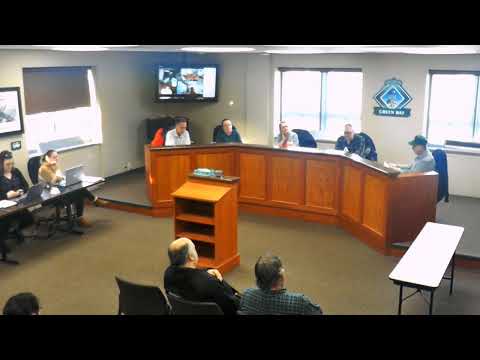
The Green Bay Offender Residency Board denied an application from Rogelio Perez to reside at 1629 Wolverine Trail after a 3-2 vote on the appeal.
The board’s decision followed testimony from Perez about his 2018 conviction, a summary of a South Dakota police report provided by the police representative, and family statements in support of Perez. The board discussed concerns about the age of the victim at the time of the offense and whether Perez’s treatment had been sufficient to address the behavior the conviction reflected.
Perez appeared by videoconference and described the offense, his time in prison and participation in a cognitive offender program while incarcerated. He told the board he had been sober for about four years and said he intended to live with his mother if allowed to move to Green Bay. Perez said he had completed treatment in custody and that he would pursue employment and medical care after release. Perez also answered questions about his education and past substance use.
Captain Oberman, the Green Bay Police Department representative, told the board he had obtained a police report from South Dakota. The report, he said, indicates the juveniles in that incident were runaways, both told officers they were dating, and that the female would have been about 15 at the time, with police documentation of sexual contact. The captain said the report did not fully explain the court charging decisions or final outcomes beyond what was in the document.
Board members raised two central concerns: that Perez is transferring from out of state when the board has local residents to place, and that some members believed Perez had minimized the seriousness of the offense and the depth of treatment he described. One member said, “I have some reservations,” and another expressed that a family placement could be supportive but still questioned the applicant’s account.
After discussion, a member moved to deny Perez’s request to reside at 1629 Wolverine Trail; the motion was seconded and passed 3 to 2. The board recorded the outcome as a denial but invited Perez to reapply if he can produce a different address or materially changed circumstances.
The board clerk recorded the vote as 3–2; specific individual votes were not recorded in full in the transcript.
Perez was told he may return to the board with a different address or new information.