Get Full Government Meeting Transcripts, Videos, & Alerts Forever!
Get email alerts on the Waste Collection topic
No spam. Unsubscribe anytime.
Bill would let entrepreneurs apply for Montana garbage‑hauler permits without prior hauling experience
Summary
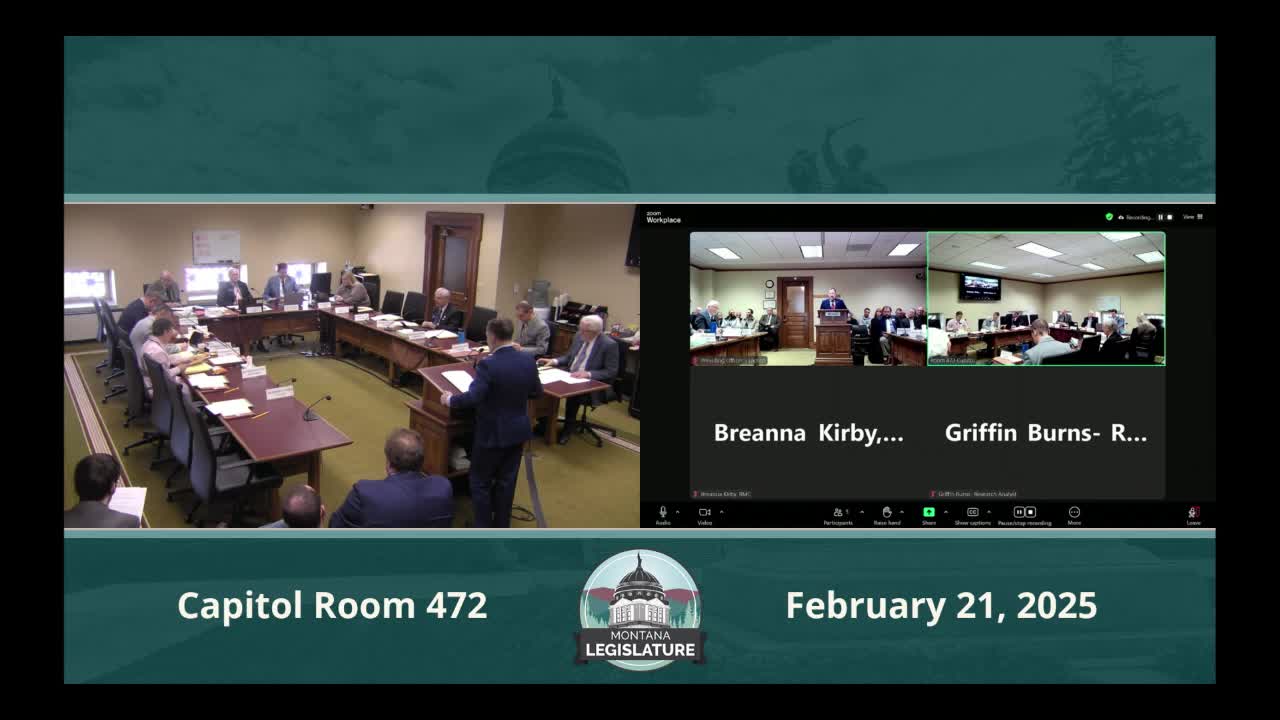
A House Energy Committee hearing on House Bill 517 drew testimony from the bill sponsor, industry representatives and a small hauler who described multi‑year permit fights. The bill would clarify state motor‑carrier law to allow applicants who only "intend to engage" in garbage hauling to seek Public Service Commission (PSC) permits.
Representative Brad Barker, sponsor of House Bill 517, told the House Energy Committee that Montana’s current motor‑carrier law can be read to require applicants already be in the trash business before they may obtain a class D garbage‑hauler permit. "As the law reads plain language, you have to be in the trash business to get into the trash business," Barker said, urging lawmakers to clarify the code so in‑state entrepreneurs can apply to the PSC.
The bill seeks to add clearer language around the phrase "intends to engage," which Barker said some read as barring new entrants. "I simply want to make this a little bit more free market approach to allow entrepreneurs to ... apply," he said, while stressing the change would not alter protected territories, the PSC’s licensing process or the PSC’s authority to assess need.
Opponents, led by E. J. Redding of the Montana Solid Waste Contractors Association, warned lawmakers the bill’s title and scope are too vague. "My concern ... is the wide open vague nature of the title," Redding said, urging caution so the bill cannot be "hijacked" in later stages.
Trevor Graff of the Montana Public Service Commission, testifying as an informational witness, said the commission offered "soft support" but sought clarification of sponsor intent. Graff said the PSC’s concern centers on how broadly "intends to engage" could be read and whether it might be interpreted to allow carriers to operate before the PSC has completed its fitness and need review. "The commission is a bit unsure with how broadly the 'intends to engage' interpretation could be used," Graff said, adding that the PSC could apply asset‑based tests to applications if needed.
Small hauler Lance Johnson described multiple PSC proceedings in which his company sought expanded authority. Johnson said he began hauling construction debris and, after several applications and hearings, now operates Grizzly Disposal in the Bozeman and Missoula areas but at times must haul to distant landfills because local disposal access was not granted. "We haul garbage long distance ... I took a $10,000 loan against the house and here I am," Johnson said, detailing the time and costs of contesting permit denials and protests.
Committee members pressed the sponsor and witnesses on several points: whether the bill would unintentionally deregulate rates or protected territories (Barker said it would not), how PSC hearings determine fitness and need (Graff described the PSC’s hearing process and the need determination), and the practical effect on access to local landfills (witnesses said landfill access and municipal disposal agreements are separate from PSC permits and can limit where a permitted hauler may dispose).
The hearing record shows a mix of concerns and support: sponsors and small haulers described permit fights and the barrier posed by the statute’s plain language; industry representatives cautioned against overly broad titles and unintended consequences; and the PSC requested clarifying amendments to narrow sponsor intent. The committee concluded the hearing on HB 517 without taking a vote.
The bill will remain under committee consideration as members decide whether to propose clarifying language that narrows the change to the single phrase Barker identified.