Get Full Government Meeting Transcripts, Videos, & Alerts Forever!
Get email alerts on the Transparency Epa Guidance topic
No spam. Unsubscribe anytime.
Committee hears bill requiring DEQ, Agriculture to post EPA guidance online
Summary
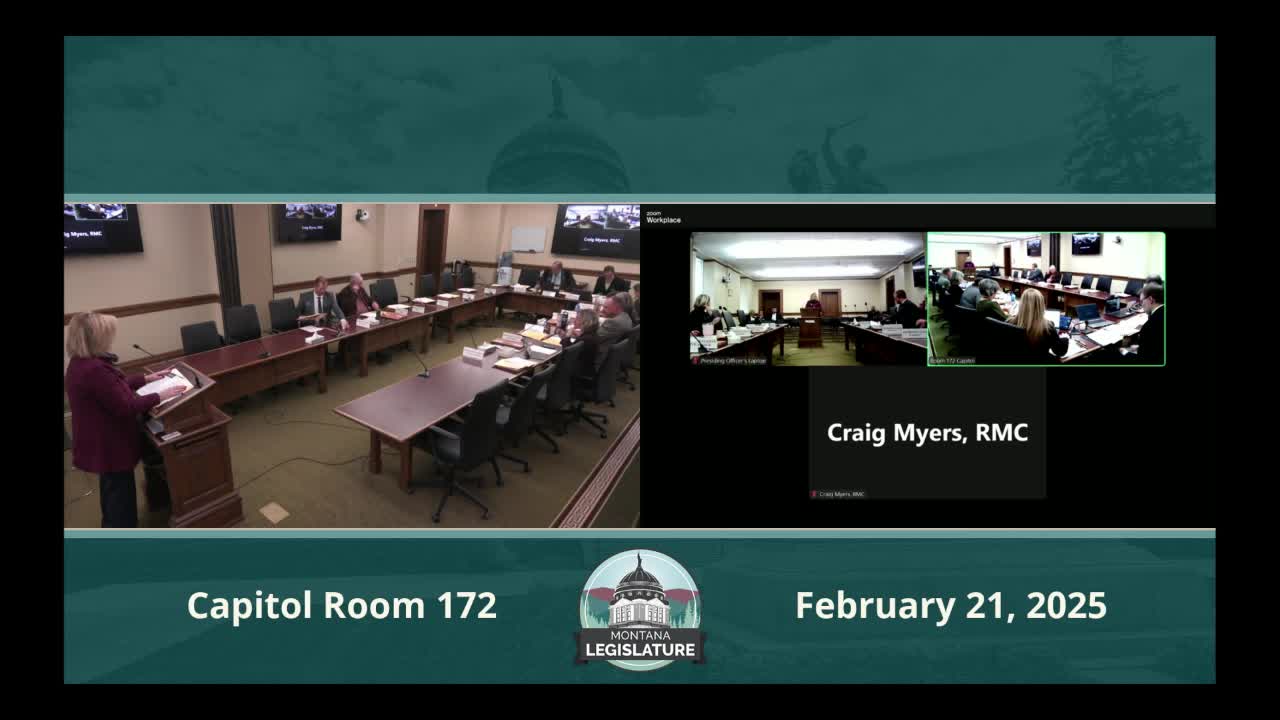
Representative Kerry Seekins Crow introduced House Bill 481 at a House Natural Resources Committee hearing, asking the Montana Department of Environmental Quality and the Montana Department of Agriculture to publish on their websites federal guidance they receive from the U.S. Environmental Protection Agency.
Representative Kerry Seekins Crow introduced House Bill 481 at a House Natural Resources Committee hearing, asking the Montana Department of Environmental Quality and the Montana Department of Agriculture to publish on their websites federal guidance they receive from the U.S. Environmental Protection Agency.
The bill’s sponsor, Representative Kerry Seekins Crow, said the measure “requires the Montana department of environment quality, DEQ, and the department of agriculture to post on a website all federal guidance that they receive from the EPA.” She said the requirement would let lawmakers and the public see guidance to ensure it does not exceed statutory authority.
The bill’s backers and opponents framed the measure as a transparency proposal. Steve Johnson of the Center for Practical Federalism told the committee, “Guidance is not law. Unfortunately, a lot of times, it gets treated as law,” and said the bill would make it easier for states and the public to identify guidance that appears to add obligations without formal rulemaking.
Agency officials described how they would implement the proposal and raised workload concerns. Anya Nowakowski, director of the Montana Department of Environmental Quality, said the department would likely comply by posting hyperlinks to EPA documents but flagged practical questions about capturing all relevant notices. “We would post…a hyperlink to those documents and that is how we would proceed,” she said. Anna Ketchkase, general counsel for the Montana Department of Agriculture, said monitoring the range of EPA communications would require dedicated staff time: “It is going to require definite management from one of our staff members to call all of those different sources of information.”
Committee members pressed staff and the sponsor on implementation details, including whether the departments would post hyperlinks or PDFs, how often pages would be updated and how the bill defines “guidance.” The sponsor and a testifier referenced the bill text’s timeline language; a committee member pointed to line 11–12 of the bill, which requires posting “within 15 days after receipt.” Representatives also discussed whether the legislation would duplicate publicly available EPA materials and whether posting on state sites would become a burden if it required tracking newsletters, news releases and bulletins.
Sponsor and supporters said the bill is intended to create consistent, enduring transparency regardless of federal administration practices; Steve Johnson noted earlier executive-branch changes that affected whether federal guidance was broadly posted by agencies. The sponsor said she would work with agencies on timelines and implementation details.
An amendment handed out at the hearing removes the Board of Oil and Gas Conservation from the list of agencies covered by the bill; the sponsor said the board already holds primacy for well-related matters. No committee vote was taken at the hearing. The chair closed the hearing on House Bill 481 after the amendment was acknowledged.
The hearing record shows discussion but no action to pass, refer, or amend the bill on the floor; committee members indicated further work on timelines and the fiscal note might be needed before the bill advances.