Get Full Government Meeting Transcripts, Videos, & Alerts Forever!
Get email alerts on the Media Literacy topic
No spam. Unsubscribe anytime.
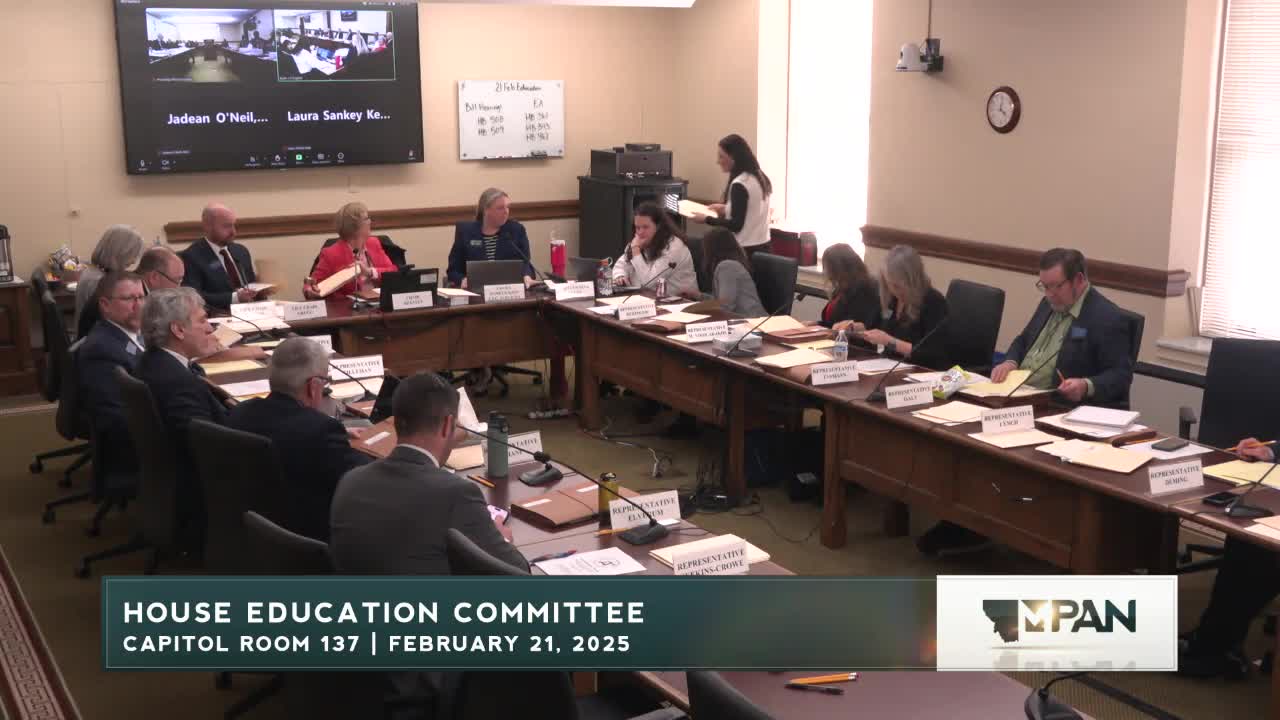
Lawmakers hear testimony on media‑literacy bill amid questions over definitions and classroom time
Summary
Representatives heard testimony for House Bill 508, a policy statement encouraging media‑literacy instruction; proponents cited mental‑health and civic benefits while opponents warned of added burdens on teachers and overlap with existing standards.
Representative Kelly Cordum opened House Bill 508 by describing the changing information environment and urging the committee to "empower our students with the tools to survive in this ever changing brave new world." She began her remarks with the oft‑quoted line, "Do not believe everything you read on the Internet," and told members that she provided an amendment with definitions to clarify terms used in the bill.
Proponents told the committee that media literacy aligns with library and information standards and is increasingly important for student mental health, civic participation and critical thinking. Ella Smith, testifying for the Montana Library Association, said the bill "aligns with content standards for library media and information literacy for ninth through twelfth graders" and stressed the need to teach students how to evaluate sources. Tribal representatives also voiced support: "In the age of media saturation...critical thinking skills have become even more important in relevance to media literacy," Alyssa Snow said, noting the high average daily screen time for children and teens.
Several proponents linked media literacy to mental‑health concerns. Carlene Ramsey, a licensed clinical professional counselor, described clinical observations that younger children are being exposed to disturbing online content and said, "teaching a child how to navigate the Internet is so important to support children's positive mental health and self image." Rosemary Smith, a media‑literacy educator, testified that media‑literacy instruction can reduce polarization and support student resilience.
Opponents including the Montana Federation of Public Employees (MFPE) supported media literacy in principle but opposed adding new statutory language that could further increase teachers' workloads. "We already have standards to address these skills in the ELA and library standards," MFPE's Kim Popham said, arguing the Board of Public Education should be allowed to adapt standards and districts should be trusted to implement them.
McCall Flynn, executive director at the Board of Public Education, gave informational testimony stating that the board already adopts content standards related to "library media and information literacy" and that the standards "are very much aligned to what's the language that you see in the bill." Flynn and committee members discussed the tradeoffs of adding requirements and whether the board or local districts should set curriculum or standards; Flynn noted the existing standards are public and that a change at the state level would prompt conversations about what, if anything, would be removed to make room in the school day.
Committee members asked about the bill's definitions and who would decide what constitutes "misinformation," "disinformation," "propaganda" and "indoctrination." Representative Cordum said she worked with her cosponsor to include definitions in an amendment intended to be non‑political, and she described the definitions she offered in the amendment. The committee did not vote on the bill; the hearing record shows extensive testimony and follow‑up questions and the sponsor said she would work with stakeholders on definitions and implementation.