Get Full Government Meeting Transcripts, Videos, & Alerts Forever!
Get email alerts on the Law Enforcement Federal State Coordination topic
No spam. Unsubscribe anytime.
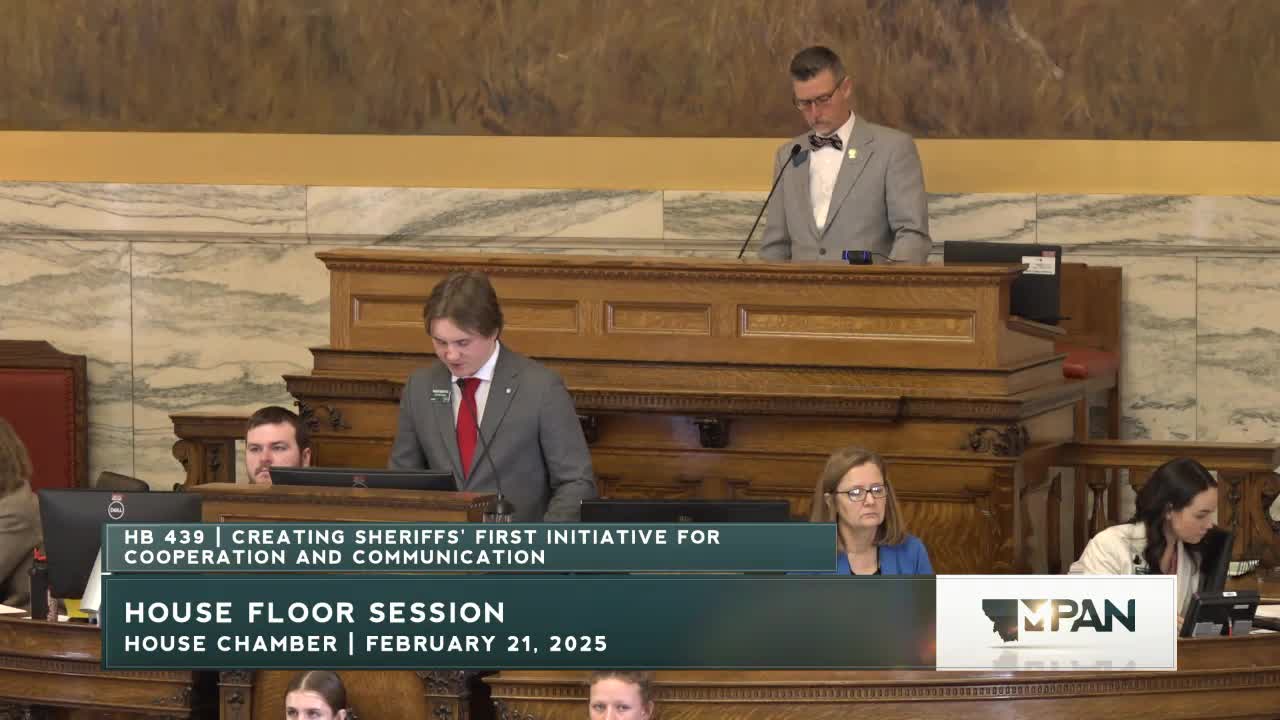
House rejects bill requiring federal agents to notify county sheriffs before arrests, searches
Summary
House Bill 439, which would have required federal agents to notify the county sheriff before an arrest, search, or seizure in the county (with limited exceptions), failed on second reading after a lengthy debate over officer safety, tribal jurisdiction, and federal supremacy.
Representative Deming introduced House Bill 439 as a —3heriffs bill—4 asking federal officials to provide notice to the county sheriff before executing arrests, searches or seizures in the county. "The bill's intent is to remind everyone of the importance of notice and cooperation," Deming said, citing incidents where local sheriffs were not informed of federal operations.
Supporters and several sheriffs told members they want better deconfliction and communication. Representative Gist said officer safety is paramount: advance notice helps local officers know whether a federal operation might require backup and prevents plainclothes confusion at a scene. Representative Sprunner and other members reported that some local sheriffs had changed their position after consultations and now support notice requirements.
Opponents, including Representative Close, argued the measure likely conflicts with the U.S. Constitution's supremacy clause and exceeds state authority to regulate federal law enforcement. Close said, "we simply do not have the authority under the supremacy clause to tell the federal government not to make an arrest." Others pointed to practical problems: Indian-country jurisdiction where county sheriffs lack authority, ongoing federal investigations where notice could compromise operations, and the risk of creating inconsistent, impractical notice obligations across jurisdictions.
The House voted on the sponsor's motion to recommend the bill do pass. The clerk recorded 44 representatives voting aye and 56 voting no; House Bill 439 failed second reading.