Get Full Government Meeting Transcripts, Videos, & Alerts Forever!
Get email alerts on the Rural Improvement Districts topic
No spam. Unsubscribe anytime.
Committee reviews bill to add ‘improvements’ to rural improvement district law
Summary
House Bill 159 would insert the word “improvements” into statutes governing Rural Improvement Districts (RIDs) and clarify budgeting and maintenance responsibilities, proponents said; MACo and a Broadwater County commissioner testified in favor.
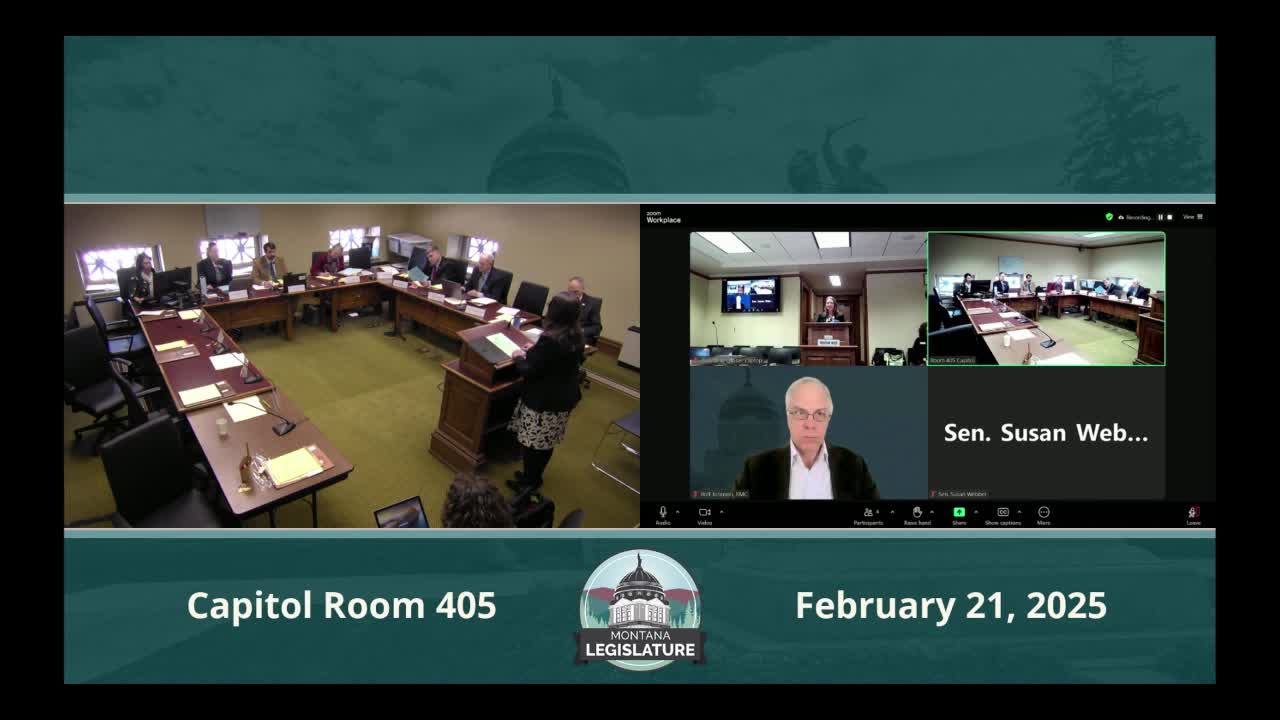
Representative Alana Griffith (House District 60) introduced House Bill 159 to the Senate Local Government Committee, saying the measure makes a small change in statutory language that has broad implications across Montana. "This is adding the word improvements to our RIDs," Griffith said, adding that the change affects how counties and property owners classify and fund road, sidewalk and other public works in subdivisions.
Debbie Randolph, a Broadwater County commissioner speaking for MACo (the Montana Association of Counties), testified the bill clarifies how Rural Improvement Districts are created, how counties should budget for construction, and how maintenance funding should be requested. "The bill cleans up the process for creating an RID and tells the county how to budget for the improvement and how to request funding for the maintenance of that," Randolph told the committee.
Witnesses described RIDs as petitions by residents to fund public works—paving gravel roads, improving drainage, building water and wastewater facilities—followed by county oversight of maintenance. Randolph said some counties hold separate votes for construction and for ongoing maintenance levies so benefiting property owners know costs upfront.
Senator Hertz questioned statutory consent thresholds in the draft: he noted the bill appears to require 85% consent of affected property owners for action on private roads and 50% for public roads. Randolph confirmed the 85% threshold for private roads and said most RID assessments she has seen are expressed as dollar amounts rather than mills. There were no opponents in person or online and no informational witnesses.
The committee closed the public hearing on HB 159 with the sponsor expressing appreciation for the prompt consideration; no committee vote was taken at that session.