Get Full Government Meeting Transcripts, Videos, & Alerts Forever!
Get email alerts on the English Learners Funding topic
No spam. Unsubscribe anytime.
Committee advances bill to fund English‑learner stipends, cuts program appropriation
Summary
The House Education Committee amended and voted to advance House Bill 361, which would set state stipends for teachers serving English learners and revise the program appropriation from $5,000,000 to $1,000,000.
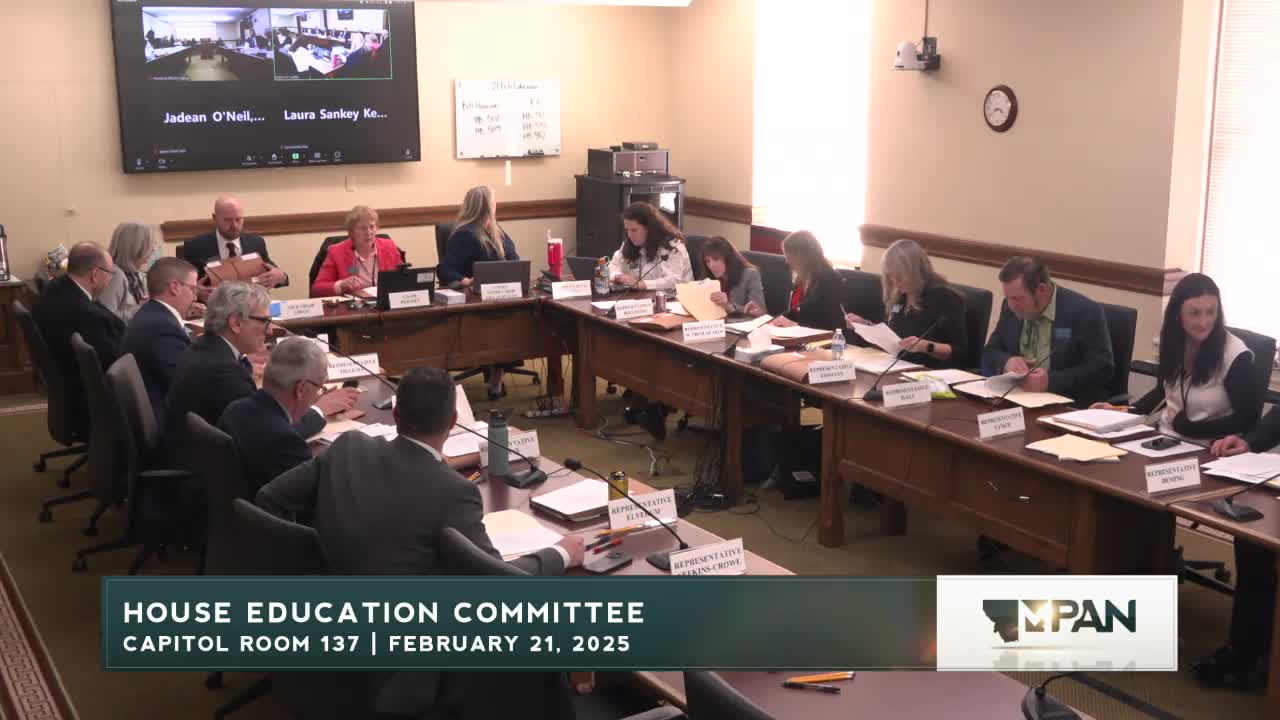
The House Education Committee on March 3 advanced House Bill 361, an education funding bill that would create state stipends for highly qualified teachers serving English learners and change the state appropriation for English‑learner programs.
The bill, introduced by Representative Keogh, was amended in committee to clarify program parameters for Title 3 programs and to set stipend levels that mirror payments for National Board Certified teachers. "For the first level of a stipend, it would be set at 50% of the quality educator payment," committee staff member Laura said while walking members through the amendment. The amendment also raised the stipend level to 85% of the quality educator payment for teachers working in high‑poverty or impacted schools and reduced the program appropriation cited in the bill from $5,000,000 to $1,000,000 to change the local/state match ratio.
Vice Chair Romano, who moved the amendment, said, "I think this is a good amendment. I'll be voting for it. I think that it's critical that we get qualified and certified ELL teachers in our schools." The committee adopted the amendment by voice vote with Representative Seekins Crowe recorded as "aye" by proxy. Later, with the amendment attached, the committee voted by voice to move the bill to the floor.
The amendment text ties stipend amounts to the "quality educator payment" and references language consistent with House Bill 260, according to staff. The amendment also incorporates requirements described as those of the Title 3 programs discussed at the hearing.
Action taken in committee was procedural: the amendment was adopted and the bill as amended was advanced to the full House for consideration. The committee did not record a roll‑call tally in the transcript; votes were taken by voice and one proxy vote was announced.
The bill changes include both programmatic clarifications (definition and parameters for state support of English learner programs and how district matching works) and funding changes (reducing the listed appropriation). Implementation details such as effective dates, district reporting, or additional rulemaking were not specified in the committee record at the time of the vote.