Get Full Government Meeting Transcripts, Videos, & Alerts Forever!
Get email alerts on the Healthcare Prior Authorization Reform topic
No spam. Unsubscribe anytime.
Committee hears wide support and insurer concerns for prior‑authorization reform bill
Summary
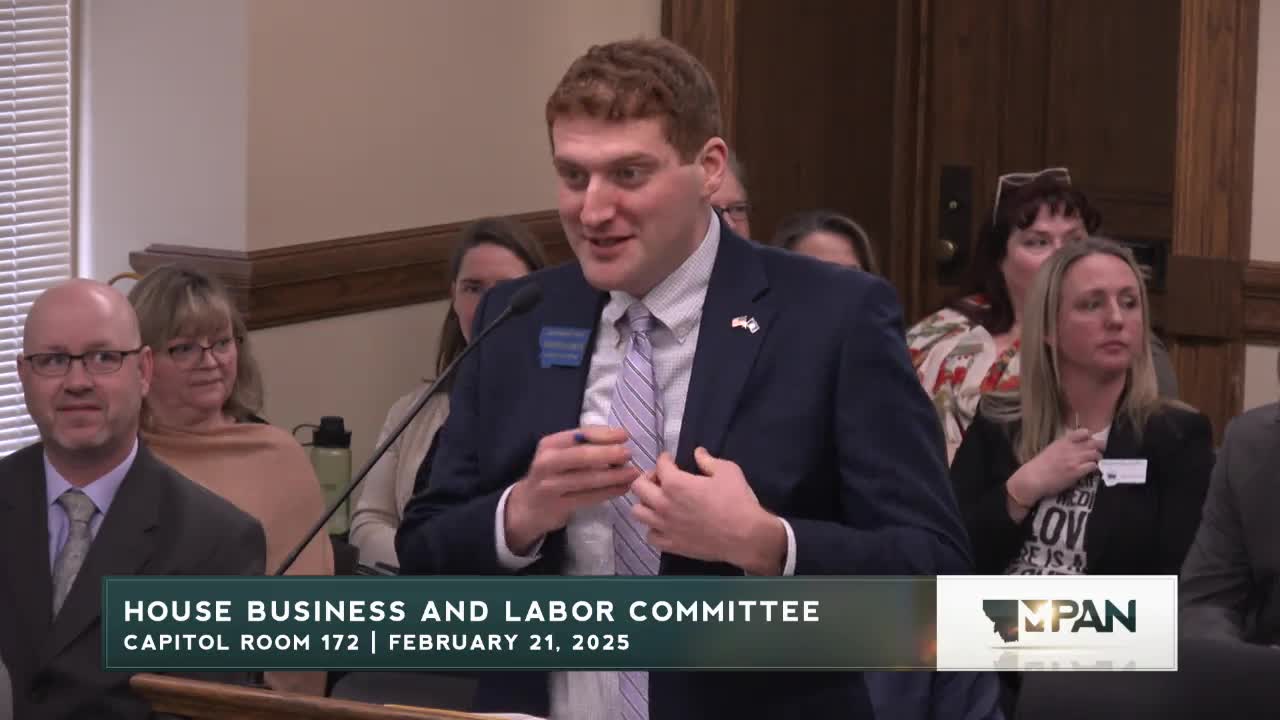
Rep. Jonathan Karlen told the House Business and Labor Committee that House Bill 398 would require continuity of prior‑authorization decisions when patients switch plans, specialty‑matched reviewers for clinical denials, and longer authorization periods for chronic care.
Representative Jonathan Karlen opened the committee hearing on House Bill 398, which he described as a negotiated effort to reduce delays and administrative burdens associated with prior authorization while preserving patient safety.
Major provisions in the bill and sponsor amendment include: honoring existing prior authorizations for at least three months when a patient changes insurance plans; requiring that adverse (denial) determinations be made by a reviewer with clinical expertise focused on the diagnosis and treatment at issue; extending standard prior‑authorization approvals from three to six months and, for defined chronic conditions, to 12 months; and defining ‘‘chronic condition’’ by reference to the Centers for Disease Control and Prevention (CDC) definition.
Why it matters: Physicians and hospital advocates told the committee the current prior‑authorization regime creates time‑consuming administrative work and can harm patients through delays. Dr. Saul Rivard, president of the Montana Academy of Family Physicians, said prior authorization is “among the heaviest administrative burdens” and can contribute to physician burnout. Pharmacy and hospital advocates said staff spend sizeable portions of their work hours handling authorizations.
Supporters: A broad coalition of clinicians and health organizations testified in favor, including the Montana Academy of Family Physicians, Montana Medical Association, Montana Hospital Association, Montana Pharmacy Association, the Montana chapter of the American Academy of Pediatrics, the Montana Primary Care Association and the Montana Nurses Association. Several clinicians gave examples of patients whose treatment was delayed: one pediatric patient waited months for a biologic that restored vision for some but not all patients after long delays, a family described repeated hospitalizations during authorization waits, and clinic staff reported spending up to 40% of work time on authorizations in some specialty settings.
Opponents and concerns: Insurers and pharmacy benefit managers (PBMs) opposed parts of the bill or sought amendments. Blue Cross Blue Shield of Montana, Cigna, AHIP, the Mountain Health Co‑op and national PBM trade groups asked for narrower language on who must make adverse determinations, saying routine or clerical denials do not require specialty‑matched reviewers and that forcing specialty matching for every denial would slow turnaround and raise administrative costs. Blue Cross cited average pre‑service decision times of about 2.5 days and warned that requiring external specialty reviewers for many determinations could lengthen decision times and raise plan costs. Several insurer witnesses proposed amendments that would preserve specialty matching for appeals and complex clinical peer‑to‑peer reviews while allowing faster administrative determinations for routine cases.
Clarifications and limits: Sponsors and proponents said the bill was negotiated with payers and represents compromise language; insurers said a remaining sticking point focused on section 2 (specialty matching for adverse determinations) and proposed an amendment to narrow its scope. Several witnesses suggested a January 1, 2026 effective date to match plan years and implementation schedules.
No formal committee votes were recorded in the provided transcript excerpt. The hearing record includes extended testimony from both provider and payer interests; committee members asked about timelines, patient safety exceptions and administrative impacts.