Get Full Government Meeting Transcripts, Videos, & Alerts Forever!
Get email alerts on the Civil Liability Reform topic
No spam. Unsubscribe anytime.
Lawmakers hear bill to bar civil suits by people convicted while committing crimes
Summary
Representative Curtis Schomer introduced HB 521 to broadly bar people convicted of crimes from recovering civil damages for injuries suffered during commission of those crimes; trial lawyers and civil-rights advocates warned the change would remove long-standing civil protections and could prevent victims from recovering in many scenarios.
Representative Curtis Schomer presented House Bill 521, a bill designed to block people convicted of crimes from bringing civil claims to recover damages for injuries or losses that occurred during the commission of those crimes.
Schomer framed the bill as protecting victims and preventing criminals from using the civil system to profit from wrongdoing. "If you commit a crime, you should not be allowed to sue the victim," said Kerry Hegerberg of the Montana Chamber of Commerce, testifying in support.
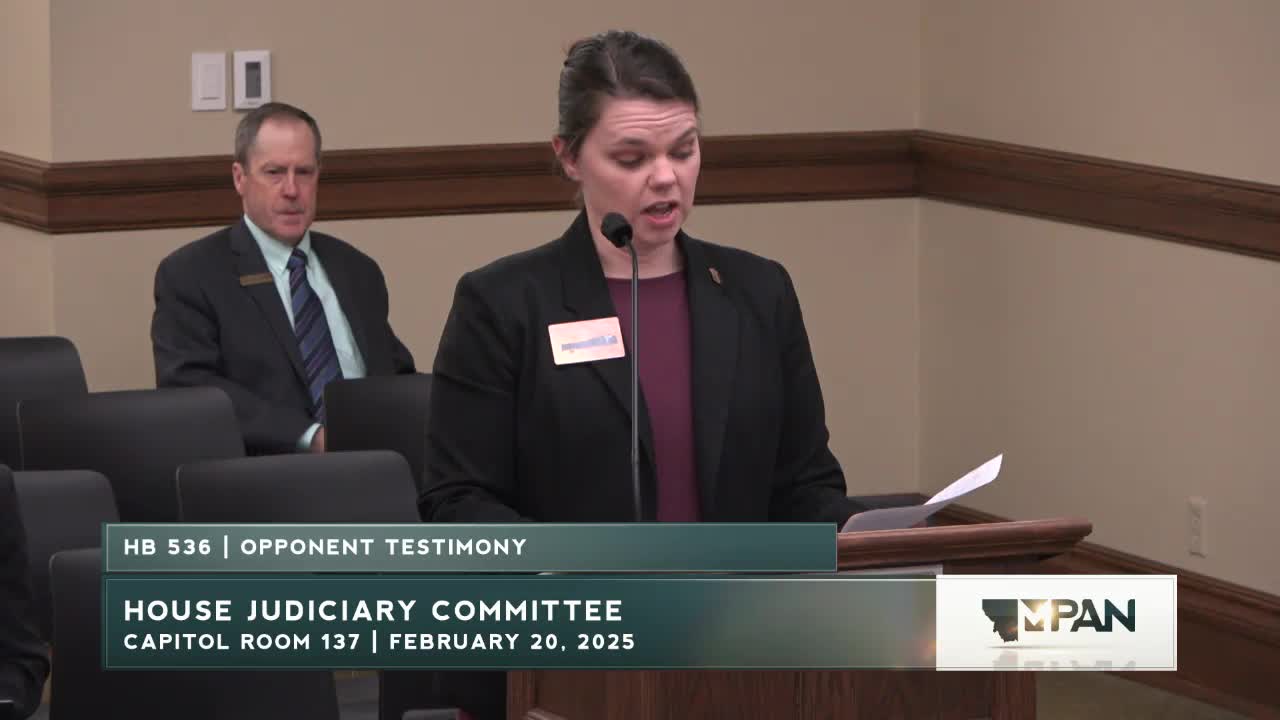
Opponents, including Nikki Zupanek of the Montana Trial Lawyers Association, said the proposal significantly expands existing statutory immunities, removes important legal safeguards and could bar recovery in a wide range of cases. Zupanek told the committee the bill would delete two statutory sideboards that currently limit immunity to situations involving felonies or reasonable force and argued the measure could prevent suits by people injured during misdemeanors or nonviolent offenses.
Committee members described difficult hypotheticals. Representative Howell asked whether a hit-and-run victim who was later convicted for unrelated drug possession could be barred from suing the driver who struck them; Zupanek said under the proposed language, that would be blocked. Staff and witnesses discussed other examples — a teenager trespassing who is shot, or a claimant seriously injured during a joint criminal episode — where civil recovery now can be weighed by a jury even when criminal charges exist.
Several committee members urged caution. Zupanek said existing law strikes a balance between permitting some recovery and discouraging claims tied to serious unlawful conduct; she urged retention of current limits rather than a wholesale expansion of immunity.
Representative Schomer said he was open to friendly amendments but stated he did not intend the bill to protect criminals and defended the bill as protecting property owners and victims. The committee did not vote at the hearing and took no immediate action.