Get Full Government Meeting Transcripts, Videos, & Alerts Forever!
Get email alerts on the Ai Deepfake Legislation topic
No spam. Unsubscribe anytime.
Committee hears bill to bar fabricated AI uses of a person’s voice, name and likeness
Summary
Representative Jill Koehnauer presented HB 513 to create a private right of action for unauthorized AI-generated depictions and voice replicas and to protect first-amendment uses; sponsors said the bill targets fabricated digital impersonations while preserving news and parody carve-outs.
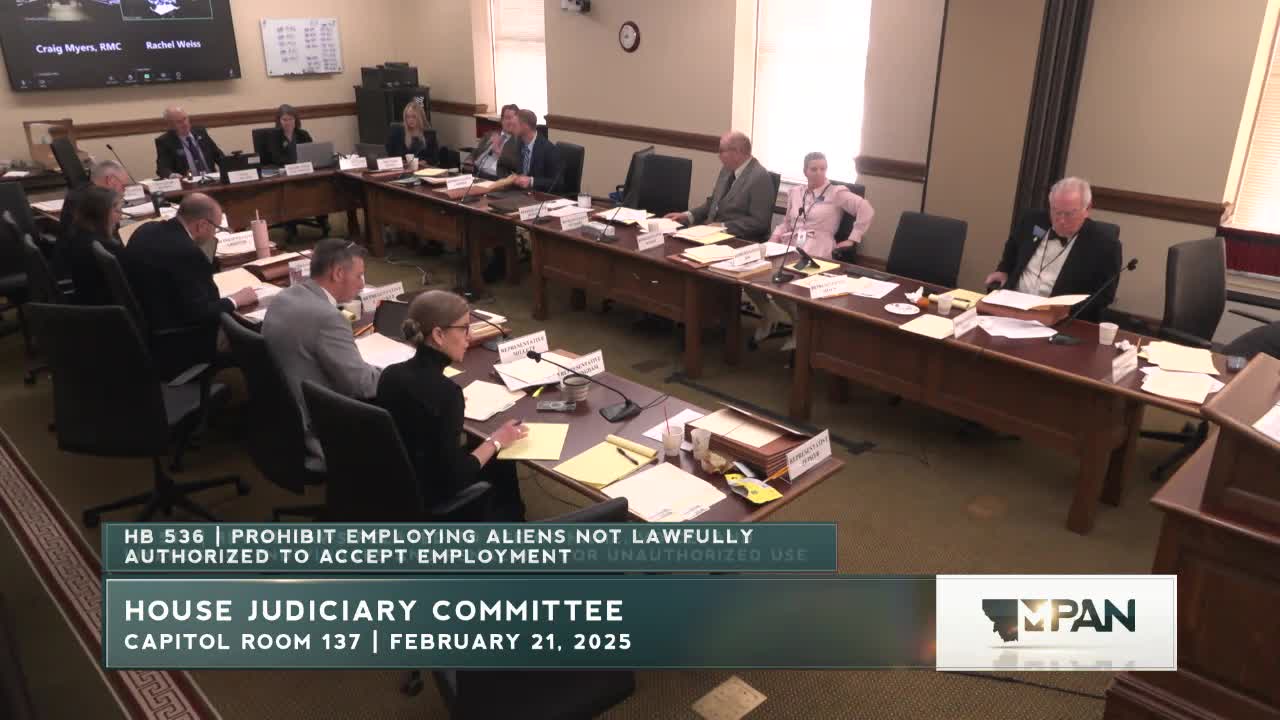
Representative Jill Koehnauer opened a hearing on House Bill 513, a proposal to grant individuals a statutory property right in their name, voice and likeness and to allow civil claims when those personal attributes are digitally fabricated or used without consent.
Koehnauer told the committee the draft would extend the kind of name-and-likeness protections already enacted for college athletes to "every single one of us," allow those rights to be transferred to descendants, and create damages and disgorgement remedies when an algorithm, software tool or other technology produces fabricated depictions or voice replicas without consent. The bill would also allow a claimant to recover gross profits when a defendant commercialized an unauthorized depiction.
The bill text narrows liability to "digital depictions" and "digital voice replicas" that were created or materially altered using digital technology and that portray an individual in ways the person did not actually appear or in expressions the person did not actually perform. Koehnauer said the measure would not prevent use of authentic recordings or ordinary news gathering and would include standard carve-outs for comment, criticism, parody and reporting.
Committee members tested those limits. Representative Kelly asked whether routine law-enforcement recordings and operator-installed security cameras would be protected. Koehnauer replied she intended authentic recordings to be outside the bill's scope and agreed to add clarifying language if needed. Representative Zephyr and others discussed whether the First Amendment carve-outs would shield impressionists and parodists; Koehnauer said the bill's satiric and parody language was intended to allow those uses.
Proponents included Kristin Page Nye of AARP Montana, the Alzheimer's Association, the Montana Association of Chiefs of Police, and actors from the film and performing community who said AI replication threatens performers' livelihoods. Mike Fanning, the state elder-justice prosecutor, and Trevor Tangen of Adult Protective Services testified in support of clearer statutory protections for vulnerable people as part of the state’s broader digital-safety framework.
Opponents were not recorded online for this hearing. Committee members asked staff to check whether the bill's definitions and carve-outs would interfere with law-enforcement use of body-camera or other recordings and whether a clear rule should be added for recordings lawfully created and distributed.
Koehnauer asked the committee to give the bill a "due pass." The committee did not vote at the hearing and requested follow-up language from staff to clarify law-enforcement and security-camera carve-outs.