Get Full Government Meeting Transcripts, Videos, & Alerts Forever!
Get email alerts on the Scope Of Practice Optometry topic
No spam. Unsubscribe anytime.
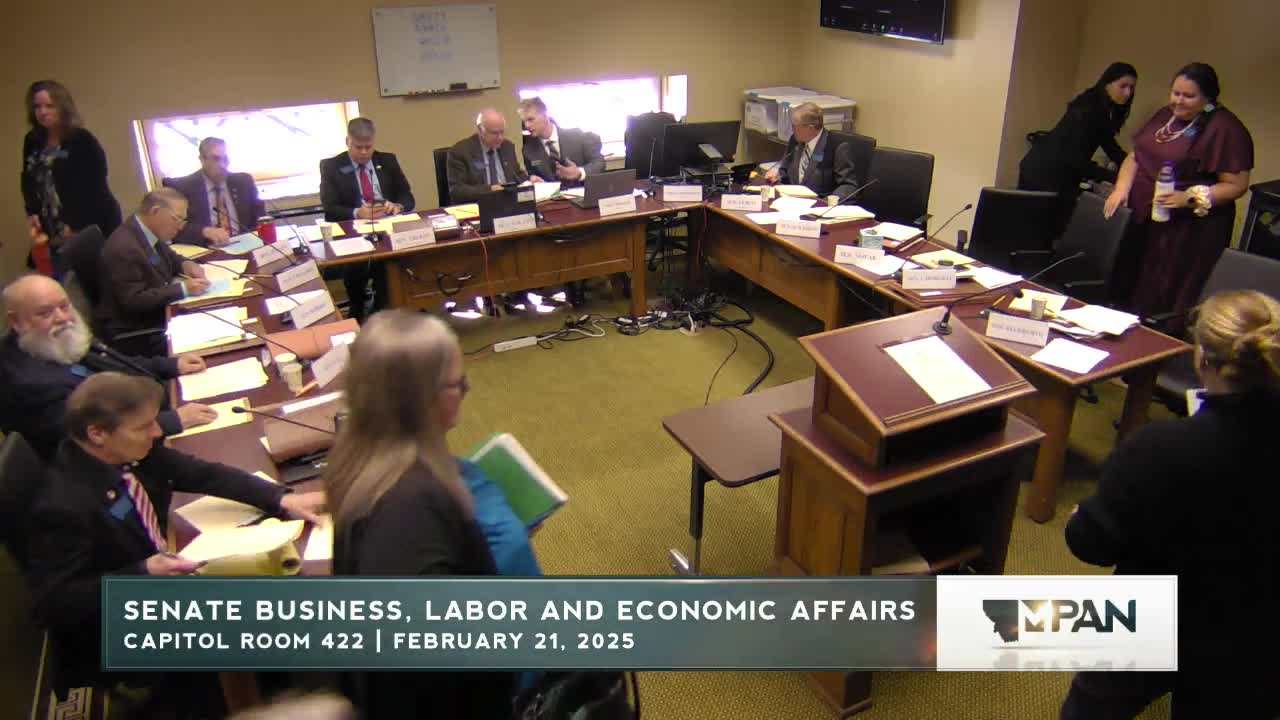
Doctors and optometrists clash in Senate hearing over expanding optometrists’ in‑office surgical authority
Summary
Representative Ed Buttrey introduced House Bill 218 to the Senate Business and Labor Committee, seeking to allow board‑certified optometrists in Montana to perform specified in‑office laser and anterior‑eye procedures after additional certification by the Montana Board of Optometry.
Representative Ed Buttrey, speaking in the Senate Business and Labor Committee, opened a hearing on House Bill 218, which would update Montana’s optometry practice act to allow certified optometrists to perform specified in‑office surgical and laser procedures limited to the anterior segment of the eye and adnexa.
“Optometrists are trained and educated to perform these procedures and Montana law is 25 years out of date,” Buttrey told the committee. Supporters said the change would improve access to timely eye care in rural communities, reduce travel for elderly and immobile patients, and allow optometrists who have received accredited training and board certification to treat certain conditions locally.
Doctors of optometry who testified described their education and training — a four‑year optometry program after undergraduate study — and said additional certification by the Montana Board of Optometry would be required before any optometrist could perform the newly authorized procedures. Proponents stressed that the bill would not authorize refractive (vision‑correction) laser surgery, intravitreal injections, or penetrating surgeries such as cataract extraction.
“Modernizing the practice will allow patients to receive timely, high‑quality care where they live,” said Dr. Ron Benner, an optometrist from Laurel who testified in favor of the bill. Several other Montana optometrists and the Montana Optometric Association urged passage, and witnesses distributed a statewide map showing optometrist locations and argued the state’s ophthalmologist workforce is concentrated in a small number of urban centers.
Ophthalmologists, physicians and medical associations strongly opposed the measure on patient‑safety grounds. Dr. Scott Guess, an ophthalmologist, said ophthalmologists receive medical school and residency training that includes thousands of hours of supervised surgical experience and argued that legislation cannot substitute for that depth of surgical training.
“Legislation does not change the training that’s required to appropriately perform surgery,” Dr. Guess said, adding that certain procedures can lead to severe complications — including retinal tears, bleeding and in extreme cases permanent vision loss — that require specialist management.
Other opponents cited evidence from other states that expanded scopes of practice for optometrists did not meaningfully improve access and sometimes led to higher rates of retreatment or complicated outcomes. Members of the Montana Academy of Ophthalmology and the Montana Medical Association handed the committee letters and case examples from other states and highlighted the role of subspecialty training and referral networks for complicated cases.
Department of Labor and Industry staff and licensing officials provided procedural context: the Montana Board of Optometry would set certification standards and the Department administers licensure. Bureau Chief Kevin Bragg told the committee the board would undertake rulemaking and that the department would create an endorsement on a license for providers who met board‑set qualifications.
Committee members asked whether federal facilities (such as VA hospitals or military treatment facilities) would accept optometrists performing these procedures; testimony noted that federal policies vary and that some federal facilities do not permit optometrists to perform the proposed procedures on federal sites. Members also pressed for data from other states about utilization rates, retreatment frequencies and whether access actually improved in large or rural counties; several opponents said they would supply studies and case examples.
The hearing ended without a committee vote. The sponsor said he would work with stakeholders and that the board and department would need to craft certification and oversight rules if the committee moved the bill forward.