Get Full Government Meeting Transcripts, Videos, & Alerts Forever!
Get email alerts on the Paid Family And Medical Leave topic
No spam. Unsubscribe anytime.
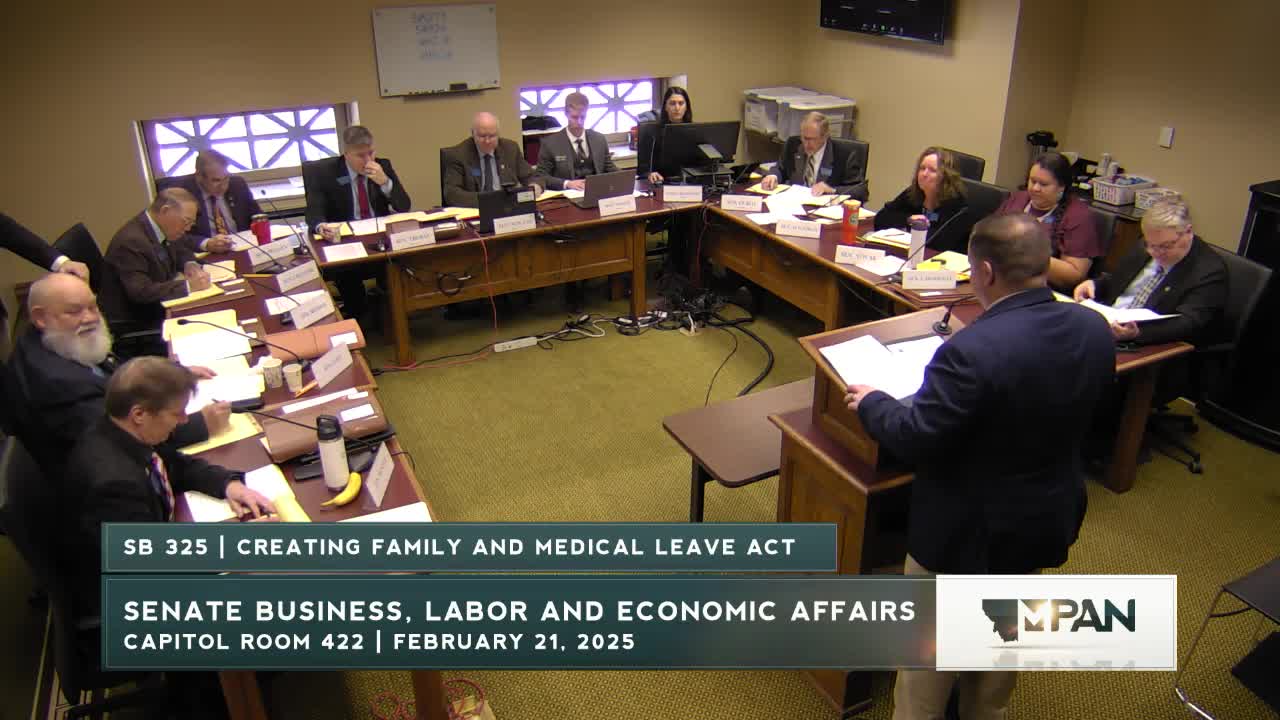
Senate committee hears bill to create Montana Family and Medical Leave Insurance; questions on cost, timing and employer impact
Summary
Senate Business and Labor Committee members heard testimony on Senate Bill 325, the “Montana Family and Medical Leave Insurance Act,” which would create a state‑run paid family and medical leave program funded by employer and employee contributions split equally and limited by a 1 percent cap on wages.
Senate Business and Labor Committee members heard testimony on Senate Bill 325, the “Montana Family and Medical Leave Insurance Act,” which would create a state‑run paid family and medical leave program funded by employer and employee contributions split equally and limited by a 1 percent cap on wages.
Supporters said the program would provide wage replacement for qualifying events — such as a serious health condition, care of a new child, or care for certain family members — and would mirror eligibility and wage calculations used in Montana’s unemployment insurance system. Proponents also emphasized a higher benefit share for low‑wage workers, an inclusive definition of family, and reduced contribution rates for very small employers.
The bill would let the Department of Labor and Industry administer a new Family Medical Leave Insurance Fund. Under Senate Bill 325, an eligible worker could take up to 480 hours (12 weeks) of paid leave in a benefit year; weekly benefit amounts would scale with income and be capped at $1,000. The sponsor and proponents told the committee the intent is that benefits run concurrently with federal FMLA when both apply.
“This bill will help keep workers attached to the workforce and allow families to care for loved ones without risking economic devastation,” said Senator Derek Harvey, the bill’s sponsor, during opening remarks. Patrick Yawaki, who testified representing several tribal communities and organizations, urged a “due pass” vote and said the bill respects tribal governments’ ability to elect participation. Other supporters included representatives from family‑support nonprofits, the Montana AFL‑CIO, Montana Nurses Association, and business advocates who said paid leave can reduce turnover and boost recruitment.
Department of Labor and Industry officials answered committee questions about start‑up and operating costs. Commissioner Sarah Swanson told the committee the department anticipates creating a new bureau to run the program and estimated five initial staffers in the start‑up year (growing to eight in 2027 and roughly 29 by 2029 if usage reaches projections). She said front‑end technology to accept contributions and process claims could cost about $14 million. The department estimates claims could number roughly 8,500 in 2027 and rise to just over 15,000 by 2030; average weekly benefits were projected in testimony at roughly $572–$642 per week and program payouts in later years in the tens of millions.
Committee members pressed several points in follow‑up: how solvency and reinsurance would be handled, whether the Legislature could later redirect fund balances, how the program would treat existing employer leave policies or paid time off, and how the new program would coordinate with collective bargaining agreements. The sponsor and Department witnesses said the bill caps contribution rates so the state is not on the hook for benefit payouts, that rulemaking would address opt‑out or coordination mechanisms, and that the Department expects contributions to be collected before benefits are paid out.
Opponents raised small‑business concerns. Rhonda Wiggers, representing the National Federation of Independent Business, said even a modest payroll contribution is effectively a tax and cautioned that small employers rely on flexible paid‑time‑off models and could be disadvantaged by a uniform contribution requirement. She also flagged practical concerns about job‑restoration obligations for very small employers who must fill critical roles.
Committee discussion also covered how the bill treats self‑employed individuals (an opt‑in provision), tribal notification requirements, proposed criminal and civil penalties for fraudulent claims, and the bill’s effective dates: collection would begin July 1, 2026, with payments to begin once the fund reached solvency.
The hearing closed without a committee vote. Senator Harvey said he would work with stakeholders on clarifications and that a fiscal note and additional details would be supplied to the committee.