Get Full Government Meeting Transcripts, Videos, & Alerts Forever!
Get email alerts on the Education Charter Funding topic
No spam. Unsubscribe anytime.
Senate narrowly approves charter-sharing language after hours of debate; senators divided over local fiscal impacts
Summary
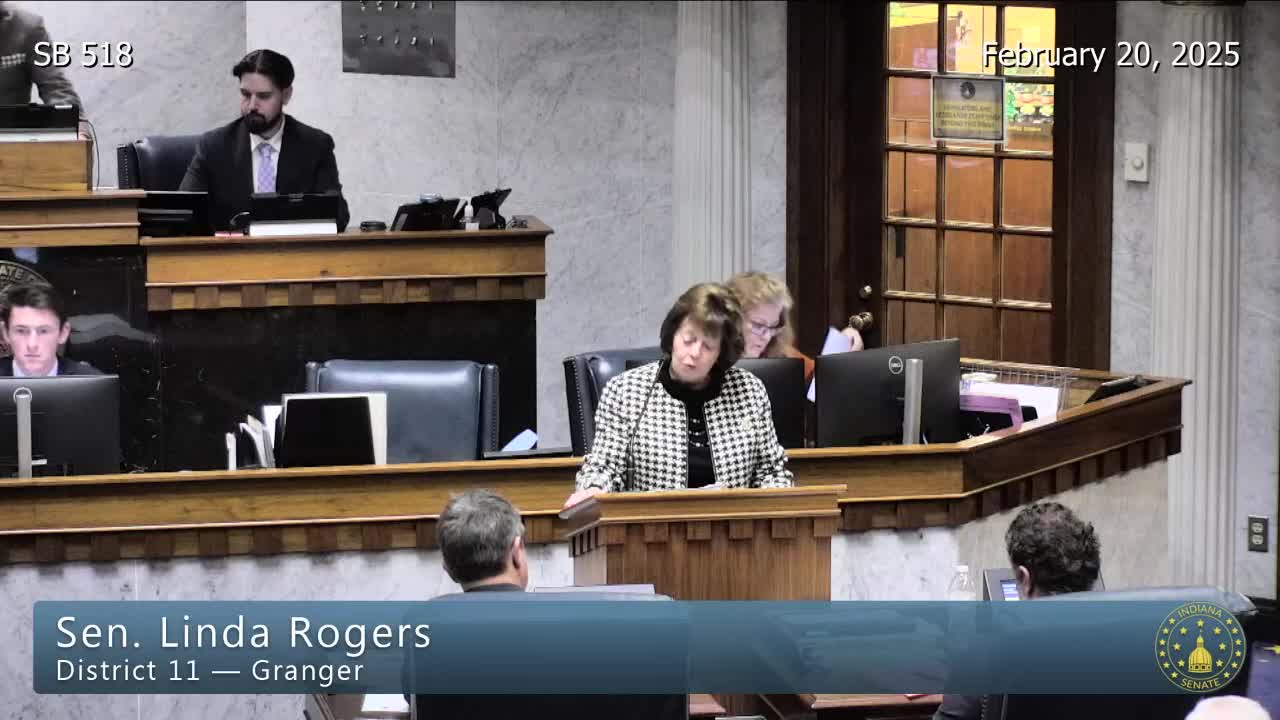
The Senate approved a major change to how certain local property-tax levies will be shared with charter schools, passing Senate Bill 5 18 in a 28–21 roll on March 3 after lengthy debate over local fiscal impacts and implementation timing.
The Indiana Senate approved Senate Bill 5 18 on March 3, 2025, by a 28–21 roll call after an extended floor debate that ranged across questions of local control, fiscal impact, and the role of charter schools in urban districts.
What the bill does
Senate Bill 5 18 changes how some local property-tax levies are shared with qualifying charter schools. The Senate-floor amendments phased the major sharing provisions in so the new sharing regime would begin in 2028 for the statewide operations fund and include other local levies under a specified schedule. The bill excludes pre-existing debt-service levy collections (grandfathered) but requires school corporations to publish notice in certain cases and adds reporting requirements for the Department of Education. The bill was presented as a mechanism to make local funding follow students in a way advocates said is fairer for families using charter options.
Why it mattered on the floor
Supporters said local practice had produced a mismatch between where property-tax dollars were raised and which institutions actually educate certain students. Senator Rogers, the floor sponsor, said the change restores parity by making local levies follow children who attend charter schools rather than continuing to concentrate certain local revenues in district buildings that no longer educate all students in that taxing area.
Opponents, including a coalition of senators representing urban districts and larger school systems, argued the bill shifts large and uncertain sums of local tax revenue away from school corporations that still educate the majority of students. Senators raised multiple concerns: the floor record showed senators asking for district-level financial projections, the interaction of the change with other budget proposals (including property-tax reductions under separate legislation), and the timeline for implementation (2028) when many districts were planning referenda and capital projects.
Floor – key testimony and arguments
- Support: Senator Rogers argued the pilot and amended schedule provide time for planning, and she said the bill corrects an allocation inequity where some districts retained operations revenue for students they do not educate.
- Opposition: Senators Taylor, Yoder, Jackson and others urged delay or deeper fiscal study. Senator Taylor produced district-level examples on the floor and warned of multi‑million-dollar shifts from Indianapolis public schools and others. Senator Jackson (Indianapolis) said the bill threatened dozens of school buildings and programs if district revenues fell as projected.
Vote and next steps
The Senate voted 28–21 to pass the measure and will transmit it to the House. Senators on the floor repeatedly requested clearer district-level fiscal figures and outlined plans to press for precise implementation guidance and reporting; the bill text also places a phased start date in 2028 for key levy sharing so state and local officials will have time to prepare. If the House amends the measure, sponsors on both sides signaled readiness for additional negotiations and district-level impact reviews.
Speakers on the floor and sources
Directly quoted and attributed testimony on the bill comes from Senator Erin Rogers (floor sponsor) and multiple senators who spoke at length during the debate, including Senators Mike Taylor, Linda Yoder, Lonnie Jackson, and Andrea Brown. The Senate clerk recorded the final vote as 28 ayes, 21 noes. Fiscal figures cited during the debate were disputed on the floor; a number of senators asked for updated Legislative Services Agency or Department of Education district-level analyses before implementation.
Why this matters to local readers
The bill affects how local property-tax levies may be shared with charter schools in many districts and can change revenue available for transportation, building maintenance, and classroom operations. Local officials, school boards, and voters planning referenda or capital projects should be aware the Senate approved the change and that implementation details and district-level fiscal estimates will be critical to local planning.