Get Full Government Meeting Transcripts, Videos, & Alerts Forever!
Get email alerts on the Streets And Infrastructure topic
No spam. Unsubscribe anytime.
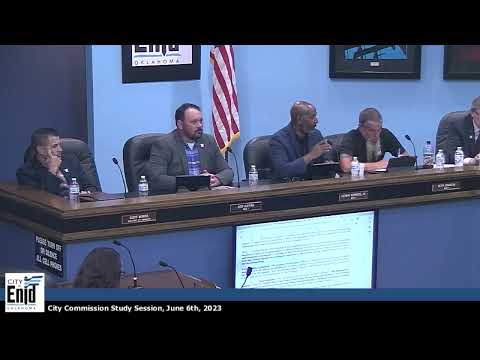
City updates paving and concrete repair programs; new equipment cuts closure time
Summary
Street supervisor described recent asphalt overlays, concrete repairs, crew and equipment improvements, and resident notification procedures; commissioners praised the work but noted drainage and pre‑work needs for some projects.
City staff presented an update on the municipal asphalt overlay and contractor‑led concrete repair programs, saying recent equipment and scheduling changes have reduced closure times and improved throughput.
Ashley Humphrey, the city’s street supervisor, told the Board of Commissioners the in‑house paving crew and new paving equipment allowed the department to lay more than 350 tons of asphalt in a single day, completing some residential roads in two to four hours and limiting full closures to roughly 24 hours. Humphrey identified key crew members and operators and credited a new machine with shortening projects that formerly took multiple days.
Humphrey listed recently completed or repaired stretches including Sixth Street (412 to State), Thirteenth (Oklahoma to 412 and Park to 412), South Wilson (Cherokee to Oklahoma), North Garfield, Monitor Street and Harpers Ferry and Shiloh (finished the day of the presentation). She said some roads were added to the program after plant mix availability changed; one residential street was paved in a single day when the plant produced slightly larger aggregate.
The presentation included photos, ward breakdowns and a GIS map that staff said is available on the city website and updated in near real time. Humphrey said the crew also performs concrete subbase repairs and compaction testing when needed; commissioners and staff emphasized drainage repairs must precede overlays on some streets.
On resident notification, Humphrey said the department uses two electronic signs at the road ends, press releases, flyers delivered to homes and flexible scheduling to minimize disruption (for example, accommodating a resident’s particular work‑day constraints). A commissioner asked specifically whether residents receive notice when driveways will be inaccessible; Humphrey described a “48‑hour” notice practice and flyer distribution during prep work.
On the concrete repair program, staff reported 28 contractor sites completed this year, including wheelchair ramps, cul‑de‑sacs and alleyways. Contractors focused on removing and replacing damaged panels, curb and gutter, flumes and other elements; ward distribution reflected a heavier cul‑de‑sac workload in Ward 1 this year. Staff said the program began about four years ago and has led to noticeable improvements across the city.
Commissioners praised the crew and contractors. No formal action was taken at the study session.