Get Full Government Meeting Transcripts, Videos, & Alerts Forever!
Get email alerts on the Commerce Abs topic
No spam. Unsubscribe anytime.
ABS reports lower post‑COVID sales, new retail programs and budget pressures; committee asks for deeper follow‑up
Summary
Alcohol Beverage Services reported lower post‑pandemic sales, one‑time system and insurance expenses, expanded local‑product programming and new retail formats, and the committee requested detailed follow‑up and budget mitigation plans.
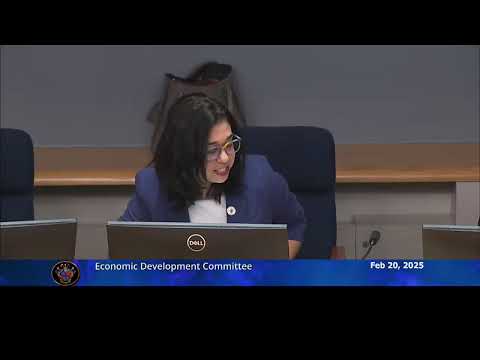
The county’s Alcohol Beverage Services (ABS) presented sales and expenditure trends, retail initiatives and operational challenges to the Economic Development Committee, which asked ABS to return with more detailed store‑level plans and budget mitigation strategies during the FY26 budget process.
Kathy Durbin, ABS director, described recent retail investments—new store formats such as Oak Barrel and Vine, and upcoming replacements in Wheaton and White Oak—and programming to promote local manufacturers, including a “Tastemaker” trail and in‑store “Taste and Tell” events. Durbin said the department has grown a local product program from about $30,000 in its first year to approximately $3,000,000 in sales and that those local products can be held and distributed to support small hospitality businesses.
Durbin also discussed a recent armed robbery at the Wheaton store: police and ABS loss‑prevention coordination led to an apprehension, and the department said it has expanded loss‑prevention monitoring and is upgrading security and cameras across stores.
ABS staff presented preliminary FY24 and FY25 data showing lower retail margins compared with the COVID windfall years. Marty Udimore, ABS administrative division chief, explained that an updated point‑of‑sale (POS) system and higher insurance costs—about $1.5 million and roughly $500,000 respectively—were major contributors to a multi‑million dollar “other expenditures” line. ABS said the POS implementation took about a year and has improved data availability for store‑level analysis.
Committee members asked why certain retail locations operate at a net loss on the submitted table. ABS staff said part of that appearance reflects an internal accounting construct introduced under a prior director that applied warehouse markups to retail stores; staff said removing that construct would show far fewer stores running losses. Staff also noted many stores were placed to serve communities rather than to maximize retail profit, and said the department is now using new sales data, targeted product assortments and community programming to improve performance.
Members sought specifics on renovation costs, labor and marketing. ABS staff said renovation costs ranged widely; they reported recent reductions in design scope and said typical newer store refresh plans are closer to $500,000 after trimming previously higher estimates. Labor costs have increased, and ABS told the committee it expects upward pressure on the general fund transfer because wages and personnel costs are rising—staff cited an approximate $5,000,000 labor‑cost impact across the division. Marketing spend is minimal; ABS said it relies on partnerships, social media, a free podcast and Visit Montgomery County collaborations.
ABS also described policy and program changes: spirit‑based ready‑to‑drink (RTD) products at 8% ABV and under are now permitted for private retailers (about 50 businesses already approved), and ABS said it will charge a modest annual permit fee (approximately $200) starting in 2026 to manage renewals and oversight. ABS said it uses an iStore ordering system for licensee orders and that many small suppliers now prefer ABS distribution even when self‑distribution is available.
The committee asked ABS to return with more detailed store‑by‑store analyses, a strategy to improve underperforming locations and budget mitigation options in two months during the budget process, and requested a fuller operational deep dive in the summer or fall.