Get Full Government Meeting Transcripts, Videos, & Alerts Forever!
Get email alerts on the Zoning Rezone topic
No spam. Unsubscribe anytime.
Neighbors and property owner spar over Furlaine rezone; staff outlines limits on units, slope and access constraints
Summary
At a public hearing on the preliminary docket the planning staff described build limits and likely requirements for a proposed rezone of Furlaine parcels; neighbors raised concerns about intersection safety and slope stability while the property owner said the requested upzone is modest and aimed at preserving land and providing flexibility.
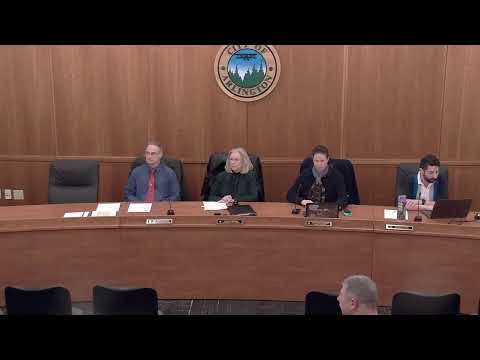
Planning staff and neighbors at the Arlington Planning Commission meeting focused public comment and staff explanation on a privately initiated rezone of three parcels (plus a fourth property added to the docket) along Furlaine (also spelled Furlane in the record) between Highway 9 and Hazel Street.
Amy Hammy, planning staff, described the application as a privately initiated request to rezone three parcels (with an added fourth parcel) from residential low capacity to residential moderate capacity and said the total combined acreage of the four parcels is 8.77 acres. Hammy said the upper, upland portion of the site is approximately 5 acres while about 3.77 acres are constrained by slope, the rail line, Centennial Trail and will be treated as undevelopable in preliminary analysis.
Hammy explained density rules used in the citys zoning: the residential moderate capacity (RMOD) zone carries a stated range of 7 to 11 dwelling units per acre. She said a strict maximum at 11 units per acre on the approximately 5 developable acres would produce up to about 55 units before standard deductions; when typical reductions for roadways, sidewalks, landscaping and open space are applied (the staff example used 20–30 percent reductions and an averaged figure), Hammy reported a likely range under RMOD of roughly 38 to 44 dwelling units; under the existing residential low capacity zoning she estimated about 21 to 24 dwelling units. Hammy told the commission that apartments in the big, multi-story sense are not allowed under current code language for RMOD, which permits single-family, duplex, triplex/fourplex and cottage or row-house-style multifamily but with height and form limits.
Neighbors raised traffic, safety and slope-stability concerns. Tom Flatt of 141 Florence Street told the commission he worried about the Highway 9 and Hazel Road intersection and said, “If we had 44 units leaving in the morning to go to work, 44 coming coming to work or coming home from work in the evening, that's a lot of uncontrolled stress.” Flatt also cited slope-disturbance and landslide risk, referencing historical concerns about hillside failures in other regions.
Diana Flett, also of 141 Florence Street, questioned why a rezone was necessary if the existing zoning could allow comparable dwelling counts. Jake Heckla, executor of the estate of Kurt Heckla and a property owner for the Furlaine parcels, said the requested upzone is “modest” and aimed to allow one additional home in the short term and provide future flexibility for heirs. Heckla said much of the acreage is a field hemmed in by the rail line and Centennial Trail and expressed interest in preserving the field or making it accessible in the future; he also described on-the-ground cleanup activities he and volunteers had undertaken since the property owners death.
Hammy said the city had told the applicant the top of slope would need setbacks that depend on geotechnical analysis, and that the area along the railroad, Centennial Trail and 60th Avenue would not be permitted for development. She flagged likely required improvements at the Highway 9/Hazel intersection for future development, possibly including a roundabout or a second access point, but said specific requirements would depend on project design and agency approvals.
No final project approvals occurred; the rezone application was added to the preliminary docket for full analysis, SEPA review where required and future public hearings. The commissions docket approval, which included the added fourth parcel, sends the application on for staff analysis and eventual public hearings and City Council consideration.