Get Full Government Meeting Transcripts, Videos, & Alerts Forever!
Get email alerts on the Comprehensive Plan Update topic
No spam. Unsubscribe anytime.
Woodland planning staff outlines compressed schedule, outreach and legal constraints for 2025 comprehensive plan update
Summary
City of Woodland staff told the Planning Commission the city must complete a Growth Management Act–compliant comprehensive plan update in 2025 using a $120,000 Department of Commerce grant, but work is constrained by cross‑county planning, floodplain and shoreline requirements and uncertain development projections.
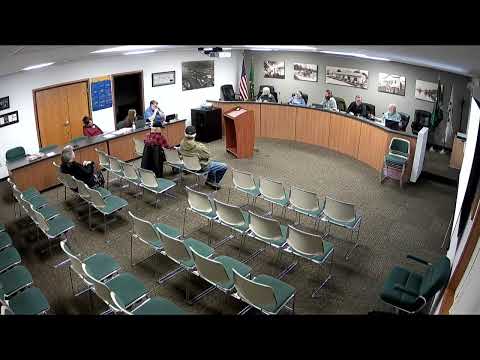
Travis Goddard, Community Development Director for the City of Woodland, told the Planning Commission on Feb. 20 that the city must finish a Growth Management Act–compliant comprehensive plan update this year under terms tied to a Department of Commerce grant.
The update matters because it will guide 20 years of land use, infrastructure and housing decisions across portions of Woodland that lie in both Cowlitz and Clark counties, and because state and federal rules constrain where and how the city can plan for new development.
Goddard said the Department of Commerce awarded the city $120,000 for the update and has put the work on a 2025 schedule, which compresses the timeline. “The good news is, is we’re going to give you $120,000 grant to do the work. The bad news is is you need to do it in 2025,” Goddard said, summarizing Commerce’s direction.
He told commissioners the update will focus on whether existing goals and policies remain appropriate, and on forthcoming consultant drafts that are posted to the city’s planning projects web page. Goddard said the consultant has produced a goals-and-policy analysis matrix and draft chapter updates; the matrix flags where policies appear unchanged, where consultant edits are suggested (red), and where staff wants commissioners to review items flagged orange or brown.
Goddard urged commissioners and the public to use the online survey and to submit typed, line‑referenced comments rather than photocopied, annotated documents. He said the outreach schedule includes multiple open houses and that staff will compile comments for the record. “I will not accept massive piles of paper for the record,” he said.
Commission discussion focused on the limits that Cowlitz County and environmental regulators place on Woodland’s ability to expand its urban growth boundary (UGB). Goddard recounted a prior 2018 process in which Cowlitz County officials objected to expansions of Woodland’s UGB that would plan into Cowlitz County territory, and he said that because portions of Woodland sit in two counties the city’s planning is constrained by whichever county’s comprehensive plan applies.
“...we’re kind of painted into this corner where we have to update the comprehensive plan, but we’re not totally rewriting the comprehensive plan from 0,” Goddard said, noting that Cowlitz County’s approach could make Woodland’s 2025 plan out of date if Cowlitz changes its UGB rules in 2026.
The commission also discussed housing calculations in consultant memos. Goddard said the housing memo breaks down need by income tiers and accounts for pipeline projects and existing zoned land. He said the consultant’s snapshot counts pipeline approvals in the supply calculation to meet GMA targets this cycle, but that the city may need to return to code amendments or a UGB change later if those approvals lapse or development does not occur.
Environmental constraints were raised repeatedly. Goddard said the Department of Ecology visited and expressed concern about planning that would allow development in the floodplain and shoreline areas; Ecology emphasized ecological protection and floodplain risk. Goddard said the city can use local flood protection standards and building elevation requirements but cannot unilaterally prohibit property development where property rights apply. He said Ecology offered to document its concerns in writing if needed in discussions with Commerce.
Commissioners and staff noted the consultant’s housing analysis shows Woodland likely can meet the near‑term GMA targets through infill, accessory dwelling units and modest zoning flexibility without immediately expanding the UGB, but that relying on pipeline approvals or a large single parcel in the bottoms carries environmental and legal uncertainty.
Goddard reviewed next steps: commissioners should read the consultant materials on the 2024 project page (not older 2018 or 2023 pages), provide line‑referenced emailed comments tied to the spreadsheet item numbers, and attend scheduled open houses and planning commission sessions. He said some chapters (utilities, parks) reflect recent council actions and require less revision, while other chapters (housing, capital facilities) will see consultant updates posted for review.
Votes at a glance: the meeting record shows the agenda and previous minutes were moved and seconded; the transcript does not record vote tallies or final announced outcomes in those instances. A rezone request from Woodland Shores RV Park (seeking a change from Highway Commercial to Neighborhood Commercial to allow year‑round occupancy) was announced as forthcoming and will appear to the commission in the coming months.
The update process will be iterative, Goddard said, and may require further action after Cowlitz County finishes its own planning update. He asked commissioners to prioritize homework review so public hearings and council decisions can proceed on the consultant’s schedule.