Get Full Government Meeting Transcripts, Videos, & Alerts Forever!
Get email alerts on the Budget Allocation Capacity topic
No spam. Unsubscribe anytime.
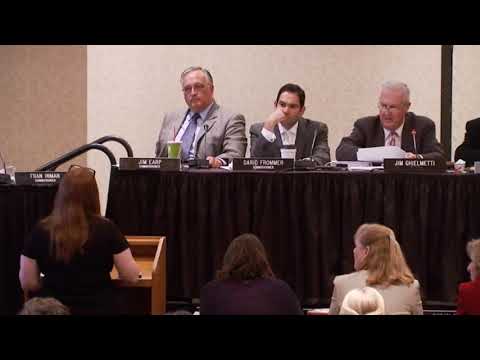
Caltrans says excise tax cut already built into STIP estimate; trust-fund shortfall manageable in short term
Summary
Athena, a Caltrans budget staff member, told the Transportation Commission on April 9 that the department's STIP fund estimate already assumes the Board of Equalization's forthcoming 3.5-cent cut to the price-based gas excise, and that the State Highway Account's elevated cash balance should blunt short-term effects from a tightening Federal Highway Trust Fund.
Athena, a Caltrans budget staff member, told the Transportation Commission on April 9 that the department's STIP fund estimate already assumes the Board of Equalization's forthcoming reduction of the price-based gasoline excise by 3.5 cents, so the cut should not reduce the commission's allocation capacity for the current year.
The department presented a 36-month State Highway Account cash forecast and its allocation-capacity report through Jan. 31. Athena said the commission had voted about $1.4 billion of the roughly $3.5 billion of available allocation capacity through January; approval of the program of projects on the April agenda would raise that to about $1.7 billion, roughly half the year's capacity.
Caltrans staff explained why the 3.5-cent adjustment, which moves the price-based excise from 21.5 cents to the 18-cent base excise next fiscal year, does not immediately reduce STIP capacity. "As part of the assumptions when we put together the STIP fund estimate that we released in August, we had already expected that there would be a lowering of the price-based excise, and so we took that into account, so there should be no effect on the STIP capacity," Athena said.
Staff also warned commissioners about possible impacts from a tightening federal Highway Trust Fund. Athena said the Federal Highway Administration's latest projection moved the projected insolvency from August to July. She explained that Caltrans typically fronts state dollars on federally funded projects and is later reimbursed by FHWA; because of the department's elevated SHA cash balance, moderate federal delays could be absorbed in the short term. "If they were to stop paying us altogether, sure, it would be a problem, but we should be fine for approximately two months before we had problems with insolvency," Athena said.
Commissioners pressed staff for more transparency from the Board of Equalization about the methodology it uses to set the price-based excise. Commissioner Gilmetti asked directly how the state had 'lost' roughly $500 million (the difference between 21.5 and 18 cents across allocations). Athena explained the board's mechanism: each year the BOE projects what sales-tax collections would have been and sets an excise to maintain revenue neutrality; she and other staff described that calculation as a 'black box.'
Commissioners asked staff to pursue further information. Susan Branson (Caltrans staff) said the commission could invite the Board of Equalization to a meeting to explain its methodology; the commission directed staff to pursue a BOE presentation and for the director to communicate interim findings through Executive Director Andre Boutros.
The presentation also covered federal Tiger grants (including a shift in some funds to planning grants) and the president's proposed federal transportation budget; Athena noted the proposal contained a substantial amount of one-time money. No formal commission action was taken on the budget presentation itself, but commissioners asked staff to seek BOE and Department of Finance briefings and to provide earlier updates to commissioners if possible.
Ending: Caltrans will return with additional detail at future meetings and staff will request a Board of Equalization presentation to the commission; the director and executive staff will distribute follow-up information to commissioners once obtained.