Get Full Government Meeting Transcripts, Videos, & Alerts Forever!
Get email alerts on the Early Literacy Act20 topic
No spam. Unsubscribe anytime.
Fort Atkinson schools report first-year implementation of Act 20 literacy requirements
Summary
District staff told the school board they implemented Wisconsin's Act 20 literacy mandates this year by adding new assessments, training and personalized reading plans while relying on existing literacy foundations and federal ESSER funds; board members pressed for clarity on long-term costs and state funding.
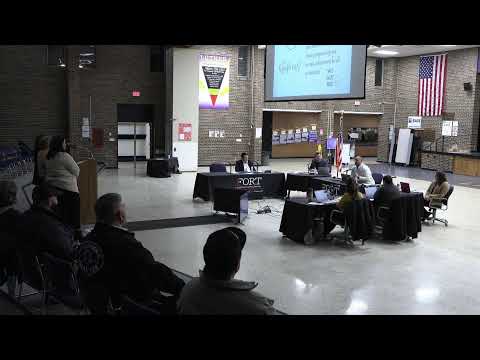
Fort Atkinson's school district presented a progress report Thursday on implementing Wisconsin's Act 20 literacy law, saying staff completed new state-required assessments, began required teacher training and launched personalized reading plans for students in 4K through grade 3.
The report, led by Director of Instruction Amy Oakley with support from Lisa Hollenberger and Candace Sayer, said the district prioritized alignment to the state'selected, science-based reading model and used prior ESSER purchases to avoid some one-time costs. Oakley said teachers have completed roughly half of the 40 required hours of Act 20 training and the district used a mix of existing resources and a no-cost nonprofit option for professional learning.
District leaders said they deployed a new data system, NextPath, implemented new classroom intervention strategies and rolled out the state'mandated screening and diagnostic assessments in kindergarten through grade 3, with 4K assessment planned for spring. Oakley said teachers are writing and launching personalized reading plans (PRPs) and that intervention work has been integrated into classroom differentiation time where possible.
Why it matters: Act 20 imposes new statewide assessment, training and intervention requirements for early literacy that districts must meet to maintain state reporting and compliance. Implementation requires staff time, training and assessment capacity. Board members asked whether the state supplied funding for those obligations and how much ongoing cost the district can expect.
Board and staff discussion: Board members and staff repeatedly called Act 20 an unfunded mandate. Oakley and Dr. Abbott said the district used previously allocated ESSER (COVID recovery) funds to buy phonics and word-study materials before the law took effect, reducing the district's incremental purchases. Dr. Abbott noted a $50 million set-aside in the state budget tied to Act 20 had not been released and urged legislators to free those funds.
When asked about the program's fiscal impact, Oakley said the district has not produced a single fiscal note yet and that additional costs would depend on future decisions about materials, staffing and supports. Board members emphasized the timeline pressure in Year 1; Oakley and colleagues said state testing and PRP windows can be tight (she noted a 15-calendar-day window for some steps) but that collaborative district systems helped staff meet deadlines.
Outlook: Oakley said the district's strategic plan and existing literacy emphasis positioned it well to adopt Act 20 requirements, and she described the district's approach as integrating new mandates into existing practice rather than treating them as a separate compliance task. District staff signaled they will continue training next year and monitor resource needs as implementation matures.
Ending: Board members thanked staff for the work and reiterated concern about ongoing funding and staffing implications if additional state support does not follow the mandates.