Get Full Government Meeting Transcripts, Videos, & Alerts Forever!
Get email alerts on the Unemployment Benefits topic
No spam. Unsubscribe anytime.
Senate advances bill expanding unemployment eligibility, adds appropriation safeguard
Summary
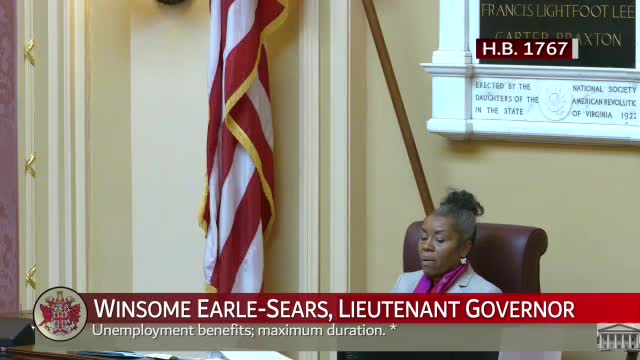
After hours of debate, the Virginia Senate advanced House Bill 17 67 — expanding the maximum duration of unemployment benefits and extending eligibility to certain independent contractors — and adopted a floor amendment making the measure subject to appropriation.
The Virginia Senate on Thursday debated and advanced House Bill 17 67, a measure that would expand the maximum period for receiving unemployment benefits and extend eligibility to some independent contractors who had worked for the federal government.
The bill drew sustained floor debate and emotional appeals. Senator Deeds, the senator from Charlottesville, said the legislation “expands the maximum period of time for which one can receive unemployment benefits” and noted an amendment to cover independent contractors who worked for the federal government.
Supporters framed the measure as short-term relief for workers facing layoffs. Critics warned about moral hazard, fiscal cost and expectations for future budget action. Senator French, the senator from Shenandoah, and Senator Malkai of Mecklenburg both described their constituents’ views that government assistance should be limited and that individuals should plan for contract-based risk.
Late in the day, Senator Sarravel, the senator from Eastern Fairfax, offered a floor amendment to make the bill “subject to appropriation,” saying the amendment simply “says this bill is subject to appropriation of the budgets clause.” The Senate recorded that floor amendment as adopted by recorded vote: 20 aye, 19 no.
The chamber recorded subsequent roll-call voting on the bill. The transcript shows multiple procedural steps and a final roll call taken after extended floor action; the transcript records the body’s vote tallies in sequence and the presiding officer’s final announcement. The text of the bill and the enacted funding level, if any, will depend on the budget negotiations and any conference with the House of Delegates.
Discussion only: the Senate debate included substantive policy concerns — benefit length, which classes of independent contractors qualify and how rapidly the program might need funding. Direction: with the floor amendment agreed to, the bill now carries the constraint that implementation requires appropriated funds and will move into the conference/budget process for funding decisions.
What’s next: the measure will move to conference (if it has not already) and any implementation depends on inclusion of funding in the enacted budget or subsequent appropriation action.