Get Full Government Meeting Transcripts, Videos, & Alerts Forever!
Get email alerts on the County Goals And Policy Reviews topic
No spam. Unsubscribe anytime.
St. Clair County commissioners set broad goals, order reviews of contracts, health department structure and airport fees
Summary
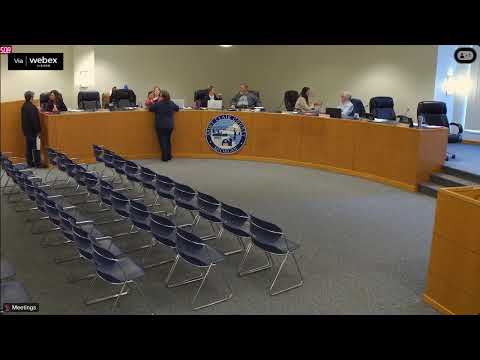
The St. Clair County Board of Commissioners on the workshop agenda reviewed a recommended set of six overarching goals and directed county staff to undertake several policy reviews and reports, including an evaluation of contract-renewal practices, an organizational review of the county health department and community mental health authority, and a study of airport operations and fee structure.
The St. Clair County Board of Commissioners on the workshop agenda reviewed a recommended set of six overarching goals and directed county staff to undertake several policy reviews and reports, including an evaluation of contract-renewal practices, an organizational review of the county health department and community mental health authority, and a study of airport operations and fee structure. The board also confirmed a special meeting next week to receive legal memorandums related to landfill operations and adjourned by voice vote.
County Administrator Carrie told commissioners the goals document grew from department-head submissions and will be used to categorize department projects under a small number of countywide priorities. "Once the board decides what your overarching goals are, we'll categorize each of the department goals to fall under a category," Carrie said, noting the final document will be placed on the county website and departments will be asked to update goals annually and provide measurable metrics.
The draft goals presented to the board are: ensure efficient and responsible government; use organizational resources to create a prosperous community and improve quality of life; develop an overall facility plan to meet department needs; enhance and maintain a highly skilled county workforce; evaluate and enhance government services; and a separate category for landfill operations. Carrie said many department-specific projects (for example, technology upgrades or document scanning) will be mapped into these broader categories and that the county's capital improvement plan will be used to prioritize large facility projects.
Commissioners stressed different priorities. Several asked that transparency and citizen engagement language explicitly cover nongovernmental entities receiving county funds. Commissioner (name recorded as "Bob" in the transcript) asked that the board add the phrase "and any non-governmental entity that we fund" to the transparency and citizen engagement goal so those organizations face the same accountability expectations.
Facility planning and maintenance drew repeated attention: administrators told the board many county buildings are aging and need security, ADA, plumbing and electrical upgrades. Carrie identified the courthouse (elevators and a sally port), the intervention center (HVAC), airport, emergency management, animal control and other buildings as having maintenance needs and recommended using the five-year capital improvement plan (CIP) to score and schedule large projects.
On workforce, commissioners and department heads urged a new comprehensive wage study. Carrie said the last full wage study and job analysis was done in 2016'17 and recommended repeating that exercise to support recruitment and retention; department suggestions also included job fairs, educational assistance, benefit communication and monthly new-employee orientations.
Contracts and procurement were a sustained topic. Commissioners and department heads discussed the county's current procurement rules and a renewal provision tied to CPI-U that now allows some contracts to be renewed repeatedly without rebidding. Carrie said initial contracts are bid but renewals within the CPI-U threshold can continue indefinitely under the current policy. Several commissioners requested staff evaluate the county's contract policy and consider placing limits on automatic renewals or setting a rebid threshold for larger-dollar renewals; one commissioner suggested rebidding contracts above $75,000 to $100,000, while county staff reminded the board that procurement and operational burden rises with more frequent rebids.
Sheriff Matthew King, speaking as a department head, told commissioners that certain large contracts (notably jail medical services) often have a small pool of vendors and that continuity of service can produce lower prices; he asked commissioners to consult department staff before imposing blanket rebid rules. "If we were to have to rebid all those very quickly, it'd be expensive very quickly," King said, describing potential service disruptions and staffing impacts at the jail.
Landfill operations and pending legal memorandums prompted a scheduling decision: the board agreed to hold a special meeting for a closed session to consider legal memoranda related to landfill enforcement and operations. "Yes, next Wednesday at 3 p.m. is the special board meeting with the only item on the agenda being the closed session," Carrie said; she and other participants said the closed session materials should inform future decisions about landfill operations and compliance with state regulators.
Health department structure and community mental health were discussed in detail. Commissioners asked county counsel and staff to provide options and legal implications about the county's relationship to the community mental health authority and to evaluate the reporting lines between the health director and the part-time medical director. Carrie summarized the county's legal and funding position: when Community Mental Health became an authority following a 1999 law change and a board resolution, the county agreed to continue funding at the 1999 level; Carrie told the board the county currently provides "just under a million dollars" annually and that returning CMH to a county department could change liability and funding exposure. Commissioners asked for a legal memo and follow-up report.
Airport operations also drew discussion. One commissioner asked the aeronautics advisory board to examine a user-pay model for the county airport and to report on whether modest takeoff/landing fees for general aviation could reduce county support for airport operations; Carrie said she would check the advisory board's meeting schedule and have the airport director or advisory board report back.
The board concluded the workshop by assigning staff follow-up on several items: an evaluation of contract-renewal policy, a corporate-counsel briefing and options regarding Community Mental Health and the health department's organizational structure, a review of airport operations and fees, and compilation of the department-submitted detailed goals into a public-facing document with metrics.
Votes at a glance
- Motion: Adjourn workshop. Mover: Chairperson Steve Samasco. Vote: unanimous voice vote in favor. Outcome: approved.
Next steps: staff will assemble the department-level details into a final goals document for publication, return with recommendations on the contract-renewal policy and procurement thresholds, provide legal options on Community Mental Health and health-department reporting lines, and report back on airport fee options; the board scheduled a special meeting next week for closed-session review of landfill legal memoranda.