Get Full Government Meeting Transcripts, Videos, & Alerts Forever!
Get email alerts on the Early Learning Childcare Dd Services topic
No spam. Unsubscribe anytime.
Health and Welfare details early-learning reorganization, ICCP funding proposal and SWITC investments
Summary
Analysts and agency leaders described the shift of developmental-disability services into a new early learning division, a governor recommendation to add $15 million one-time to the Idaho Child Care Program and continued investment in the Southwest Idaho Treatment Center and STAR certification work.
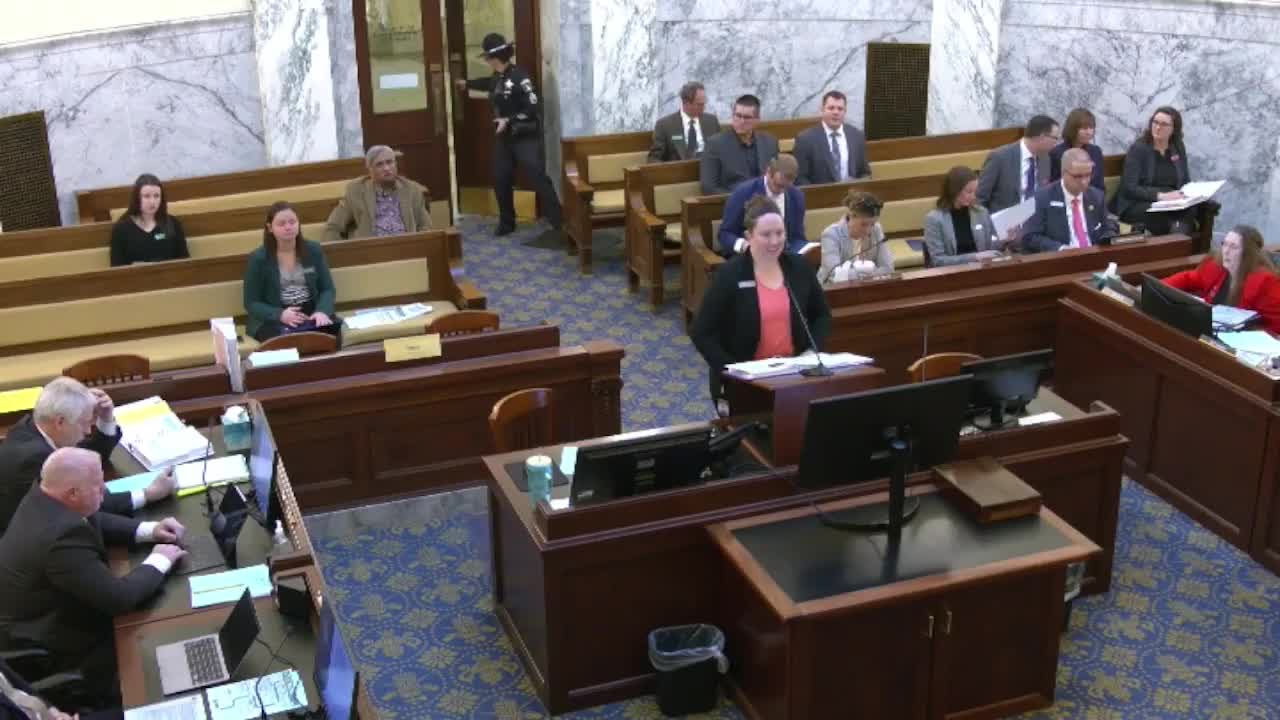
Legislative analysts and Department of Health and Welfare officials told the Joint Finance and Appropriations Committee on Feb. 20 that the department’s reorganization has moved several developmental-disability and early-learning programs under a new Early Learning and Development division, and the governor has recommended both one-time and ongoing funding for child-care programs.
Alex Williamson, budget and policy analyst with Legislative Services, explained that services formerly labeled Developmental Disability Services are being retitled Early Learning and Development and that some programs (including community developmental disability services and extended employment services) are now administered through Medicaid. Williamson noted the presentation reflects the budget book organization and that some slides retain old titles while staff work through the reorganization.
Among the governor’s proposals highlighted in the hearing was a $15 million one-time installment for the Idaho Child Care Program (ICCP) drawn from available Child Care and Development Block Grant funds that the department said are underutilized in prior years; the recommendation proposes $15 million per year for three years. The agency also requested $4.2 million ongoing for ICCP; Williamson presented the governor’s recommendation as part of the fiscal-year 2026 package.
Williamson said the division was authorized 306.71 FTE with 38.71 vacancies earlier in February and that the agency held about 18 additional positions in review to manage personnel spending.
Committee members asked about the STAR certification program and spending at the Southwest Idaho Treatment Center (SWITC). Williamson described the STAR certification request as a one-time, fourth-year item in a multiyear rollout; the requested amount for the third year was $249,200 (one-time) and the division is required to report on program progress later in the summer.
Senator Cook asked why a walk-in cooler was budgeted at SWITC; Lisonbee (Allison) Tate, division administrator, said purchasing a walk-in cooler allows bulk food purchases that reduce food costs across facilities and supports cross-divisional collaboration. "The cost of food when you buy it in bulk is much less," Tate said, and noted bulk purchases could help other state hospitals that lack large refrigeration capacity.
Director Alex Adams said SWITC had been under intense scrutiny previously and credited training and operational changes with improving outcomes: he said the facility has had three consecutive years without licensing findings and that the STAR clinical model has been applied to increase capacity and move long-term residents into less-restrictive placements.
Williamson and Adams also discussed the Idaho Child Care Program’s recent enrollment pause and budget alignment. Adams said the department spent roughly $52.7 million on child care in the prior year and that treating ICCP as an entitlement would have required about $68.2 million — an additional $15.4 million. He said the department paused enrollment temporarily to align spending with the legislature’s appropriation, then resumed enrollments in January after corrective actions.
Senator Wintrow and others questioned federal funding risks; Adams said the department monitors federal changes but did not express immediate concern about loss of entitlement funding, adding that non-entitlement programs have exit strategies that would avoid an abrupt switch to general-fund obligations.
Ending: The committee requested follow-up materials, including the STAR progress report due later this summer and more detail on ICCP enrollment and pause decisions. The department said it will provide the requested reports and cost breakdowns as lawmakers continue deliberations.