Get Full Government Meeting Transcripts, Videos, & Alerts Forever!
Get email alerts on the Broadband Infrastructure topic
No spam. Unsubscribe anytime.
House bill would set permitting "shot‑clock" to speed broadband builds, sponsors say
Summary
House Bill 180 would establish statutory review timeframes for local governments to process broadband, small‑cell and wireless permits. Supporters say time limits will prevent grant recipients from waiting months or years to start; local officials warned about workload and the risk of default approvals.
A bill that would impose statutory review deadlines on local governments for broadband and wireless permits drew support and questions from the House Local Government Committee as members weighed implementation details and local capacity.
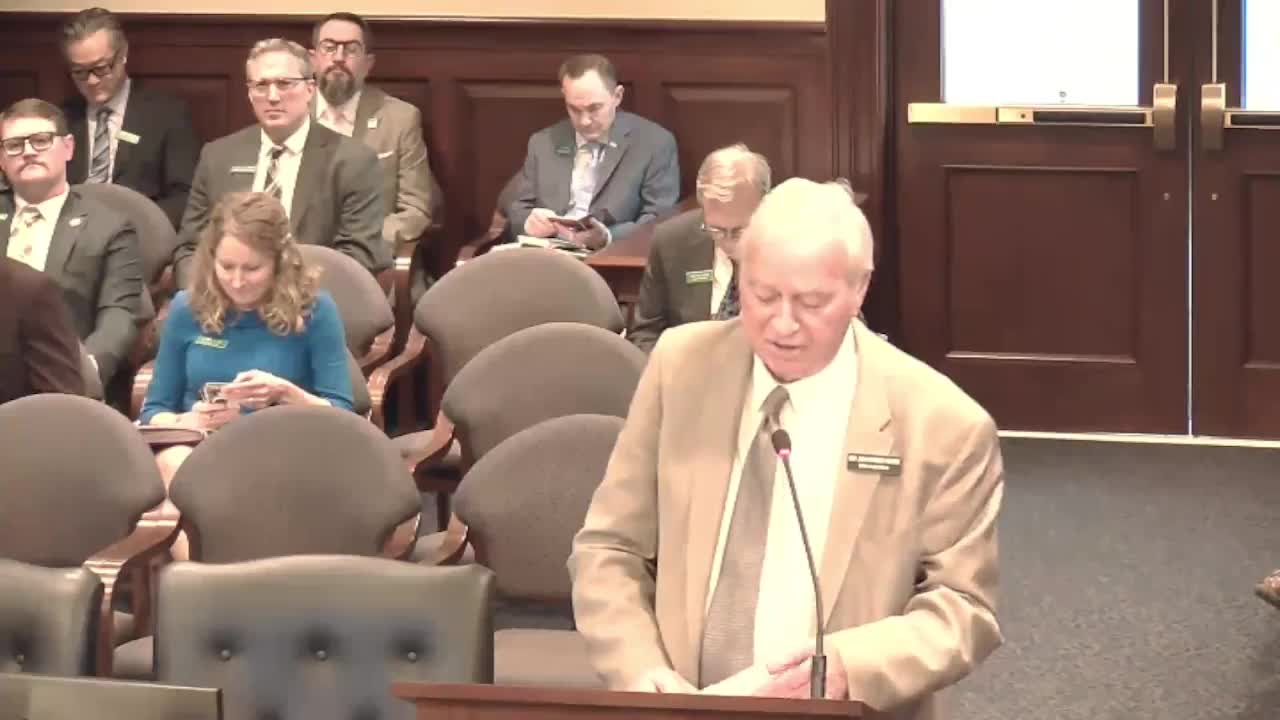
Representative Trey VanderWeiler, sponsor of House Bill 180, told the committee the measure creates a "shot clock" so grant recipients can begin projects without year‑long permitting delays. "A provider submits their application to the county. The county then has 10 business days to review the application and determine whether it's complete," VanderWeiler said, describing the bill’s front‑end completeness check and multi‑tiered review windows.
Under the bill’s framework, VanderWeiler told the panel, review deadlines mirror technology and equipment type and draw from Federal Communications Commission rules: broadband and small cells on existing equipment, 60 days; small cells on new equipment, 90 days; other wireless on existing equipment, 90 days; other wireless on new equipment, 150 days. If both parties agree, the timeline can be extended.
Supporters included broadband providers and trade groups. Danny Pate, chief operating officer for Fatbee and Fiber (Coeur d'Alene), said his company would invest tens of millions of dollars in Idaho but had faced permit delays. "When we built the West Ada School District, we endured delays of about 11 months, from some utilities with no answer," Pate said. He said delays forced a change from underground to aerial construction that added about $1 million to a local job and reduced the number of homes the company could have served.
Industry testimony also addressed pole‑attachment jurisdiction and the Idaho Public Utilities Commission. Ron Williams of the Idaho Cable Broadband Association urged the committee to extend pole‑attachment dispute jurisdiction to all broadband providers rather than only legacy cable companies.
Local government presenters urged flexibility. Ada County Development Services Director Richard Beck said the bill requires a jurisdiction to notify an applicant within 10 business days if an application is incomplete; Beck said that in busy seasons the county can take 10 or more business days just to enter applications and assign them for review. He also noted that municipal comment periods and public hearings can add 30 to 60 days.
Committee members debated practical questions: whether a provider can hold an unused approval indefinitely without starting work, whether counties could be coerced into extensions, and whether staffing shortages would disadvantage larger or smaller jurisdictions. VanderWeiler said that a provider that does not proceed risks losing grant funding and that the bill is intended to create certainty for providers and jurisdictions while allowing mutual agreements to extend timeframes.
The committee voted to send House Bill 180 to the floor with a "do pass" recommendation.
Ending: The committee advanced the measure but members asked for follow‑up on details such as the mechanics of notice, how extensions will be handled, and whether planning grants or staffing support should accompany shot‑clock implementation.