Get Full Government Meeting Transcripts, Videos, & Alerts Forever!
Get email alerts on the School Policy Pronouns topic
No spam. Unsubscribe anytime.
Senate passes bill restricting schools’ use of pronouns without parental notification; opponents say it targets transgender students
Summary
The Arizona Senate passed SB1002 on third reading after heated floor debate. Sponsors said the measure protects parental rights; opponents called it discriminatory toward transgender students. The final vote was 17–12 with one not voting.
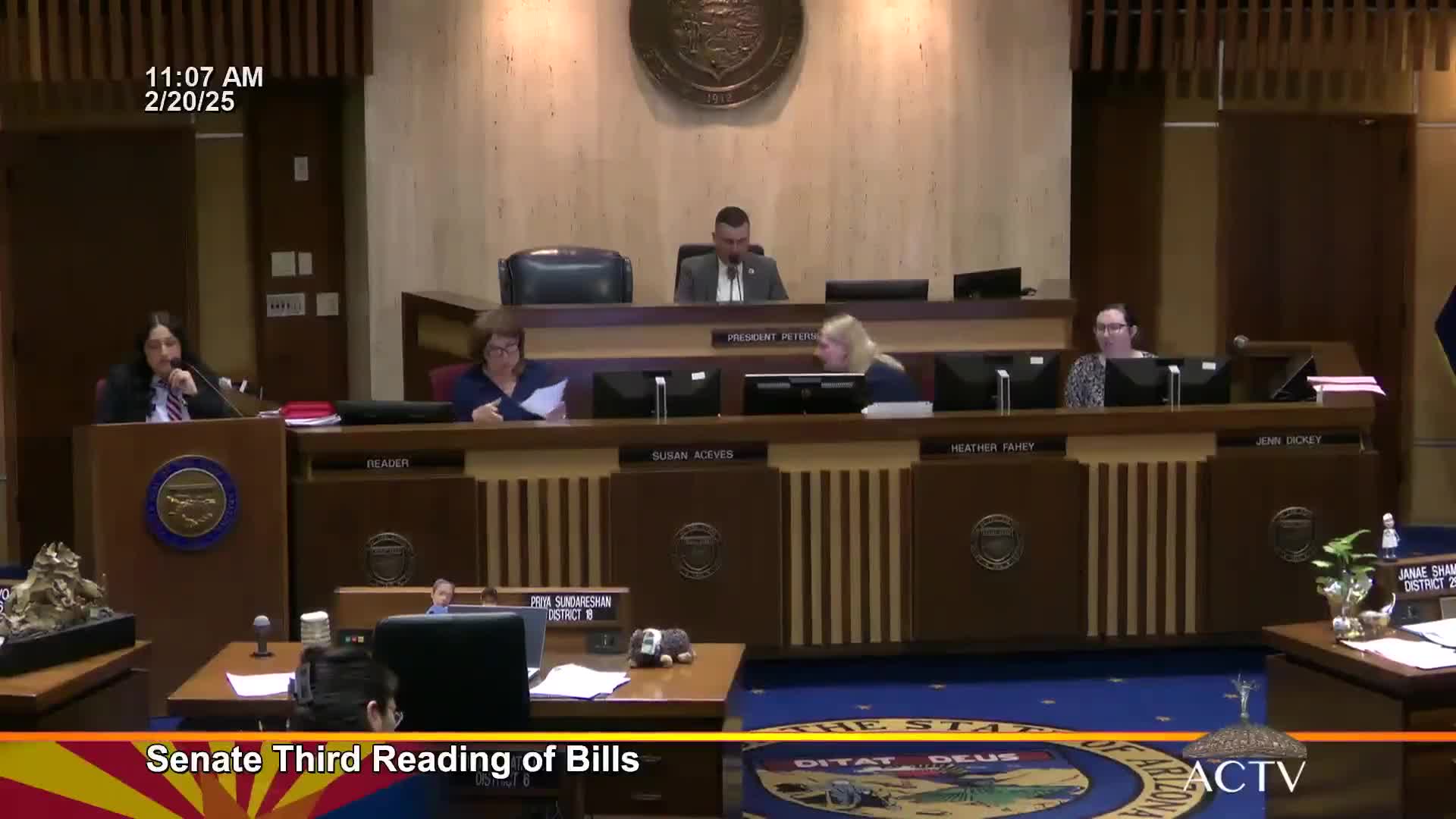
The Arizona Senate on third reading passed SB1002, a bill that would add a new section to state law addressing school practices around students’ names and pronouns, on a 17–12 vote with one senator not voting.
Supporters framed the bill as a parental-rights measure aimed at ensuring parents are informed about changes schools make with students’ names or pronouns. Opponents said the legislation singles out transgender students and risks harming vulnerable youth.
Senator Vince Ortiz (explaining his no vote) said he felt “anger and sadness” that the chamber was voting on a bill he said would “directly harm children who deserve to live the same joyful childhood that any child does.” Ortiz added, “Trans people have always existed throughout our history, and they always will. I believe this legislation tries to erase them.”
Senator Maria Diaz also explained her no vote, calling the measure “an attack on transgender students.”
Senator Mitzi Epstein said she opposed the bill because it is effectively “the pronoun police” and “is intended for trans people to be bullied.” Epstein described the measure as one that would compel teachers and school personnel into disputes that should be handled through family communication.
Senators who spoke in favor of the bill described it as protecting parents’ right to know about the medical or psychological treatment and identity-related matters of their children and as preventing school staff from taking actions without parental knowledge. A senator who spoke in support said the bill “is about parental rights” and “the health of children,” and then recorded a yes vote.
The bill was reported from committee and brought to third reading; the clerk announced the final tally as 17 ayes, 12 nays, 1 not voting. The measure was transmitted to the House.
The debate included references to potential legal implications; one senator said the bill could conflict with state civil-rights statutes (referred to during remarks as “Title 7 and Title 9” of what was spoken of as the state’s civil-rights framework). Those legal questions were raised during floor remarks but no court challenge or legal determination was recorded during the session.
Outcome: Passed on third reading, 17–12–1. The bill will be forwarded to the Arizona House of Representatives for consideration.