Get Full Government Meeting Transcripts, Videos, & Alerts Forever!
Get email alerts on the Fire Territory Mooresville Brown topic
No spam. Unsubscribe anytime.
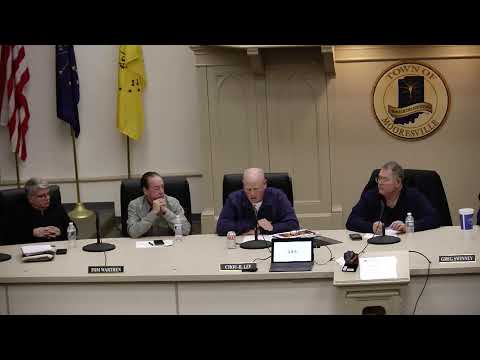
Mooresville and Brown Township hold second public hearing on proposed fire territory; no decision made
Summary
Officials from the Town of Mooresville and Brown Township presented an 8.7 million-dollar proposed fire territory budget and detailed likely property-tax impacts during a second of three required public hearings. Presenters did not seek a vote; an adoption meeting is scheduled for March 20.
Mooresville and Brown Township officials presented details of a proposed joint fire territory and its likely tax impacts at a public hearing, but took no formal vote.
Attorney Jeff Bellamy, representing the two units, opened the informational presentation by describing the required process under Indiana law: “In order to even consider a territory in Indiana, code provides that you have to have 4 public sessions. 3 of them are public hearings and 1 is a public meeting,” Bellamy said. He said the session was a repeat of material first presented at an earlier hearing and that no motion would be made that night.
Why it matters: The proposal would combine the town and township fire and EMS services under a single locally controlled territory board and ask property taxpayers to fund that board through a new levy. Presenters and residents said the change aims to address staffing shortfalls, rising equipment costs and unpredictable volunteer availability; opponents and some residents warned the tax increase shown in the proposal would be large for many households.
Chief Jeff Stout described current operational pressures and staffing losses and said consolidation would allow more consistent ambulance and engine staffing. “Why do we need a fire territory? Well, the cost of the increase, cost of the apparatus, cost of the fire gear,” Stout said, outlining higher prices for trucks, turnout gear and breathing apparatus since 2019 and saying both agencies had reduced staffing in recent years to preserve pay. He described a proposed field staffing model for the territory and said the plan would create chief and division chief positions and an ALS ambulance complement.
Paige Sansone of Baker Tilly Municipal Advisors presented the financial analysis. Sansone said the territory’s proposed 2026 operating budget is about $8.3 million, plus roughly $415,000 in capital, and a first-year funding requirement of about $9.9 million when a modest cash reserve is included. Sansone said expected non‑property revenues (vehicle excise and ambulance billing) could cover roughly $1.3 million and that the remaining need would come from property tax. She presented a baseline first‑year territory property‑tax rate of about 0.7286 (about 73 cents per $100 of assessed value), and said the rate would likely fall to roughly 64 cents in the second year as start‑up revenue needs decline.
Sansone also presented local budget figures and shortfalls she said the two units currently face: Brown Township’s fire budget for 2025 showed roughly $2.4 million in disbursements and about $1.9 million in receipts (a gap she described as roughly $510,000); Mooresville’s comparable gap she estimated at roughly $365,000. She told residents the combined current fire budgets total about $4.7 million while the territory proposal would be about $8.7 million.
Paige Sansone: “A fire territory is a type of fire service consolidation that’s allowed by law,” she said, and summarized the tax examples in the handouts showing likely bill increases. For example, she said a $100,000 home in Brown Township would see a total tax bill that includes a projected increase from roughly $370 to about $482, with the fire share rising from about $51 to $163; a $100,000 home in Mooresville could see a roughly $422 bill rise to about $558 with the fire share rising from about $207 to $362 (examples supplied in presenter handouts).
Public comment and concerns: About three dozen residents spoke during an extended public comment period. Common themes included concern about the size of the proposed tax increase, requests for more detailed cost‑containment analysis and questions about alternatives including county EMS, district options, phased or smaller budget increases, use of reserves and potential impacts on other taxing units (schools, library, parks).
Residents pressed for clearer detail on equipment costs, staffing timelines and the distinction between short‑term start‑up costs and long‑term operating levels. Dave Snyder, a resident who spoke, thanked officials for the presentation and said the information was educational. Several residents described being on fixed incomes and warned a 30% property‑tax increase would be difficult to absorb. Another resident, Dylan Hollis, a local firefighter/paramedic, said the town already misses critical runs when staffing is thin: “If we continue to kick this problem down the road, it is only going to get bigger,” Hollis said, urging action to stabilize staffing.
Officials’ response and limits of tonight’s session: Town and township officials repeatedly emphasized that the hearings are informational and that no final vote would be taken at the meeting. Jeff Bellamy and other presenters explained statutory timing: the third required public hearing is scheduled for March 6 at 6 p.m. at the same location and the required fourth public meeting — when the two bodies may formally vote to begin the territory process — is scheduled for March 20.
What was not decided: No board votes or ordinance adoptions occurred. Presenters and officials said adoption would be considered only at the final public meeting; if either governing body declines to adopt the territory at that meeting, the status quo would continue.
What comes next: Officials said they will hold the third public hearing on March 6 and the adoption meeting on March 20. They invited further written questions via email and said staff would provide additional detail on any items raised at the hearings. Officials also encouraged residents to review the handouts distributed at the hearing or to consult county property‑tax lookup tools to estimate individual impacts.
Ending note: The presentations and public comment made clear the proposal is aimed at addressing staffing, equipment and sustainability concerns for fire and EMS operations; it also exposed deep public concern over the cost and pace of the change. The governing bodies will hear the same informational presentation a final time on March 6 and will consider a formal motion on March 20.