Get Full Government Meeting Transcripts, Videos, & Alerts Forever!
Get email alerts on the School Structure topic
No spam. Unsubscribe anytime.
School Committee accepts middle-school restructuring recommendation to move to 5–6 and 7–8 model; phased rollout targeted for 2026–27
Summary
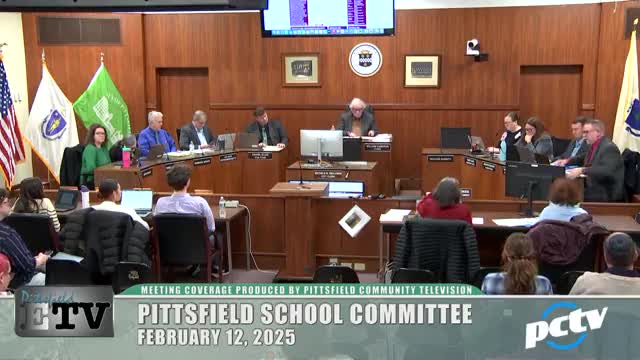
The Pittsfield School Committee on Feb. 12 accepted a recommendation from the Middle School Restructuring Committee to reorganize grade spans into a 5–6 early middle model and a 7–8 upper middle model, with a phased roll‑out the committee recommended target for full implementation in the 2026–27 school year.
The Pittsfield School Committee on Feb. 12 accepted a recommendation from the Middle School Restructuring Committee to reorganize grade spans into a 5–6 early middle model and a 7–8 upper middle model, with a phased roll‑out the committee recommended target for full implementation in the 2026–27 school year.
The committee’s report, compiled after more than 20 hours of volunteer meetings, surveys and focus groups, recommended grouping grades 5 and 6 to provide an “elementary‑like cohort” focused on social, emotional and academic transition supports and grouping grades 7 and 8 to introduce early college and career readiness courses and credit‑bearing options. The report recommended instructional strategies including co‑teaching models, project‑based learning, non‑traditional schedules with longer blocks for deeper instruction, personalized instructional blocks for remediation or enrichment, and increased honors and accelerated offerings.
Committee members and presenters emphasized the recommendation is intended as a systemwide strategy, not a single operational step. Presenter Sarah Muehl, a parent and committee member, described the plan’s goal as “inclusive, equitable, and sustainable changes for the betterment of all students, faculty, and staff,” and said the group proposed a slow, careful implementation. The presentation included survey results gathered from four groups (parents/caregivers, students, staff and community members). Highlights presented by the survey team included:
- Parent/caregiver responses (majority elementary respondents): about 51.6% opposed to the restructure as phrased in the survey, 30.3% in favor and 11.8% neutral; top perceived opportunities were improving academic outcomes and providing more tailored supports; main concerns were disruption and increased transitions. - Student responses (grades 4–9 surveyed): 55.1% of respondents preferred no change when asked how they would reorganize; students prioritized keeping friends and social continuity and showed strong interest in electives such as physical education, art and technology. - Staff responses: 45.5% in favor of restructuring, 38.4% neutral, with top priorities identified as resources and supports for students and concerns about behavior and teacher retention. - Community members (smaller sample): majority interested in staying informed; teacher retention and student behavior ranked as top challenges.
The restructuring committee’s written recommendations also addressed retention and academic support policy, proposing a review of retention practices to “move away from social promotion” and include time‑limited grade repair and other mastery‑focused interventions; staffing and licensure alignment for the new grade spans; targeted professional development; a communication plan for families; and modifications to transportation policy with attention to bus fleet and operator capacity.
Public comment and committee discussion echoed priorities and concerns. Multiple parents and community members said they had chosen other schools for middle grades in the past, and some described academic or behavioral issues that prompted them to leave. Justin Scaduto, a committee member who said he initially opposed restructuring, described changing his view after the committee’s work: “I didn't give it a fair chance... once I did I realized that if we do this and we do it right... this is gonna be really great for our kids.” Parents and students who spoke at the meeting asked about elective continuity (for example music), transportation, and whether the district would wait a year before implementation; presenters and the superintendent said the plan called for phased adjustments and that many implementation details (licensure, Canvas usage for grading in grade 5, scheduling, and transportation) would require further work.
Committee action: A motion to accept the presentation and endorse the committee’s recommended plan was made and seconded; the School Committee voted in favor and the motion carried. The administration and committee members said next steps include further subcommittee work, targeted focus groups, intentional communication with families, and additional time for principals and staff to prepare if implementation moves forward.
Why it matters: The proposal would change the district’s middle‑grade configuration for large numbers of students, require negotiated or administrative changes to schedules and staffing, and aims to address persistent concerns the district cited about academic outcomes, student behavior and choice‑out rates.
Ending: The committee accepted the report and will receive further implementation planning and community engagement documents; the administration said it will return with more specific timelines and subcommittee recommendations before any final policy or structural votes.