Get Full Government Meeting Transcripts, Videos, & Alerts Forever!
Get email alerts on the District Budget topic
No spam. Unsubscribe anytime.
School Committee narrows FY26 balancing plan; favors modest fee increases, aims to reduce FTE cuts
Summary
Faced with a preliminary FY26 deficit of about $1.8 million, the Andover School Committee narrowed budget options and signaled support for a package that combines limited fee increases and non‑salary reductions to reduce but not eliminate required staff reductions. Committee members favored a middle option (labeled "Option 3a" in discussion) that
Business‑office officials and the superintendent presented the district’s preliminary FY26 budget, $104 million in operating requests and a projected gap driven largely by contractual salary increases and transportation and special‑education costs.
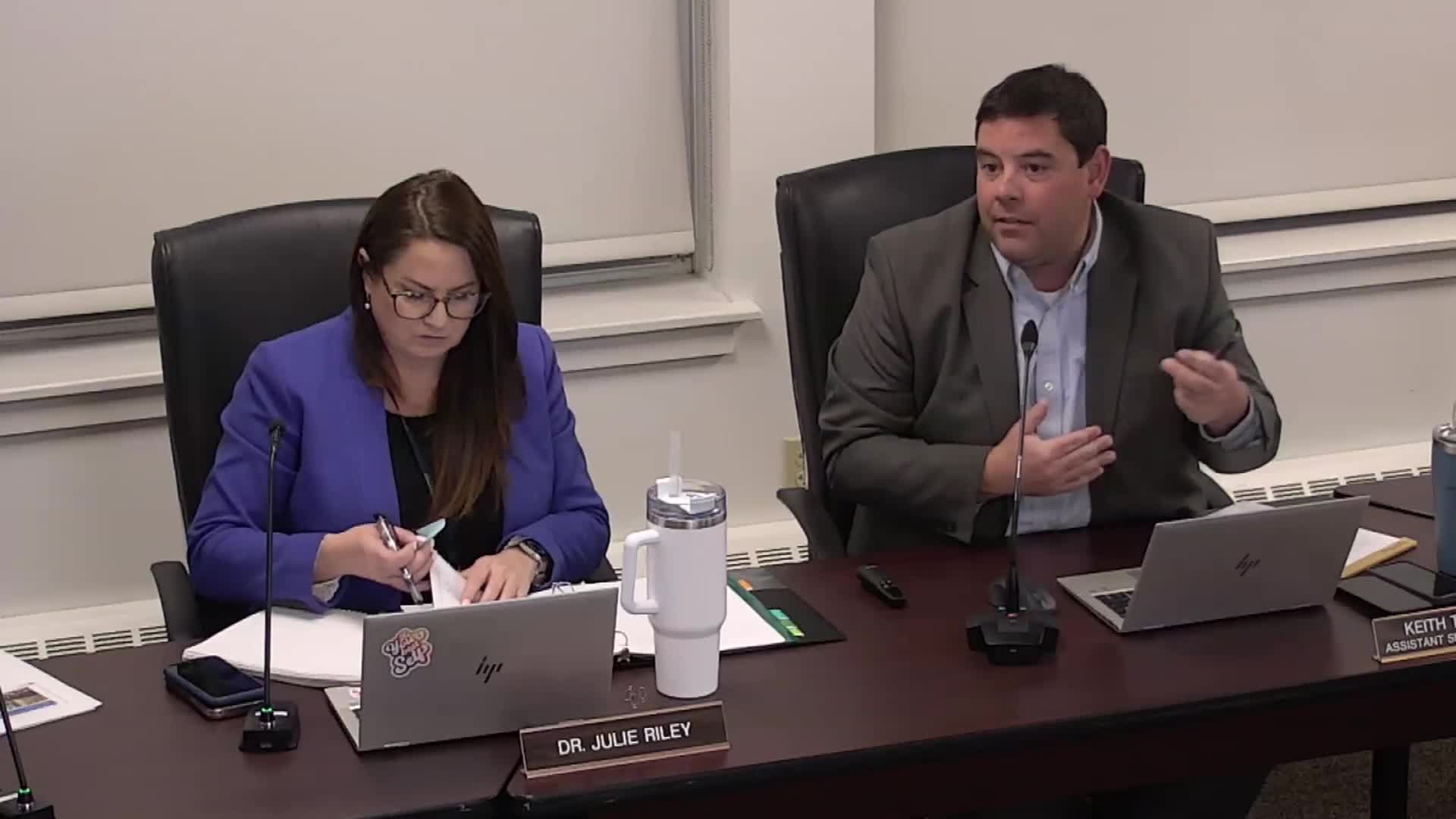
Keith Taverna of the business office summarized major drivers: negotiated salary increases for multiple bargaining units, a 15.2% increase in special‑education tuition and transportation in some lines, and higher utility and facility rental costs tied to the new West elementary building. Taverna said the district’s current budget assumptions include a town allocation increase of 3.75% from the town manager; the administration asked the School Committee to formally accept that assumption at the next meeting as the basis for building the FY26 budget.
The administration presented five balancing options that mix non‑salary reductions, fee increases and varying reliance on staff attrition to hit the $1.8 million shortfall. Key elements in the committee discussion:
- Fees and revenue levers examined included transportation user fees (previously reduced), athletics fees, fine‑arts fees, preschool tuition and reinstating some activity or material costs previously funded by booster groups. - Non‑salary reductions were presented at 1%–5% levels (paper supplies, contracted services and student activity subsidies). The administration noted those non‑salary figures had already been reduced in recent years (for example, ESSER grant money had supported some contracts in prior years and has ended). - Personnel reductions were presented as full‑time equivalent (FTE) totals needed to close remaining gaps if the committee chose less reliance on fee increases. Administration estimates varied by option; the “pure salary” option would require roughly 24 FTEs in reductions, while blended options reduced the number to the high teens.
After extended committee discussion — with members expressing concern for equity and the burden on families — the committee gravitated toward a middle package the administration labeled in discussion as “Option 3a.” That package (as the committee assembled it at the meeting) keeps non‑salary lines at current levels, applies modest 2.5% increases to athletics and fine arts fees (reinstating a regular cadence to fees last changed years ago), and uses other offsets so the FTE reduction the administration would need to execute is smaller than under the no‑fee scenario. The committee members present said they did not support the administration’s more aggressive Option 5, which would reinstate many fees and rely heavily on booster groups.
Committee members asked the administration to: (1) commit to developing a regular cadence for modest fee adjustments in future budget cycles rather than long gaps between increases; (2) model detailed FTE and program impacts early in March so members can see how attrition and retirements change the staffing picture; and (3) prepare clear, digestible public materials (short one‑pagers and short videos) that explain the drivers of the deficit and the trade‑offs under consideration.
Taverna and other leaders said the district will continue to use the circuit‑breaker reserve and carry‑forward positive operational results to reduce this year’s gap; they also noted the district intentionally did not use one‑time town free‑cash reserves to permanently restore FTEs, a decision committee members said they supported.
The committee concluded the meeting with a set of directions to staff to refine “Option 3a” (as described) and return with updated numbers at upcoming workshops and financial presentations. The transcript recorded no formal vote on a final FY26 budget at this meeting; the only recorded formal vote was the adjournment vote at the end of the session (passed 5–0).