Get Full Government Meeting Transcripts, Videos, & Alerts Forever!
Get email alerts on the Special Education And Multilingual Learners topic
No spam. Unsubscribe anytime.
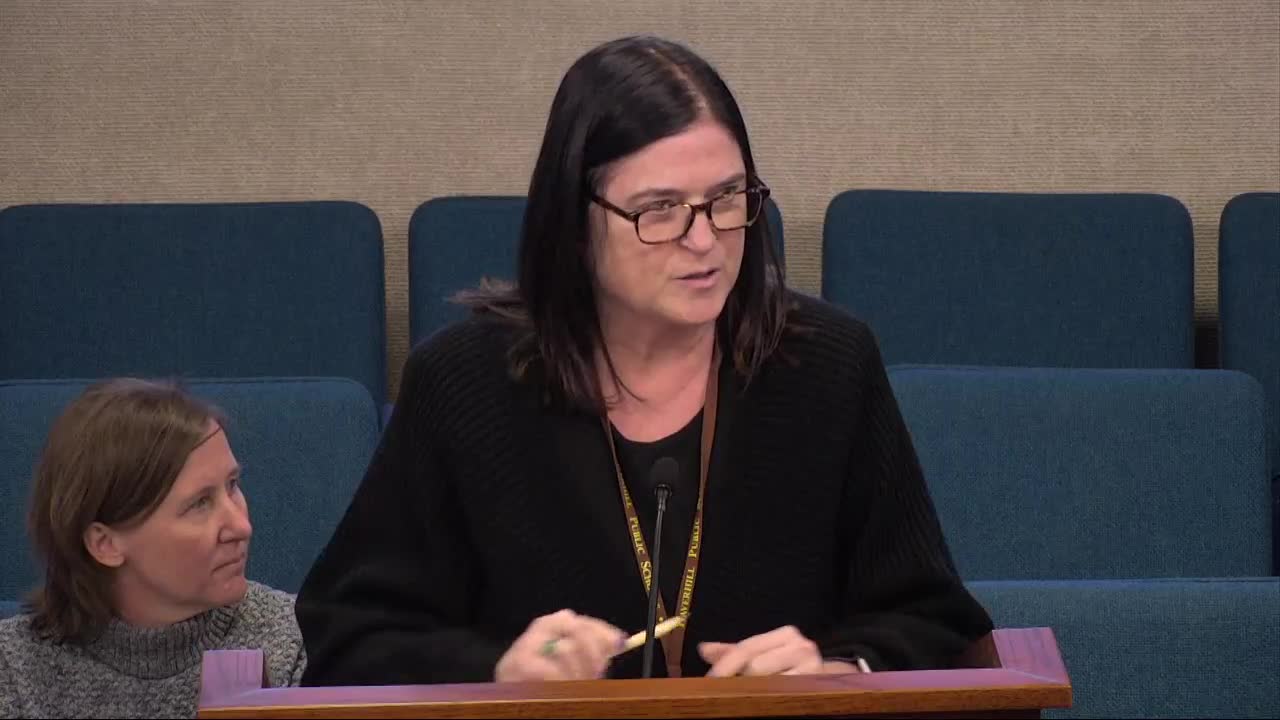
Haverhill presents gains for students with disabilities and outlines multilingual learner supports
Summary
School leaders told the School Committee that graduation rates for students with disabilities and for English learners have risen in recent years and outlined districtwide initiatives—MTSS ambassadors, data walls, new IEP training, and targeted interventions—to address persistent achievement gaps.
At a School Committee meeting, Haverhill Public Schools officials reported rising graduation rates for students with disabilities and described districtwide programs aimed at improving outcomes for students with disabilities and multilingual learners.
Deba Ibanez, executive director of student support services for Haverhill Public Schools, said the four‑year graduation rate for students with disabilities rose from 52.9% in 2020 to 66.3% in 2023, an increase she described as “growth and improvement.” The district also reported an increase in graduation for English learners, from 66.7% in 2019 to 84.6% in 2023, figures officials attributed to expanded programming and changes to assessment practice.
Officials said the district pursued a strategy of moving some students from alternate assessments to regular MCAS to align them with grade‑level expectations. “We took dozens and dozens of kids off of alts and put them onto the regular MCAS,” Ibanez said. School leaders said early setbacks on those tests were followed by years of instruction and supports that contributed to higher graduation rates.
Superintendent Margaret Murata and other presenters detailed a set of initiatives intended to close remaining gaps. They include: - A weekly access‑for‑all leadership team to coordinate supports across departments and avoid duplication of services. - MTSS (Multi‑Tiered System of Supports) ambassadors in each building who identify problems of practice, share resources and run professional learning; presenters said 62 educators have participated so far in a district behavior‑management workshop. - A districtwide intervention tracker to monitor student interventions, screeners (including i‑Ready and dyslexia screeners), and progress monitoring so teams can form targeted Tier 2 and Tier 3 groups. - Early literacy screening (i‑Ready) administered three times a year for grades K–3 with one‑on‑one follow‑up assessments when students are flagged. - Work with the Dyslexia Institute and DESE guidance to standardize practices and professional development for teachers and instructional support staff.
Nicoletta Filimon, an English language development teacher, described a new district work group focused on English learners with disabilities and students with limited or interrupted formal education (SLIFE). She said the group is producing a district quick reference guide and a set of professional‑development slide decks to give teachers short, actionable guidance and links to deeper resources.
School representatives gave school‑level examples of implementation. Denora Peralta, Bradford Elementary principal, described a classroom “data wall” that maps i‑Ready and MCAS scores, color‑codes student supports and drives small‑group instruction. Nicole Kelly, eighth‑grade special education teacher at Hunking School, described “WIN” (What I Need) blocks—30‑minute flexible instructional cycles used two to five days a week to group students by specific needs and rotate supports.
Officials also described ongoing work in special education: rollout of Massachusetts’ new IEP training modules, district training (15–20 sessions to date) on accommodations and de‑escalation, a $40,000 grant to train trainers for the new IEP, and plans for DESE’s integrated monitoring visit scheduled for May.
Committee members pressed for additional detail: Attorney Rosa and others asked for breakdowns showing how many students with disabilities also qualify as English learners or low‑income, and for attendance correlations with achievement. Murata and staff said they will pull disaggregated data and return with more analysis.
The presentation closed with officials stressing continued progress and the need for additional staffing and analytic capacity. “We could use statistical resources to help us sort those things out and make better decisions,” said a committee member summarizing a budgeting priority that the committee later approved.