
Galena Park ISD mental-health staff outline teen dating violence risks, prevention resources
Get AI-powered insights, summaries, and transcripts
Sign Up Free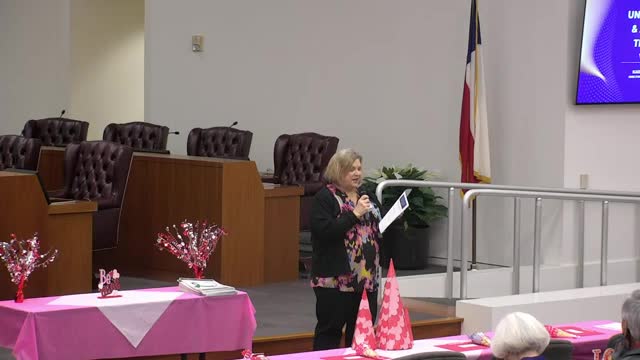
Summary
Dr. Karen Haines of Galena Park ISD presented definitions, warning signs and prevention strategies for teen dating violence; district partners described in-school services and cleared background checks for agency staff.
Dr. Karen Haines, director for mental health and social services for Galena Park ISD, told a school wellness meeting that teen dating violence affects millions of U.S. teenagers and described warning signs, the cycle of abuse and available resources for students and families.
Haines opened by distinguishing teen dating violence from adult domestic violence and said the behavior can be physical, verbal, emotional, financial or technological. "Help is available," she said, and urged staff and family members to create safe, nonjudgmental spaces where young people can disclose abuse.
Haines cited prevalence figures repeatedly during the presentation, saying, "1 in 12 U.S. high school students experience physical or sexual violence in a dating relationship," and adding that "1 in 5 girls and 1 in 10 boys experience physical or sexual violence in their intimate relationships." She told attendees that many young people do not ask for help: "Only 33 percent asked for help," she said, and that the pattern of repeated leaving and returning to an abuser is common: "a person leaves 7 times and return[s] to the situation where they're being abused before they finally leave for good."
Haines outlined common forms of teen dating violence discussed in the presentation: intentional bodily injury (examples listed included slapping, punching, kicking and physical restraints), psychological abuse (withdrawal, ignoring, shunning), sexual or nonconsensual contact and harassment or stalking (unwelcome in-person or online contact, repeated calls or unwanted gifts). She described the cycle of abuse as tension-building, violent explosions and a "honeymoon" or calm period when the abuser makes promises to change.
On prevention, Haines recommended teaching safe and healthy relationship skills, engaging influential adults and peers, strengthening economic supports for families, improving school climate and providing treatment for at-risk youth. "Preventing teen dating violence, it can be prevented," she said. She also emphasized that men and boys can be survivors and that transgender youth report high rates of multiple forms of dating abuse.
A representative from Community Family Centers (CFC) told the meeting that CFC staff provide mental-health and substance-prevention services at district campuses and that recent fingerprinting and background checks required by the district had been completed and cleared for their staff. The representative said the agency will deliver services at Galena Park High School and Galena Park Middle School and at North Shore, Cloverleaf and McArthur elementary schools; the representative added that the program carries no direct cost to the district and that grant funds are available.
Haines said the district distributes handouts and a local resource guide that lists hotlines and services, and she specifically named the National Domestic Violence Hotline and the Centers for Disease Control as information sources used in her talk. She told attendees that help options include phone, text and live chat services intended to be free and available in multiple languages.
The meeting also included routine business: a motion to accept minutes as written was made by Mister Simmons; the transcript records the motion and a request for a second but does not record a second or a vote outcome. Organizers announced the next meeting will be in April and will include a baby-shower-style collection for teen parents; Harris County Public Health and a registered dietitian are scheduled to present.
Attendees were encouraged to pick up the meeting packet, which includes a questionnaire, takeaways and contact cards for follow-up. Haines closed by urging adults to listen more than to judge when young people disclose concerns and to help them find free or low-cost services when needed.