Get Full Government Meeting Transcripts, Videos, & Alerts Forever!
Get email alerts on the Local Government Elections topic
No spam. Unsubscribe anytime.
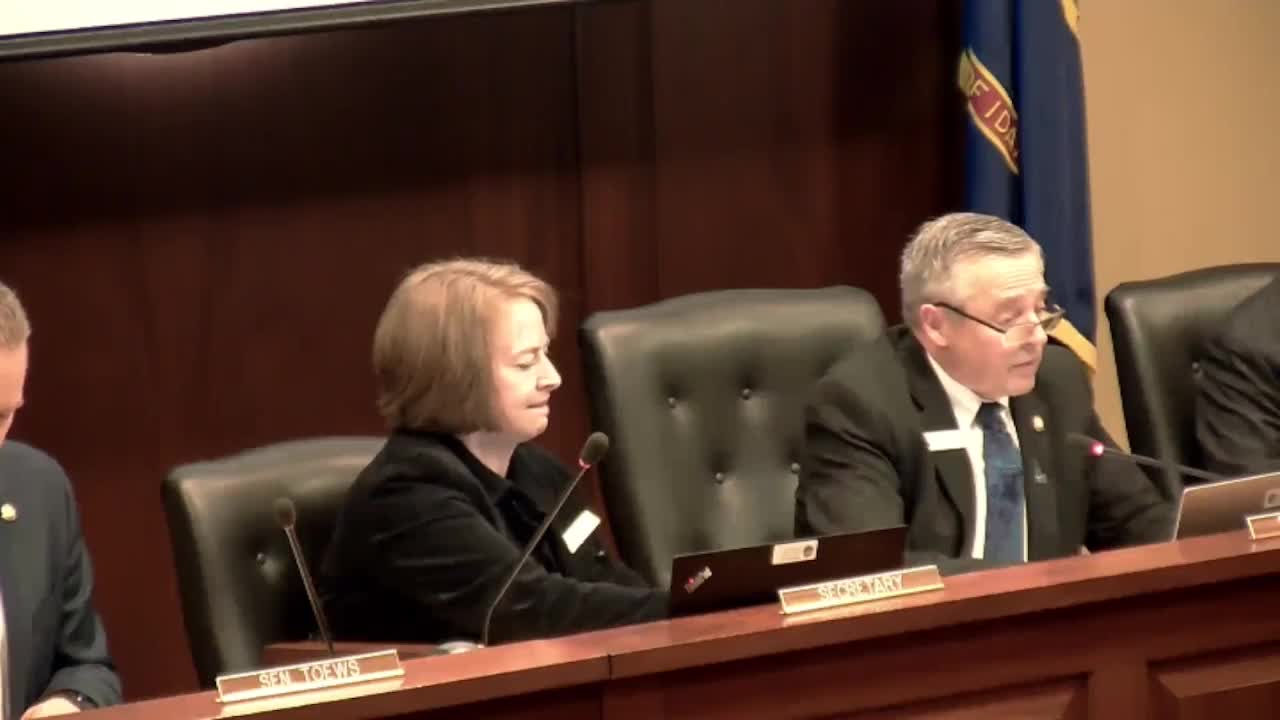
Senate committee debates lowering city council district threshold to 25,000; bill held in committee
Summary
Lawmakers and dozens of city officials, mayors and advocacy groups sharply divided over Senate Bill 10 75, which would require cities with 25,000 or more residents to elect council members by districts instead of at-large; committee voted to hold the bill after split testimony and a 5-4 vote.
Senator Josh Cole, sponsor and a senator from District 25, told the Senate State Affairs Committee that Senate Bill 10 75 would lower the population threshold for mandatory geographic city council districts from 100,000 to 25,000 and asked the committee to send the bill to the fourteenth order for amendment to set an effective date of Dec. 1, 2026, so the first affected election would be the 2027 general election.
Cole said districting “ensures that each area of the municipality has representation that can better express its own perspective and needs,” and argued the change would increase local representation and make it easier for residents in underrepresented areas to elect councilors.
Opponents — a list that included mayors, city council members and municipal associations from across Idaho — argued the change would fracture cities, reduce candidate pools for some seats, and impose implementation costs. Mayor Art Bette of Moscow and several other local officials said a district system could let a very small number of voters decide an outcome in places with low turnout or concentrated populations, particularly in college towns. “This would lead to as few as 50 or 60 people electing a city councilor,” Bette said, describing how a dense student precinct could produce very small electorates for a district.
Jason Brown, vice mayor of Twin Falls, told the committee that a 7-district breakdown in Twin Falls would leave districts with fewer than 8,000 residents and, based on November 2023 turnout, would mean roughly 450 votes per district. Jonathan Wheatley, deputy director of the Association of Idaho Cities, opposed the bill and said the earlier change to require districts at 100,000 has not yet completed two full election cycles; he warned that smaller districts could produce more uncontested races and reduce voter choice.
Supporters included local party officials and some committee senators who said districting can increase participation and ensure residents in different neighborhoods receive attention for local needs. Stad Butterworth, chair of the Ada County Republican Party, said districting “puts people closer to their representatives” and can increase engagement. Conservation Voters’ Ryan McGoldrick warned the committee not to accept a fiscal note of “no or minimal cost,” saying mapping and public-engagement processes typically cost tens of thousands of dollars for the cities that must implement them.
Committee debate acknowledged those trade-offs. Several senators suggested alternate numeric thresholds (one senator suggested 50,000) and supported extending the effective date to allow cities time to implement changes if the bill advances. Two procedural motions determined the bill’s immediate fate: a substitute motion to send the bill to the fourteenth order for possible amendment failed on a recorded roll call vote of 4-5; a subsequent main motion to hold the bill in committee carried 5-4.
Votes at a glance
- Motion to send Senate Bill 10 75 to the fourteenth order for possible amendments (substitute motion): failed, roll call 4 yes, 5 no (Yes: Senators Shippy, Adams, Den Hartog, Toews; No: Senators Recti, Harris, Anthon, Vice Chairman Burt, Chairman Guthrie). (Transcript roll call.)
- Motion to hold Senate Bill 10 75 in committee: carried, roll call 5 yes, 4 no (Yes: Senators Recti, Harris, Anthon, Vice Chairman Burt, Chairman Guthrie; No: Senator Shippy, and others as recorded). (Transcript roll call.)
- Other formal committee actions taken during the same meeting: appointment recommendation for Reed Hansen to the Treasurer’s Investment Advisory Board sent to the Senate floor with recommendation to confirm; minutes from 02/10/2025 approved; several request‑series (RS) measures ordered to print; House Bill 172 sent to the floor with a due-pass recommendation. Details on these votes are in the committee record.
Why it matters
The bill would change how municipal representation is structured in dozens of Idaho cities. Backers say districting gives neighborhoods a clearer, guaranteed voice and makes it easier for grassroots candidates to run. Opponents say it can fragment community-wide policymaking, produce very small or uncontested electorates in low-turnout precincts (notably in college towns), and carry implementation costs and administrative burdens for smaller cities.
What happened next
After testimony from mayors, city council members, municipal associations and advocates, the committee voted to hold the bill. Senator Cole said he appreciated the feedback and highlighted his aim to increase local representation while allowing time for implementation if the bill moves forward.
A recording of the committee’s roll-call votes and the full testimony is part of the Senate State Affairs minutes; the sponsor and multiple local officials asked the committee to consider a later effective date and possible threshold adjustments as amendments moving forward.