Get Full Government Meeting Transcripts, Videos, & Alerts Forever!
Get email alerts on the Student Safety Support topic
No spam. Unsubscribe anytime.
Framingham schools tighten conduct code, expand supports and bus-suspension protocols
Summary
Superintendent Dr. Tremblay briefed the School Committee on a multipronged student safety and support plan that includes code-of-conduct revisions, clearer bus suspension rules, a district threat-assessment process and expanded social-emotional evaluations and supports.
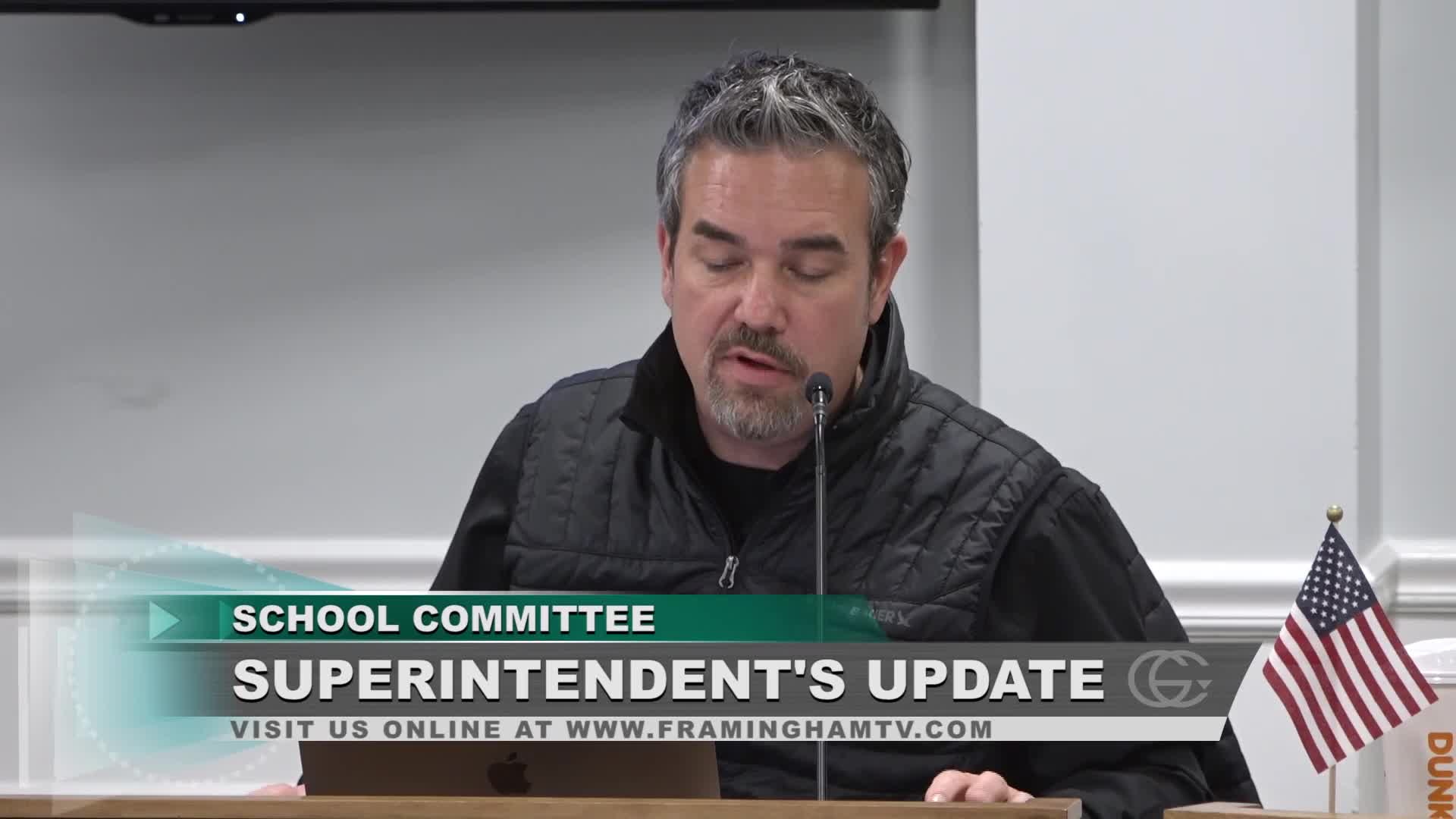
Superintendent Dr. Tremblay on Wednesday described a package of changes intended to tighten discipline practices and expand supports across Framingham Public Schools.
The administration presented a revised Code of Character, Conduct and Support that the superintendent said reduces repetitive behavior categories, adds examples to increase consistency across schools, clarifies Title IX alignment, sets district expectations for skipping class and adds districtwide cell-phone expectations. The revisions also add clearer definitions and response protocols for bullying and harassment, short- and long-term bus suspension rules, and procedures to follow after high-level incidents.
The administration framed the changes as a balance of restoration and accountability, saying the district will remove bus-riding privileges for students whose behavior makes rides unsafe. “We have a number of students that are waiting to ride the school buses. So we're not gonna have students on buses that are having unsafe behaviors,” Dr. Tremblay said. He credited bus drivers, health and wellness staff and principals for contributing to driver training, multilingual cue cards for bus drivers and improved communications with families.
Nut graf: The update packages policy changes with new operational supports intended to reduce unsafe behavior while increasing consistency and transparency. Several committee members pressed for clarity about implementation and accommodations for students with individualized education programs (IEPs).
Committee members asked for the timeline and evaluation of several pilot or expanded programs. Dr. Tremblay highlighted newly implemented procedures and supports: a formal threat-assessment team, peer mediation at the high school, and rolling program evaluations of specialized programs (Phoenix, RISE, TLC) with expected reports and recommendations in March–April. He said behavioral-health clinical coordinator Stephanie Glenn and departmental leads will provide more targeted oversight of IEP goals and program implementation.
The committee also discussed how competency determinations for graduation will treat students on IEPs or 504 plans. Principal Mark Albright said equivalency reviews will be handled case-by-case with department chairs and administration to confirm that alternate courses meet standards used for local competency determinations.
Student advisory representative Jordan Cohen and board members described local changes — including high-school e-hall pass use and new cell-phone norms — as already producing positive survey feedback from students. Several members urged the district to consider whether districtwide board policy is needed for cell phones, noting pending state legislation under discussion; Dr. Tremblay said the administration will gather input from students, staff and families before recommending policy changes.
In closing, Dr. Tremblay pointed the public to a student-safety-and-support summary posted on the district website and the superintendent’s transparency center, which now includes suspension and bus-suspension data.
Ending: The committee signaled it will continue policy-level work in coming subcommittee meetings and told staff to return with specific policy language, implementation timelines and evaluation dates.