
Vermont CTE directors outline models, capacity limits and concerns about proposed single‑district plan
Get AI-powered insights, summaries, and transcripts
Sign Up Free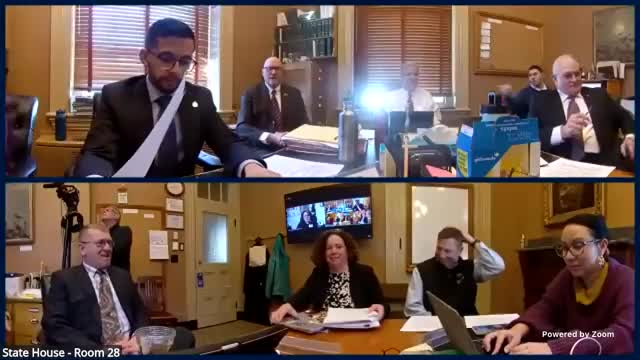
Summary
Directors for Vermont career and technical education centers told the Senate Education Committee on Feb. 19 that CTE enrollment is up but programs face space, staffing and funding barriers; they expressed conditional support for a single governance model if it improves access and preserves local program strengths.
Directors from Vermont career and technical education centers told the Senate Education Committee on Feb. 19 that centers across the state are seeing rising student demand but face constraints in space, staffing and funding, and they urged lawmakers to preserve student access as any governance changes are considered.
Why it matters: CTE programs train students for trades and health careers that are in state workforce demand. Directors said they would consider a move to a single CTE district or an education‑service‑agency/BOCES model only if it improves access, preserves program quality and resolves funding and bargaining issues that currently limit seats and teacher recruitment.
The directors — Melissa Connor, director of Stafford Technical Center in Rutland; Jody Emerson, superintendent and director of Central Vermont Career Center; Scott Barr, superintendent and director of River Valley Technical Center in Springfield; and Pat Gookin, CTE director at St. Johnsbury Academy — described multiple governance arrangements now operating in Vermont, including independent CTE districts, centers hosted by school districts, and CTE programs embedded inside comprehensive high schools.
"Career and technical education is a flexible pathway," Melissa Connor said, describing CTE as "an opt in system where students apply for admission to go to career and tech ed programs and centers." She and other directors stressed there is no single way students access CTE in Vermont: half‑day (about two hours), four‑hour morning sessions, and full‑day academic models all exist.
Directors reported substantial unmet demand. Connor told the committee Stafford had about 380 qualified applicants and capacity for approximately 262 seats this year; she said some programs accept only a fraction of applicants because of space and staffing limits. Connor added that in specific programs she expects to turn away dozens of interested students: "For next year... I have 50 applicants for our first year health careers program... I can only accept 12." She also said apprenticeship and credential requirements limit class sizes to safety or certification thresholds.
Several directors said teacher pay and collective‑bargaining agreements make it difficult to recruit industry professionals into instructor roles. "Someone coming directly from the industry who doesn't have the college bachelor's or master's is starting on that very bottom scale," one director warned, noting that pay differences can be a barrier to hiring.
Funding and accounting were recurring concerns. Directors described how sending districts that must show tuition payments in their budgets may perceive CTE as an expense that competes with local schools, and they urged lawmakers to consider a less competitive or more centralized funding approach. Several directors asked the Legislature to avoid sudden cuts tied to long back‑period reindexing: they reported a 3% decrease to the recommended base rate this year after a forecast tied back to 2007 figures and asked that funding be leveled in the short term.
The group described federal Perkins funding as a central accountability mechanism: Perkins requires programs to offer either dual‑enrollment college credits or industry‑recognized credentials. Directors noted that this federal funding underpins curriculum rigor but does not solve facilities or transportation constraints.
On governance, directors said they are open to studying a single CTE district or an education service agency (BOCES‑style) model but asked for detail before endorsing any plan. "We would be in support of that if it meets the needs of our students and improves access," a director said of a single‑district concept; another added that a one‑district move could disrupt models that already work well in some regions, such as fully embedded comprehensive high school programs.
Directors listed practical questions for any consolidation: who would be the Local Education Agency (LEA) for special education and graduation authority, who owns facilities now hosted by districts, how transportation and human resources would be handled, and how funds would be distributed. Several noted potential efficiencies under a centralized model — shared finance systems, shared purchasing, and unified HR — but said details matter.
The committee and directors also discussed scheduling and calendars as access issues. Directors welcomed recent progress aligning February and April breaks statewide but said misaligned professional development days and differing local graduation requirements still hinder some students from attending CTE full time. Connor said state statute currently treats CTE centers as recommenders of credit while the sending high schools award diploma credit, which can lead to inconsistent credit recognition across districts.
Directors described work to expand middle‑school outreach, summer tech camps and after‑school clubs to build interest, and noted that adult‑education and immigrant learner access are part of the CTE mission when space and funding allow. They pointed to local examples of dual enrollment, CCV college credits, AWS welding certification and apprenticeship connections as evidence of program rigor and pathways into work or further training.
Committee members invited the directors to continue participation in the policy process and to bring a named point person to coordinate with the Legislature as proposals develop. The directors said they are willing to meet and provide technical detail to lawmakers but emphasized a shared bottom line: any change should expand, not reduce, student access.
The committee did not vote on legislation at the hearing. Directors asked the Legislature to consider short‑term fixes (level funding this year, clearer guidance on credit transfer and early college/alternative diploma rules) while working on longer‑term governance and funding reforms.