
Tacoma Public Schools considers 10-year strategic plan after survey finds safety, equity top priorities
Get AI-powered insights, summaries, and transcripts
Sign Up Free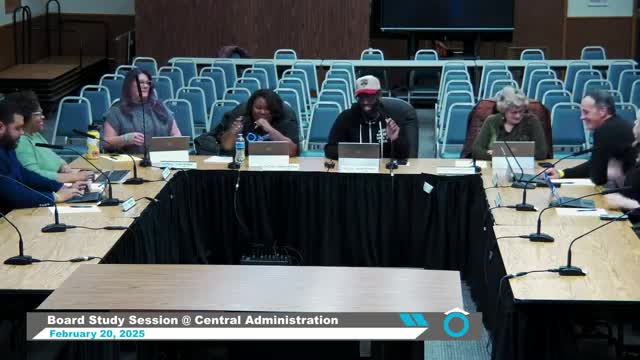
Summary
Tacoma Public Schools convened a study session to review survey results and draft goal language for a new district strategic plan, with staff and board members debating whether to adopt a five‑year or 10‑year horizon and directing staff to return with concrete success indicators.
Tacoma Public Schools convened a study session to review survey results and draft goal language for a new district strategic plan, with staff and board members debating whether to adopt a five‑year or 10‑year horizon and directing staff to return with concrete success indicators.
The district’s consultant, Tanisha Jumper, told trustees “we we got back, 2,200, results, responses,” and said the sample was weighted heavily toward parents. Survey respondents prioritized personal and physical safety, student focus, cultural respect and inclusiveness, equitable resources and access, and anti‑racism as the values they want emphasized in the next plan.
Why it matters: Board members said the strategic plan will both signal district priorities to families and community partners and guide multi‑year investments. Several trustees argued a longer timeline would allow the district to build data systems and partnerships needed to measure complex outcomes such as “critical thinking” and “effective communication.” Others warned that a 10‑year plan requires intentional calibration so it can be adjusted as leadership and funding change.
Board discussion and draft goal language
Jumper presented draft goal statements framed around three broad goals: academic achievement (students ready to learn; teachers prepared and resourced), partnership and participation (families and community partners engaged and providing opportunities), and safe and supportive schools (students and staff safe, supported and valued). She said these draft statements are intended as a platform for selecting two to three measurable success indicators for each goal.
On graduate outcomes, trustees and survey respondents ranked “critical thinker,” “effective communicator” and “resilient and adaptable” highest among desired graduate attributes. Jumper and staff discussed how some priorities are easier to measure with existing data (graduation, course enrollments) while others—like student voice or collaborative skills—may require new dashboards or qualitative collection.
Debate over plan length and measurement
Trustees weighed tradeoffs between a shorter, five‑year cycle that forces narrower, quicker wins and a longer, 10‑year horizon that allows time to build measurement infrastructure and to pursue longer‑range culture change. Jumper said a longer timeline would allow the district to “really try to unpack what would be tools for that, you know, critical thinker measurement” but acknowledged it will require time and investment. A board member noted that a longer plan can still include regular review points so the district can adapt to federal, state and local policy changes.
Staff direction and next steps
Trustees directed staff to: (1) identify two to three priority success indicators for each of the three goal areas; (2) analyze which indicators can be measured now with existing district data and which would require new collection or infrastructure; and (3) return with recommended success criteria and visual dashboard options. Jumper told the board, “I’m gonna give you 2 weeks max” to review the draft indicators and provide feedback; staff said they will synthesize board inputs and present refined success indicators in coming weeks.
The district noted procedural timing: staff said the board is likely to move to adopt the goals in March and to consider adoption of the success criteria in April or May. No formal votes or final adoptions took place during the study session; the discussion produced direction to staff rather than binding board action.
Quotations and attribution
• “We we got back, 2,200, results, responses,” said Tanisha Jumper, the strategic‑plan lead working with the district, adding that parents made up a large share of respondents.
• “I would advocate that we would need some time,” Jumper said when describing why measurement and infrastructure might require a longer planning horizon.
• “I’m gonna give you 2 weeks max,” Jumper said when assigning the board a short homework window to review draft indicators.
Context and constraints
Staff flagged two practical constraints discussed in the session: an anticipated four‑year period of budget uncertainty that will influence how aggressively the district can invest in measurement infrastructure, and the reality that many indicators—while useful for district improvement—are not one‑to‑one causal measures and must be treated with caution when interpreting correlations. Staff also pointed trustees to existing data sources they can use for indicators, including preschool enrollment figures, graduation and course‑taking data, building condition metrics and climate surveys.
What to watch for
Staff will return with a refined set of two to three proposed success indicators per goal and dashboard mockups. Trustees signaled they expect goal adoption in March and success criteria to follow in April or May; the board will vote on adoption at future public meetings. The session produced no formal board votes or policy changes—only direction to staff to prepare materials for upcoming readings and votes.
Ending
The study session closed with staff and trustees agreeing on the overall direction: keep the three draft goals, narrow and clarify success indicators, and decide in the coming months whether a five‑year or 10‑year horizon best balances measurable progress with long‑term capacity building.