Get Full Government Meeting Transcripts, Videos, & Alerts Forever!
Get email alerts on the Rv Park Regulation topic
No spam. Unsubscribe anytime.
Commission agrees to set public hearing on changing 29‑day limit for RV stays at Painted Hills RV Park
Summary
Owners of Painted Hills RV Park requested removal or extension of the city’s 29‑day limit on RV stays; commissioners agreed to schedule a public hearing to consider a text amendment to Parowan City Municipal Code Title 15‑56, with options ranging from keeping the limit to extending it (e.g., 120 days, six months) or removing it.
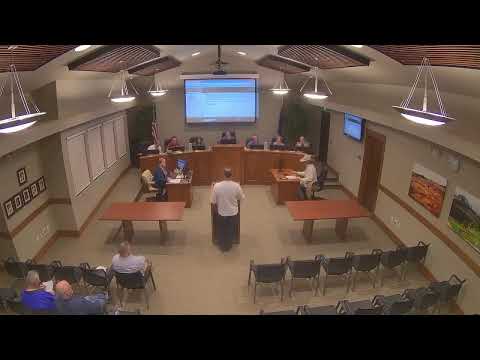
Owners of Painted Hills RV Park asked the Parowan Planning and Zoning Commission on Feb. 19 to reconsider a 29‑day limit on stays that is embedded in the city’s RV‑park code. The commission agreed to place a text amendment on a future public hearing to let the public weigh options that range from leaving the restriction in place to extending it (120–180 days) or removing it.
Casey Jones, co‑owner and principal of Painted Hills RV Park, told the commission the park was operating under the current conditional‑use framework and had made significant capital improvements since annexation in 2022. He said management enforces a no‑permanent‑structure policy, inspects older RVs before admitting them, and has recorded few police incidents since opening. Jones told commissioners, “My preference would be to eliminate the restriction and allow us to manage the business in a successful way.”
City staff explained how the 29‑day rule was implemented in the RV‑park chapter by defining “transient” as 29 days or less and suggested the cleanest mechanism for change would be a text amendment to the definition of “transient” in the code. Commissioners discussed intermediate options (for example, 120 days or six months) and enforcement mechanisms to prevent conversion into permanent housing. Dan (city staff) explained the code still prohibits permanent affixation or conversion of RVs into permanent housing and emphasized that conditional‑use status provides a mechanism to revoke approval if standards are not met.
Casey said many long‑stay guests are seasonal workers or people building homes nearby; he estimated that long‑stay customers would remain a minority and that the park’s business model favors short‑term stays. He added management typically inspects RVs and enforces an appearance/condition standard. On the taxation question, staff and the owner explained that transient room tax (TRT) is collected for stays of 29 days or less; the park’s reservation software identifies returning guests and automatically stops collecting TRT when a customer reaches the code’s 29‑day threshold, and the park refunds the tax as required.
Commissioners agreed there was enough interest to proceed to a formal public hearing; one commissioner suggested starting with a 120‑day proposal and seeing public comment. The commission then voted to place the text amendment for the RV‑park transient definition (PCMC Title 15‑56) on a public hearing calendar; no ordinance was adopted at this meeting.