Get Full Government Meeting Transcripts, Videos, & Alerts Forever!
Get email alerts on the Apprenticeship Funding topic
No spam. Unsubscribe anytime.
Providers, lawmakers press Florida DOE, districts over apprenticeship funding split
Summary
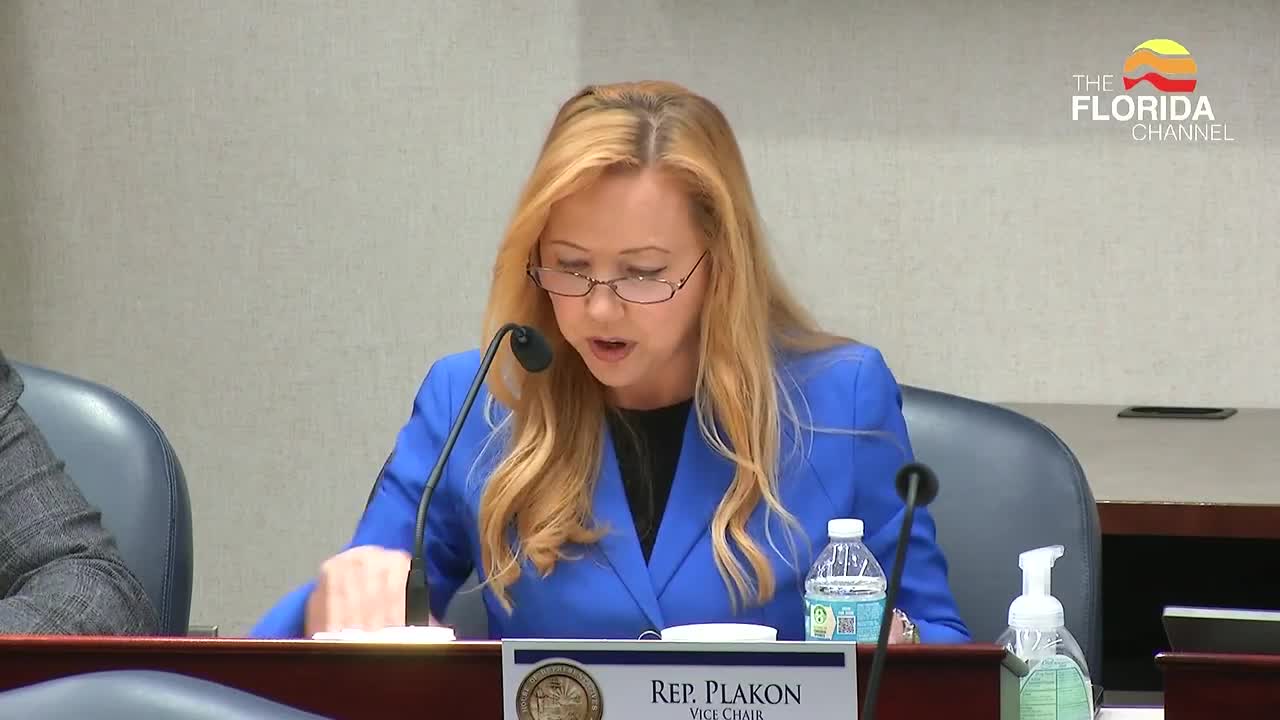
Panelists and lawmakers at a Careers and Workforce Subcommittee hearing pressed for changes to how Florida’s apprenticeship funding is routed, saying much of the money appropriated by the Legislature is retained by local education agencies rather than reaching program providers.
Panelists and lawmakers at a Careers and Workforce Subcommittee hearing pressed for changes to how Florida’s apprenticeship funding is routed, saying much of the money appropriated by the Legislature is retained by local education agencies rather than reaching program providers.
Members of the panel and the committee raised the funding split repeatedly during a May hearing; Peter Daiga, president and CEO of the Associated Builders and Contractors Florida East Coast chapter and ABC Institute, said, "we're only reimbursing us as a provider of about 44%." Dr. Paul Brodie, president of Santa Fe College, added: "I'm going to say we can always use more funding."
Why it matters: Witnesses said the current allocation reduces providers’ ability to hire instructors, expand facilities and open programs in underserved parts of the state. That constrains apprenticeship growth even as demand for skilled workers rises.
Panel testimony and committee discussion
Panelists described a multi-step funding flow: the Legislature appropriates workforce dollars to the Florida Department of Education, which applies a District Workforce Education Funding Summary and a weighted formula to calculate per-student funding. That money is then routed to local education agencies (LEAs) or district partners. Several providers said only a minority of the calculated per-apprentice amount is reimbursed to the registered apprenticeship provider.
Peter Daiga said providers sometimes negotiate contracts with districts for a greater share (he described contracts that secure roughly 60% for a provider), but he called the prevailing pattern opaque and widespread: "there's 2 I'm very close to, my own in the Tampa chapter's program. And I'd be curious, you know, what the reimbursement rate is... To me, it borders almost on collusion," he said, describing similar reimbursement outcomes across many districts.
Dr. Brodie told the committee Santa Fe uses existing operational funding but said expanding apprenticeships would require more resources for businesses to start programs and for colleges to add faculty and facilities: "we could grow apprenticeships if we found a way to, help support more businesses to helping to start apprenticeships."
Specific figures, paperwork and examples
Panelists and members cited numbers discussed during testimony: the Department of Education’s cost-per-unit figure for 2024–25 was presented as $5,139.73 per student; presenters said a realistic total for their programs worked out to about $4,613.74 after applying district differentials. Providers reported receiving as little as about 44% of expected reimbursement in some relationships, and described discrete charges that further reduce provider receipts (for example, student activity fees and administrative overhead taken by the LEA).
Panelists described administrative requirements that affect reimbursement: attendance records for classroom instruction and on-the‑job training (OJT) must be submitted and audited; OJT reporting can be delayed and missing hours reduce reimbursement. Panelists also cited instructor-approval obstacles when districts apply the same hiring or background-check standards to contractor instructors as they do to district teachers.
Policy options raised
Witnesses proposed several reforms and near-term fixes: greater transparency from the Department of Education about dollars flowing to districts, standard statewide contract terms or percentages, allowing qualified non‑district providers (for example, registered non‑profit providers) to receive funds directly as an LEA, and targeted increases or incentives (for example, enlarging the employer tax credit) to help small businesses take on apprentices. Panelists also asked legislators to examine limits on how much districts may retain for overhead and to reduce friction in instructor approvals.
Rep. Tant and Rep. Mello asked for specifics and asked panelists to identify where the withheld funds go; panelists said the funds remain with the LEA and are used for the district’s workforce programs or overhead, sometimes without line-item clarity.
Ending — next steps
Panelists urged the committee to pursue legislative fixes or oversight that would route a larger share of apprenticeship appropriations to the providers that run classrooms and labs, with the stated goal of expanding capacity, recruiting instructors and opening programs in underserved regions.
Panelists offered contact information and suggested committee members visit local programs to review contracts and budgets directly; Peter Daiga referenced wetrain.org as a resource for ABC Institute information and the panel recommended continued review of the DOE funding formula and LEA contracts.