Get Full Government Meeting Transcripts, Videos, & Alerts Forever!
Get email alerts on the Interpreting Standards topic
No spam. Unsubscribe anytime.
Deaf community urges creation of State Interpreting Standards Board to address interpreter shortage
Summary
Deaf, deafblind and hard-of-hearing advocates testified Tuesday that Connecticut is facing a persistent shortage of qualified in-person and tactile interpreters, and urged the Human Services Committee to establish a State Interpreting Standards Board (House Bill 6932) and broader pathways into the profession.
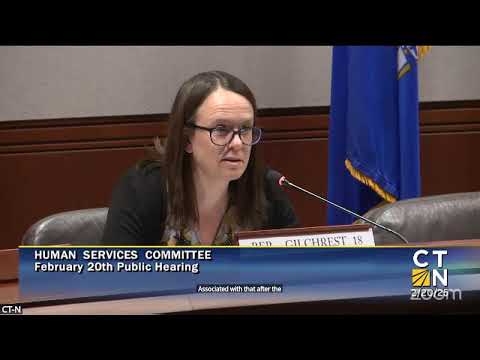
Testimony at the Human Services Committee hearing on Feb. 20 centered on House Bill 6932, which would establish a State Interpreting Standards Board to set qualifications, maintain a grievance process and expand pathways for sign-language and tactile interpreters in Connecticut. Presenters representing consumer and provider groups said the state faces a long-running shortage of in-person interpreters — particularly for medical and tactile interpretation for deafblind clients — and that remote/video interpreting often fails to meet patients’ communication needs.
Advocates described multiple, concrete problems: lengthy waits to secure in-person interpreters; a tiny pool of nationally certified interpreters based in Connecticut (testimony listed 66 hearing certified interpreters and eight certified deaf interpreters as state‑based); an aging interpreter workforce; a single in‑state interpreter training program with low enrollment; and inadequate tracking of interpreters’ qualifications and location. Luisa Gasco Sobolewski, co‑chair of the Governor’s Advisory Board for Persons who are Deaf, DeafBlind and Hard of Hearing, said 466 interpreters were registered to serve Connecticut but only 74 are based in‑state and many of the remainder provide remote services.
Speakers described particular harms when in‑person interpreters are unavailable. Sherry Burns and Lisa Flaherty Vaughn, both deafblind, told the committee that tactile interpretation — in which an interpreter uses touch to communicate — is essential to access health care and that last‑minute cancellations have resulted in missed medical appointments, postponed procedures and significant harm to daily living. Julia Silvestri and other sign language professionals described incidents in which hospitals defaulted to video remote interpreting even when it was not clinically appropriate, and told the committee that hospitals and other institutions sometimes lack local knowledge of regional signs and medical context.
Proponents argued a standards board would offer a focused, ongoing mechanism to: broaden acceptable certification pathways; support targeted recruitment and training pipelines (for example, working with community colleges and UConn ASL programs); maintain a public registry so consumers and institutions can find appropriate interpreters; and oversee a fair grievance and due‑process system. Supporters stressed the board could be low‑cost because many experts would volunteer, with only modest reimbursement for meeting accommodations and mileage.
Department of Aging and Disability Services Commissioner Amy Porter told the committee the state recently created a Bureau of Services for the Deaf, DeafBlind, and Hard of Hearing and hired a bureau director; the administration asked the committee to allow the new director time to review best practices and to recommend any additional structure. DSS officials also warned that standing up an enforcement role that can impose sanctions would require new statutory authorities, staff and funding. Several testifiers said those operational considerations argued for close coordination rather than delay: advocates asked DSS to work with the advisory board and the new director on a fast timeline and offered to partner on an implementation plan.
Committee members asked detailed questions about how many interpreters are available, where training programs are located, whether expanding acceptable credentials (beyond a single national test) would lower quality, and how to fund bilingual and tactile interpreter training. Respondents noted other states have adopted hybrid approaches that accept multiple credential pathways while maintaining rigorous clinical competence checks.
Several witnesses recommended measures the committee could adopt alongside a standards board, including: expanding interpreter training seats at community colleges and at UConn, targeted recruitment into rural and medically underserved regions, a public directory listing qualifications and availability, and short‑term funding to support tactile interpreter availability for medical and surgical appointments.
If passed, HB 6932 would create a public mechanism for ongoing review and updating of rules, supporters said, making it easier for Connecticut to keep standards aligned with national practice while also giving consumers a place to file complaints and find information about interpreters.