Get Full Government Meeting Transcripts, Videos, & Alerts Forever!
Get email alerts on the Workers Compensation Insurance topic
No spam. Unsubscribe anytime.
Insurance committee approves switch to LWCC for workers' compensation
Summary
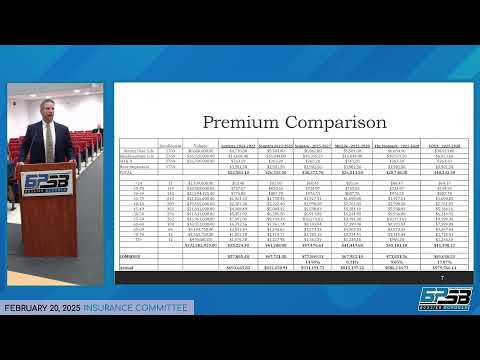
The Insurance Committee of the Bossier Parish School Board voted to accept a recommendation to move its workers' compensation coverage to LWCC, citing a loyalty-dividend model that staff say will likely yield net savings after several years despite higher upfront premiums.
The Insurance Committee of the Bossier Parish School Board voted to accept a recommendation to switch the district’s workers’ compensation coverage from LUBA to LWCC, approving the change by a voice/hand-raise vote.
Committee members and staff framed the decision as a long-term cost strategy: LWCC’s dividend model requires higher premiums in the first two years but, according to the committee’s presenter, would likely return the board to break-even in year three and generate larger dividends in years four and five.
“We wouldn’t be ahead, or if we’re ahead, not by a lot, but we would be back to a break-even point for the entire three years. But in year four, and in year five, based on our last six years of loss history, the model that they have given us shows that we could earn a dividend of up to $400,000 a year,” said Mister Rogers, the committee presenter and a member of the committee. Rogers also told members the LWCC projection included a year‑5 estimate of about $470,000 based on the school board’s loss history.
Rogers described the two insurers’ dividend approaches: LUBA’s dividend is tied to company and policyholder performance and has varied historically, while LWCC’s loyalty-based dividend increases over the first five years and can be paid even in loss years, he said. He cautioned that dividends are not guaranteed.
Some committee members urged caution. “I just… I just don’t think we should do that,” said Mister Falting, raising concern about using taxpayer funds now for a potential future payoff and the political risk if projected dividends do not materialize.
Others supported the long-term approach. Mister Wiggins moved to approve Rogers’s recommendation; Mister Bullard seconded. The chair called for the vote; committee members raised their hands and the motion passed.
Committee members said the choice reflected a tradeoff: accept higher premiums in years one and two in exchange for a projected return in later years under LWCC’s loyalty-dividend model. Staff and the presenter said they would monitor the arrangement and work with LWCC to ensure service and audit processes met the district’s needs.