Get Full Government Meeting Transcripts, Videos, & Alerts Forever!
Get email alerts on the Pulaski County Planning topic
No spam. Unsubscribe anytime.
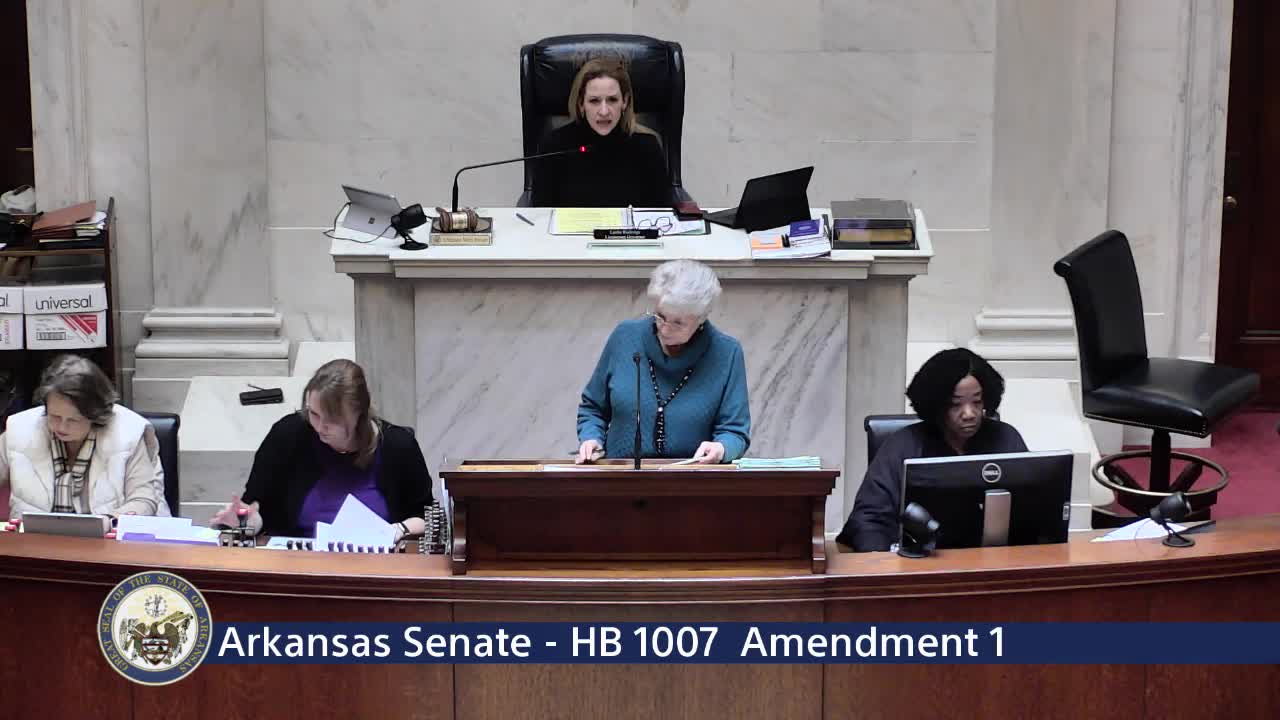
Senator Johnson pulls Pulaski County planning-board bill after extended debate over representation and penalties
Summary
Senate Bill 87, which would require two-thirds of county planning-board members to live in unincorporated Pulaski County and create a civil penalty for certain subdivision-plat violations, drew extended questioning and concern and was withdrawn by its sponsor for further drafting and stakeholder work.
Senator Mark Johnson, sponsor of Senate Bill 87, told the Arkansas Senate that his proposal was aimed at ensuring local representation on a county planning board and adding enforcement for subdivision-plat requirements. "This bill only applies to 1 county and that's the 1 we're sitting in right now," Johnson said, specifying Pulaski County as the primary target of the bill as currently drafted.
The bill would require that two-thirds of the voting members of a county planning board reside in unincorporated areas of the county when a county meets statutory population and municipal-count conditions. It would also add a civil penalty provision for persons who sell property in violation of a subdivision ordinance requiring plat approval, with an exemption where the sale was not made "knowingly." The sponsor said he removed the word "flagrantly" from the statute during amendment to avoid penalizing inadvertent errors.
Senator Johnson said the measure responds to complaints from constituents in rural, unincorporated parts of Pulaski County who feel a majority of planning-board members live inside municipalities and thus decide land-use matters for areas where they do not live. "If you're gonna have a board, it should represent the people, that are being affected," Johnson said. He emphasized the bill's limited scope as drafted but acknowledged some provisions — notably the enforcement language in section 2 — may apply more broadly: "I stand corrected. I believe that it would. And I I think that's a positive thing," he said when asked whether section 2 could apply to every county.
Senators from both urban and rural districts pressed Johnson for clarifications. Senator Peyton asked why a provision that the sponsor repeatedly characterized as narrow would not simply be written statewide if the principle applied equally. Senator Tucker and others probed specifics about confirmation votes by quorum-court members representing unincorporated areas, the potential for a single justice of the peace to hold a deciding confirmation vote, and the interplay between county judges' appointment power and quorum-court confirmation. Senator Irvin highlighted a possible drafting outcome in which a single quorum-court member could confirm an appointment under the bill's language.
Lawmakers also questioned the bill's unintended consequences. Johnson recounted a county judge's concern about a planning-board chair who lived in an unincorporated area but was later annexed into a municipality and would have been disqualified under the bill as originally written. That concern prompted Johnson to amend the measure to require two-thirds residency in unincorporated areas rather than a stricter residency test.
After prolonged floor discussion and multiple offers to work on the language with county officials and other senators, Johnson said he would withdraw the bill to make changes. "I will ask that the bill be pulled down, and we'll work on it some more," he told the chamber.
No roll-call vote on the measure was taken during this session; the sponsor requested the bill be pulled for additional drafting and stakeholder engagement. The transcript records multiple senators urging the sponsor to continue work with county judges and other stakeholders before reintroducing the bill.
The debate made clear the policy issues at stake: whether county planning boards that affect unincorporated residents should be composed primarily of residents of those unincorporated areas and how enforcement of platting and subdivision ordinances should be structured to avoid punishing good-faith mistakes. Senators emphasized the need to balance representative appointments, county-judge appointment authority, quorum-court confirmation procedures, and the practical consequences of changing eligibility rules.
Next steps: Senator Johnson said he will work with colleagues, county judges and other stakeholders to revise the bill and return with amended language addressing the drafting concerns voiced on the floor.