Get Full Government Meeting Transcripts, Videos, & Alerts Forever!
Get email alerts on the Planned Unit Development topic
No spam. Unsubscribe anytime.
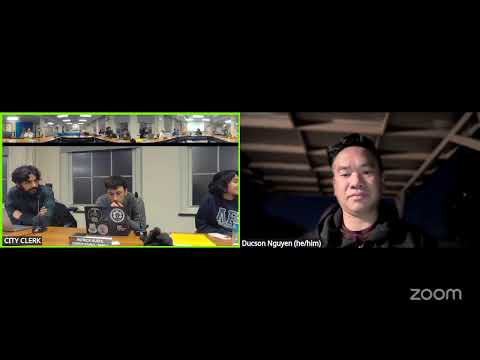
Planning staff briefs council on planned‑unit development process ahead of possible applications
Summary
Planning staff presented an overview of Planned Unit Development (PUD) rules, criteria and past examples to the Committee of the Whole as two potential applicants prepare to submit applications.
Planning staff gave the Committee of the Whole a step‑by‑step briefing on Planned Unit Development (PUD) zoning on Feb. 19, telling council members PUDs are a project‑specific rezoning tool the council can use to approve mixed‑use or complex development that otherwise would not fit current zoning.
Lisa (Planning Department staff) told council that a PUD creates a new, project‑specific zone and must provide long‑term community benefits, be compatible with the comprehensive plan and protect public health and welfare. “Planned unit development is a new zone or zones that allow for more creative use of land than is currently allowed under current zoning,” Lisa said, adding that community benefits often include public open space, affordable housing set‑asides, improved transportation access or other long‑term public amenities.
The presentation walked council through procedural steps and timeline: preliminary staff review and meetings with applicants, a public information session, conceptual approval by council, environmental review and site plan review by the Planning and Development Board, iterative refinements based on public comment, and a final council vote to adopt a PUD as a new zone. Staff noted a PUD is a higher‑risk, more complex path for developers than seeking variances and emphasized the opportunity for council to negotiate measurable public benefits and conditions.
The briefing included three past local PUDs as examples: the Founders Way (adaptive reuse with sale of a gym to a nonprofit), Cayuga Park (medical facility plus permanent community garden integration and transit access), and the South Works / Chain Works redevelopment (remediation of a contaminated industrial site, creation of mixed‑use neighborhood, public open space and trail connections). Staff cautioned that community benefits must be measurable and enforceable and that applicants sometimes return to council when proposed benefits cannot be delivered exactly as proposed.
Councilors asked clarifying questions about where PUDs are allowed (the city maintains a PUD overlay map and may expand or restrict it), tax outcomes for mixed‑use projects and which long‑term benefits are most appropriate. Planning staff said they would share the full slide deck and additional reference materials with council members.
Ending: Council members said the overview was timely; staff expects to return with specific PUD applications in the coming months and wanted council members to have this background before formal proposals appear.