Get Full Government Meeting Transcripts, Videos, & Alerts Forever!
Get email alerts on the Executive Review Doge topic
No spam. Unsubscribe anytime.
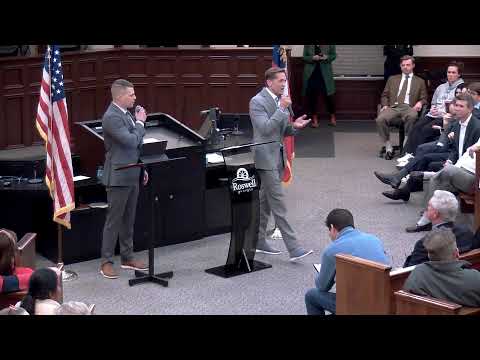
Town hall erupts over ‘Doge’ review, access to federal data and executive authority
Summary
Congressman Rich McCormick defended the administration’s contracted review process, called “Doge,” and told a Roswell audience the reviewers’ access to federal data is role‑based and subject to oversight and litigation.
Congressman Rich McCormick defended the administration’s contracted review process, which he repeatedly called “Doge,” saying the reviewers have role‑based access to government data and that disputes over access and spending will be resolved through oversight and the courts.
The debate, which dominated an early segment of the Roswell town hall, centered on whether the executive branch or a contracted review team exceeded its authority in reviewing federal spending and whether the reviewers had inappropriate access to personal or classified information. “For about 1 hour, 1 person had more access than they're supposed to,” McCormick said, adding later that reviewers access information on a “need to know basis” and that he would post paperwork to clarify the arrangements.
Why it matters: Town‑hall attendees expressed concern that the review process amounted to an unprecedented concentration of access to federal records and could be used to withhold congressionally appropriated funds. McCormick said some of the disputed holds will be litigated and defended the use of legal and oversight mechanisms to sort disagreements.
McCormick described the reviewers as government‑contracted personnel who, even if unpaid, operate under government assignment and can be treated as government employees for purposes of access: “They are hired in the government even if they're not paid. They're government employees by contract,” he said. He repeatedly contrasted the reviewers' authority with standard digital services that track federal expenditures and said he would publish documentation about the reviewers’ authority and limits.
Audience members who raised the issue framed it as a national‑level problem with local consequences. Several questioned why agency employees at the Centers for Disease Control and Prevention were reportedly being let go and then rehired in the wake of changes implemented by the review; other questioners called the approach “chainsaw” staffing cuts. McCormick acknowledged the staffing changes at CDC and said he had been briefed by CDC officials and medical colleagues; he estimated the agency has about 13,000 employees and said roughly 10% of those are probationary hires who are often the target of reductions.
On the scope of executive power and holdbacks of appropriated funds, McCormick said the president has legal authority to withhold certain funds pending review and that “a lot of this stuff will be litigated in court.” He urged constituents to use oversight and the courts if they have legal objections, and he said he preferred slower, more methodical staffing and budget changes than abrupt cuts.
Ending: McCormick told the audience he would make documentation public and invited constituents to contact his office for follow‑up. He also framed the dispute as part of a larger balance of powers question that should be settled through oversight and litigation rather than extra‑legal action.