Get Full Government Meeting Transcripts, Videos, & Alerts Forever!
Get email alerts on the Wildfire Mitigation topic
No spam. Unsubscribe anytime.
Central Marin Fire Chief gives update on wildfire mitigation, warns residents to treat it as countywide issue
Summary
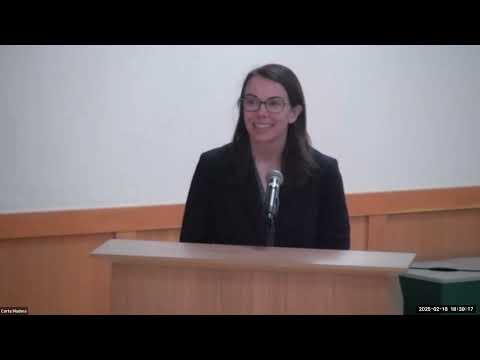
Central Marin Fire Authority Chief Reuben Martin told the Corte Madera Town Council on Feb. 16 that wildfire mitigation is a countywide effort and urged residents to treat vegetation and home hardening work as an urgent priority.
Central Marin Fire Authority Chief Reuben Martin told the Corte Madera Town Council on Feb. 16 that wildfire mitigation is a countywide effort and urged residents to treat vegetation and home hardening work as an urgent priority.
Martin summarized work funded by Measure C and the Marin Wildfire Prevention Authority (MWPA), described ongoing inspections and voluntary abatement programs and outlined how funding is divided into core projects, local mitigation and defensible-space assistance. “Fire knows no boundary,” Martin said, urging homeowners to participate in inspections and the MWPA grant programs designed to reduce risk.
The update covered three program areas: countywide core projects that fund things such as evacuation-route clearing and detection systems, a local mitigation bucket used for direct homeowner assistance, and a defensible-space program that conducts home evaluations and reinspections. Martin said the Greater Ross Valley Shaded Fuelbreak — a 38‑mile, roughly 150–250‑foot treated zone across several jurisdictions — is now largely in maintenance after heavy upfront work and that the program has completed roughly 70% of the targeted fuelbreak in the initial phases.
Martin described the combined inspection surge used across multiple fire districts and departments: roughly 30 inspectors pooled to conduct blitzes, with the joint Marin Defensible Space Alliance recording about 19,000 inspections countywide last year and nearly 1,800 inspections locally in Corte Madera during 2024. He said inspectors flagged about 15,000 violations countywide with nearly 1,200 classified as high priority; about 48 residences received voluntary abatements where crews cleared properties with homeowner releases.
Martin said the MWPA resident grant program — funded in part by core MWPA dollars and local allocations — awards matching grants for home-hardening or vegetation removal on a first-come, first-served basis and that the program often exhausts annual funds quickly. He also noted the town’s Measure F disaster‑preparedness funds are used to augment local mitigation work.
Council members and residents pressed several operational questions. Council Member Jim asked whether evacuation-route maps were publicly available; Martin said predesignated maps are posted on the Fire Safe Marin website. Multiple council members and residents asked whether the county or fire districts could use aerial or drone inspections; Martin and Town Attorney Amy Ackerman both said drones are limited to mission‑critical emergency operations and that administrative warrants would be needed to inspect private property not visible from the street. Ackerman called drone and privacy law “an evolving area” and said agencies have used administrative warrants in narrow cases.
Insurance and enforcement were frequent themes. Martin said the insurance market is a strong incentive for homeowners to take action, and he cautioned that the insurance market’s volatility can force risk‑reduction work. He also described the high staff cost and long timeline for court‑ordered abatements — “it takes anywhere from 6 to 10 months per property” — and said voluntary abatements are usually faster and far less expensive.
Residents from hillside neighborhoods asked the council and fire officials to prioritize mitigation on specific parcels. Dan Kenny of the Hidden Valley neighborhood told the council that Quarry Meadows HOA conservation land between Quarry Meadows Condominiums and Fairview Avenue posed a “wildfire risk” because of steep topography and Scotch broom. Martin said the department is evaluating access, the extent of vegetation removal feasible on steep slopes, and potential mitigation with the HOA.
Martin also warned that the state’s updated wildland‑urban interface (WUI) maps and a governor’s executive order on Zone 0 would bring more changes. He said the updated Cal Fire maps were expected for release in February 2025 and that the Board of Forestry’s implementing regulations for Zone 0 (the 0–5 foot perimeter around structures) will follow. He recommended local review because Corte Madera’s local WUI maps and rules are generally more restrictive based on local conditions.
Martin closed with practical homeowner guidance: if the public faces a fast-moving vegetation fire, he said, “stay in your vehicle until a public safety official tells you to get out,” arguing vehicles often provide better immediate shelter than being on foot.
The presentation prompted council discussion about how to increase homeowner engagement, options for community chipper and debris‑drop programs, and whether to pursue administrative citation authorities. Martin said those programs exist in some jurisdictions but noted staff limitations and the need for interagency coordination.
The council took no direct action during the presentation, but members asked staff to continue outreach, consider additional local mitigation funding and report back on potential enforcement or incentive tools that could be implemented locally.