Get Full Government Meeting Transcripts, Videos, & Alerts Forever!
Get email alerts on the Tcpalaw Negligent Hiring topic
No spam. Unsubscribe anytime.
Texas Supreme Court Hears Arguments in Walgreens v. McKenzie Over Scope of TCPA and Negligent‑Hiring Claims
Summary
The Supreme Court of Texas heard argument in Walgreens v. McKenzie on whether negligent‑hiring, training and supervision claims are governed by the Texas Citizens Participation Act (TCPA) and whether such claims require proof of an underlying actionable tort by the employee.
The Supreme Court of Texas heard argument in Walgreens v. McKenzie on whether the Texas Citizens Participation Act, known as the TCPA, bars or permits negligent‑hiring, training and supervision claims against employers when those claims rest on employee conduct that the employer says is protected by the TCPA.
At issue is whether negligent‑hiring (and related negligent training or supervision) is a derivative tort that depends on a separately actionable wrong by the employee — and therefore should be treated the same as other derivative theories under the TCPA — or whether negligent hiring is independent “conduct” not subject to dismissal under the statute.
The question matters because, under the TCPA, a defendant can move to dismiss claims that are “based on” or “in response to” the exercise of protected rights; if the court finds protected conduct, the plaintiff must then make a “prima facie” showing of the elements of the claim to avoid dismissal. Petitioner Walgreens argued in the Court that negligent‑hiring claims are derivative and therefore should be dismissed if the underlying employee tort cannot survive TCPA scrutiny. Respondent McKenzie argued that negligent hiring is independent conduct and that her complaint and sworn declaration allege facts (including alleged public humiliation and a subsequent police encounter) supporting underlying torts such as defamation and false imprisonment.
Mr. Griffith, counsel for petitioner Walgreens, told the court that precedent treats negligent hiring as a derivative theory that “deriv[e] from an underlying allegedly tortious act of the employee” and urged the justices to “reaffirm what you taught us 30 years ago” in earlier decisions. He called the Court of Appeals’ approach “textbook bad law” in its treatment of hiring, training and supervision as non‑derivative, and said the appellate court erroneously performed an “independent analysis of the negligent hiring claim” after concluding the employee conduct was protected speech.
Ms. Lewis, counsel for respondent McKenzie, countered that the live pleading and a sworn declaration show that McKenzie was “humiliated, being called a thief and doing absolutely nothing wrong,” and she argued that the record contains the clear‑and‑specific evidence the TCPA requires to support the negligent‑hiring claim. She told the court that the declaration establishes a timeline in which an employee’s allegedly defamatory statements preceded store personnel’s investigation and the police questioning.
Justices pressed both sides on two recurring themes: (1) what legal test courts should apply to decide whether a legal action is “based on” a protected act, and (2) whether a plaintiff must plead and prove a distinct, separately pleaded tort by the employee in order to pursue negligent hiring against the employer.
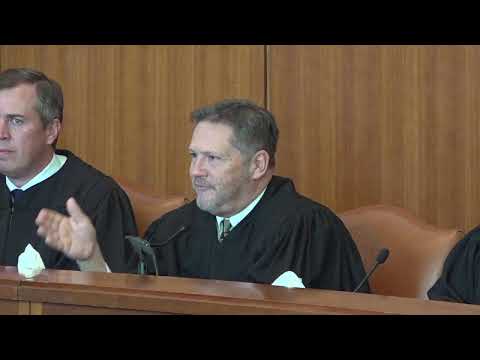
Justice Busby asked whether the live petition and declaration actually allege that the employee humiliated McKenzie before the police were called. Ms. Lewis pointed the court to the declaration’s paragraphs describing statements that caused “humiliation, anxiety, and shame,” and she said the declaration places the alleged statements before the police questioning. Petitioner counsel argued that the Court of Appeals had not only held the employee’s conduct to be protected, but then incorrectly proceeded to decide negligent‑hiring on its own terms rather than treating it as derivative.
Counsel and several justices discussed procedural rules and pleading standards: both sides cited the trial court record and the Texas Rules of Civil Procedure (Rule 45 and Rule 47 were invoked in argument) and debated how detailed a plaintiff’s pleading must be at the TCPA stage. Petitioner emphasized that a negligent‑hiring claim requires proof that the employee committed an actionable tort; respondent argued that pleading facts that, if true, support underlying tortious conduct satisfies the element and that labels are not required.
No decision was announced. After extended questioning, the court submitted the case for its later opinion.
Why this matters: The court’s resolution will affect whether employers can use the TCPA to obtain early dismissal of negligent‑hiring and related claims where the alleged employee conduct overlaps with communications or other protected acts. The ruling may also clarify pleading standards at the TCPA stage and the degree to which derivative employer claims can survive when underlying employee claims have been dismissed by an intermediate appellate court.
Votes at a glance: Not applicable — the transcript is from oral argument; the Supreme Court took the case under submission and did not announce a decision at argument.