Get Full Government Meeting Transcripts, Videos, & Alerts Forever!
Get email alerts on the Tcpanegligent Hiring topic
No spam. Unsubscribe anytime.
Texas high court considers whether TCPA shields employers from negligent-hiring claims
Summary
At oral argument in Walgreens v. McKenzie, attorneys debated whether the Texas Citizens Participation Act (TCPA) applies to negligent hiring, training and supervision claims when the allegedly tortious employee conduct is characterized as protected speech; the court took the case under submission.
The Texas Supreme Court on Thursday heard oral argument in Walgreens v. McKenzie, a case testing whether the Texas Citizens Participation Act bars negligent hiring, training and supervision claims when the employer says the employee’s conduct was constitutionally protected speech.
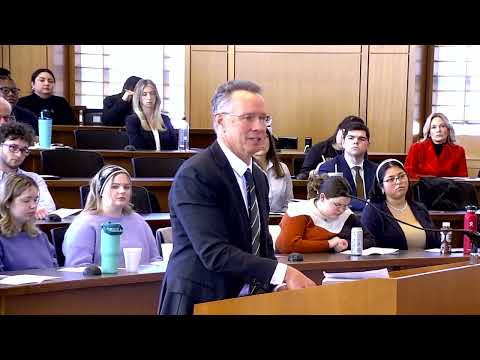
The dispute centers on whether negligent-hiring-type claims are “derivative” of an underlying, actionable tort by an employee and therefore should be treated the same as respondeat superior and other derivative theories when a defendant invokes the TCPA. Petitioner’s counsel, Mr. David Griffiths, argued the plaintiff must prove both negligent hiring and an underlying actionable tort. “To prevail on a claim for negligent hiring, training, or supervision, the plaintiff must establish not only that the employer was negligent in hiring, but also that the employee committed an actionable tort against the plaintiff,” Griffiths told the court.
Why it matters: the answer will affect employers and employees across Texas and could narrow or broaden the circumstances under which defendants may seek early dismissal under the TCPA. The Court of Appeals in this case concluded the TCPA applied to two causes of action (negligence and intentional infliction) and held the plaintiff had not made the required prima facie showing; the court of appeals reached a different result as to negligent hiring, prompting the Supreme Court review.
Arguments and key points
Griffiths (petitioner) told the justices that long-standing Texas precedents treat derivative theories—like negligent hiring—as dependent on an underlying tort, so the court of appeals erred by separately analyzing negligent hiring after finding the employee’s conduct protected. He argued that requiring proof of an underlying actionable tort is consistent with authorities the petitioner cites and with the notion that derivative claims survive or fail alongside the related underlying tort.
Respondent’s counsel, Ms. Angela Lewis, argued that the live petition and supporting declaration allege facts that, if proven, would support underlying actionable torts such as defamation and false imprisonment and that those factual allegations are sufficient to sustain the negligent-hiring claim. “Ms. McKenzie was an innocent woman. She innocently went into Walgreens and tried to make purchases as a consumer and she was faced with being humiliated, being called a thief and doing absolutely nothing wrong,” Lewis said, summarizing the factual posture of the complaint and the supporting declaration.
A contested pleading question was central: must a plaintiff plead and prove a separately labeled underlying tort against the employee (for example, a separate negligence or defamation cause of action) to maintain negligent hiring, or is it enough to plead facts that would, if proved, constitute some actionable tort? Counsel debated whether pleading factual allegations that support an underlying tort satisfies pleading requirements and whether the TCPA stage requires a separate prima facie showing specific to the derivative claim.
Timeline and evidentiary point
Counsel and several justices focused on the chronological order of events alleged in the complaint and declaration: whether the alleged humiliation in the store preceded the employee’s call to police. Lewis said the declaration states the accusations and humiliation occurred before store personnel began investigating and before the police questioned McKenzie. That sequence matters to whether the underlying conduct should be treated as protected communications and how the TCPA applies.
Procedural posture and unresolved issues
The trial court denied the TCPA dismissal in full; the court of appeals reversed as to negligence and intentional-infliction claims on TCPA grounds, concluding the plaintiff had not made the required prima facie showing for those causes, and reached a different conclusion for negligent hiring. In the Supreme Court argument, petitioner pressed that negligent hiring should have been dismissed once the court of appeals concluded the employee’s conduct was protected and the plaintiff could not make a prima facie showing of the underlying tort. Respondent counters that the live pleading and declaration supply facts sufficient to support actionable underlying torts, and she emphasized waiver and preservation issues for matters not raised below.
The court took the case under submission after argument. The justices’ questions focused on the proper test for determining when a legal action is “based on or in response to” protected conduct under the TCPA, whether derivative torts should be analyzed independently, and the limits of pleading practice under Texas Rule 45 and Rule 47.
What the record shows and what it does not
The record before the court includes the live petition and a two-page declaration from the plaintiff that describes the alleged accusations, humiliation, and subsequent questioning by police; the declaration, respondent’s counsel said, places the humiliating accusation before the police contact. The court of appeals’ opinion (summarized in briefs and argument) applied the TCPA to some claims and concluded the plaintiff failed to make a prima facie showing for those claims, but the court of appeals treated negligent hiring differently in its analysis.
Next steps
The Supreme Court has submitted the case for decision. The court’s forthcoming opinion will determine whether negligent hiring, training, and supervision claims are treated as derivative for TCPA purposes and what pleading or prima facie showing is required at the TCPA dismissal stage.