Get Full Government Meeting Transcripts, Videos, & Alerts Forever!
Get email alerts on the Appellate Advocacy Judgeship topic
No spam. Unsubscribe anytime.
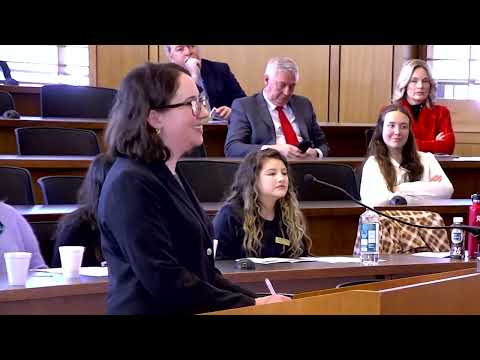
Texas Supreme Court justices give appellate-advocacy, judgeship and voting advice at Baylor Law
Summary
Justices of the Supreme Court of Texas visited Baylor Law for a student Q&A, offering concrete tips on arguing before appellate courts, paths to a judicial career, the role of clerkships and guidance for nonlawyer voters evaluating judicial candidates.
Members of the Supreme Court of Texas answered student questions at a Baylor Law School event, urging preparation and audience awareness for appellate advocacy while outlining the practical and political steps that can lead to a judgeship.
The justices emphasized that successful oral advocacy on appeal depends on anticipating the court’s hardest questions and answering them directly. “I think that the best thing that you can do in arguing before an appellate court is to pretend like you’re an appellate judge beforehand … prepare for them, anticipate the questions and answer as directly and clearly as you possibly can,” Justice Young said. Another justice urged students to practice out loud, record themselves and rehearse with a partner so the podium is not the first time they hear their argument.
The panel framed questions from students about career steps and judicial selection as matters of long-term preparation and reputation. “You have to be excellent at being a lawyer in one way or another,” Justice Bland said, advising young lawyers to cultivate a broad skill set. Justice Huddle described a personal path that combined private practice, relationships with mentors and occasional public-service opportunities, and recommended asking people already on the bench how they prepared.
Clerkships and in-person engagement with judges also received repeated endorsement. “Clerkships … put in my heart the idea that seeing the way that they serve the people, with such integrity and diligence, … opened my eyes to it,” one justice said, recommending clerkships as a way to learn how judges reach decisions even for students who do not ultimately pursue a judicial career.
On how Texas selects judges, the justices noted the state’s hybrid path: judges can be appointed but typically must run in elections. Panelists urged voters to seek informed recommendations from trusted legal professionals and to meet candidates at local events. “If they can honestly give you a sense that they are committed to the idea that judges are different from the other two branches of government … then that may be someone to consider,” a justice said. The panel also warned against treating judges primarily as vehicles for policy preferences, saying that turning the judiciary into another political branch risks undermining the rule of law.
Several justices urged students and voters to focus on candidates’ statements about judicial role and method rather than campaign rhetoric. Practical tips included watching whether a candidate can explain how they would interpret statutes and contracts, assessing experience and judgment, and valuing mentorship and day-to-day excellence in legal practice.
The event closed with brief thanks to the law school and a note that the court would remain briefly for photographs. The justices and students discussed clerkships, campaign realities in Texas, and the differences between state and federal benches, without any formal actions or votes taken at the event.