Get Full Government Meeting Transcripts, Videos, & Alerts Forever!
Get email alerts on the Zoning Density topic
No spam. Unsubscribe anytime.
Milwaukie removes ban on variances to maximum density, aligning local code with state law
Summary
The Milwaukie City Council voted unanimously to amend the city zoning code to allow variances that can increase maximum residential density, responding to Oregon Senate Bill 1537 and creating a new Type 2 variance that can boost density by up to 25%.
Milwaukie City Council on Feb. 18 adopted an ordinance amending Milwaukie Municipal Code Title 19 to remove the local prohibition on variances to maximum residential density, approving the change by a 5-0 vote.
City senior planner Vera Colias told the council the change is intended to align local procedures with Oregon Senate Bill 1537, a state law that requires cities to grant certain administrative variances for housing development. Colias said the state measure took effect Jan. 1, 2025, and includes a sunset date of Jan. 2, 2032.
The amendment removes the city’s existing ban on density variances and adds a new Type 2 variance that would allow applicants to increase maximum density in a residential development by up to 25%. Colias said developers may package up to 10 distinct variances under SB 1537, if the development qualifies — for example by meeting a minimum of roughly 17 dwelling units per acre and by adding a net increase in housing units.
“The bill requires cities to grant administrative adjustments or variances to local siting and design standards for housing development,” Colias said during the public hearing, explaining the scope of standards (setbacks, lot coverage, landscaping and certain design details) that can be varied under the statute.
Colias also outlined the state’s exemption option: if a city can show it already provides variances for standards listed in SB 1537 and has approved at least 90% of requested variances in the prior five years, the city may seek an exemption from applying the statute to those standards. She said Milwaukie’s code already contains many Type 2 “mathematical” variances and that the city intends both to remove the prohibition and to pursue the exemption application.
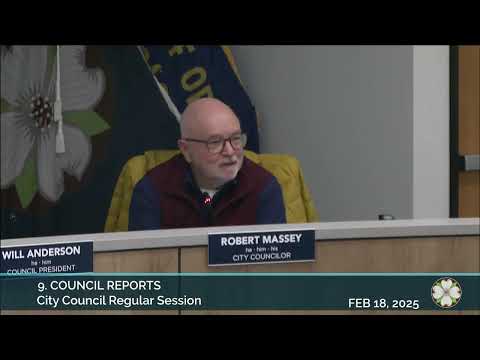
The Planning Commission reviewed the proposed code package Jan. 28 and unanimously recommended approval. Councilors had no substantive questions during the hearing. After a brief exchange following the vote, one council member cautioned that some parts of the state measure feel like overreach, while urging colleagues to continue monitoring related state activity in Salem.
The ordinance (primary file number zA2024-002, ordinance number 2249) was moved and seconded on the floor; the council voted aye: Councilor Massey, Council President Anderson, Councilor Stavenjord, Councilor Castor Botti and Mayor Lisa Batey. The ordinance was read twice by title and adopted.
What this means in practice: developers who meet SB 1537’s applicability tests may use the state’s streamlined variance process to seek relief from local numeric standards that would otherwise limit the number of units. Local design standards (for example, required facade materials or articulation) remain subject to local review when the statute applies, and the city’s public-notice Type 2 review process continues to apply. The state statute’s timelines and appeal limits — notably that only applicants may appeal a 1537 decision — also affect how the city will process these applications.
City staff said the amendment is intended to give developers a more accessible path to modest density increases that can, in some cases, add a few additional units without triggering a heavier Type 3 review. The new Type 2 density variance is limited to 25% increases in maximum density as proposed in the amendment.
Councilors and staff said they will continue to monitor how the exemption application process and SB 1537 implementation unfold across other jurisdictions so Milwaukie’s rules remain consistent with state requirements and local housing goals.