Get Full Government Meeting Transcripts, Videos, & Alerts Forever!
Get email alerts on the Hb3179 topic
No spam. Unsubscribe anytime.
House committee hears wide testimony on 'Fair Energy Act' (HB 3179); supporters cite affordability, utilities warn of investment risks
Summary
Representatives, consumer advocates and community groups urged passage of House Bill 3179 to prioritize residential affordability, restrict winter rate increases and require more transparency; investor‑owned utilities and gas industry groups warned the bill could raise financing costs or impede necessary infrastructure investment.
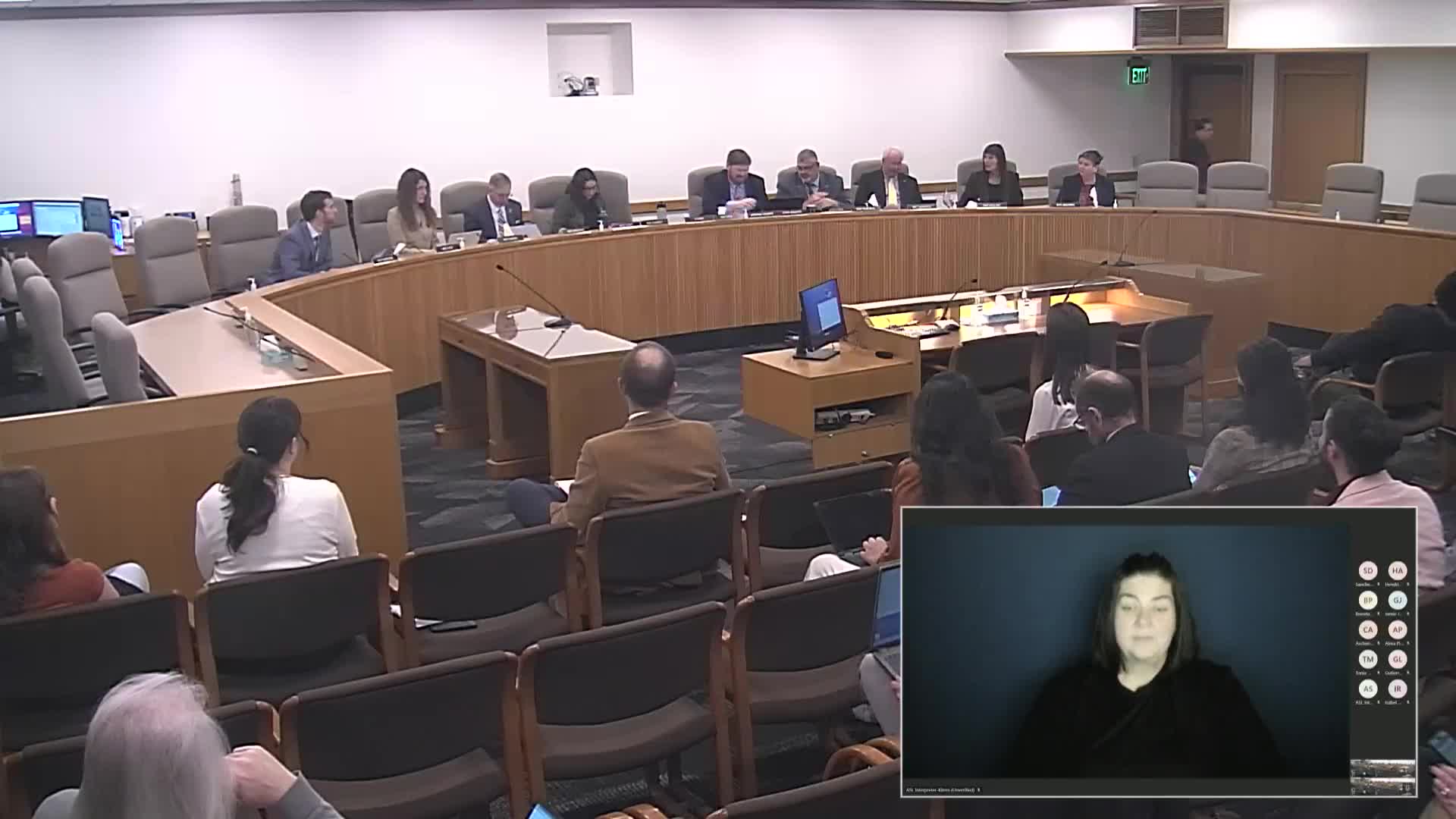
State Representative Nathan Sosa introduced House Bill 3179, the Fair Energy Act, at a public hearing before the House Committee on Commerce and Consumer Protection on Feb. 20, seeking changes to how the Public Utility Commission evaluates and approves residential rate increases.
The bill, as described by committee staff and proponents, would require utilities to provide visual cost explanations, quarterly reports of expected rate adjustments, and an economic impact analysis of proposed residential rate increases that considers household median income, unemployment and other measures. The dash‑1 amendment posted to OLIS would additionally direct the PUC to consider residential rate impacts and utility return on equity, allow the commission to phase in increases, prohibit new residential rate increases during winter (Nov. 1–March 31), extend the PUC’s decision timeline in major cases and permit use of low‑cost financing in certain circumstances. A technical dash‑2 was noted as forthcoming.
Supporters — including the Citizens Utility Board of Oregon (CUB), Community Energy Project, Verde, Rogue Climate and Multnomah County — told the committee that rapidly rising utility rates and record disconnections require new tools and transparency. Bob Jenks of CUB said the current regulatory structure “has led to a utility‑centered regulatory system that focuses on cost recovery associated with that spending” and urged changes to center residential affordability. Jennifer Hillhart of CUB summarized the bill’s main changes and said the measure applies to residential customers of investor‑owned utilities only.
Community witnesses described household impacts. Soledad Molina said her monthly PGE bills rose from under $100 to $200–$300 and that winter increases make budgeting difficult; Rogelia Martinez Perez described having food spoil after a multi‑day outage and urged protections against winter increases. Community organizations said translation, clearer bill categories and limits on frequent general rate increases would help vulnerable households.
Opponents included representatives of investor‑owned utilities and trade associations. Zach Kravitz of Northwest Natural said the bill would create regulatory uncertainty that could discourage investment and raise utilities’ cost of capital, and he warned that costs utilities incur do not disappear if the PUC later disallows recovery. Alan Spector of Cascade Natural Gas said the bill could threaten safety and reliability by reducing a utility’s ability to timely recover costs, and the Northwest Gas Association asked to be excluded from the measure, saying natural gas utilities have not raised rates as much as electric IOUs.
Portland General Electric and Pacific Power testified they are willing to work on affordability but raised concerns about securitization as proposed and the potential for unintended consequences that could slow needed investments for reliability, clean‑energy transitions and grid modernization.
Committee members asked about several trade‑offs: limiting rate requests for 18 months and whether emergency or single‑issue filings would remain available; how securitization might be applied; and whether the bill should include a sunset or additional study. Sponsors and proponents said the bill is designed to give the PUC more tools, not to prohibit necessary investments, and said further rulemaking and stakeholder engagement would accompany implementation. Opponents urged careful drafting to avoid chilling investment and increasing borrowing costs.
No vote was taken; the committee closed the public hearing and scheduled a continuation for Feb. 25 to hear remaining registered witnesses.
Ending: The hearing produced extensive testimony on competing priorities — affordability and investor certainty — and committee members and stakeholders signaled ongoing negotiations over technical fixes and scope.