Get Full Government Meeting Transcripts, Videos, & Alerts Forever!
Get email alerts on the Agrmental Health Agristress topic
No spam. Unsubscribe anytime.
Senate committee hears proposal to fund AGRISTRESS helpline with $2 million endowment
Summary
Lawmakers, county commissioners and Oregon State University extension officials urged the Senate Committee on Early Childhood and Behavioral Health to advance Senate Bill 779, which would appropriate $2 million to an endowment to sustain the AGRISTRESS crisis helpline for Oregon agricultural and forestry communities.
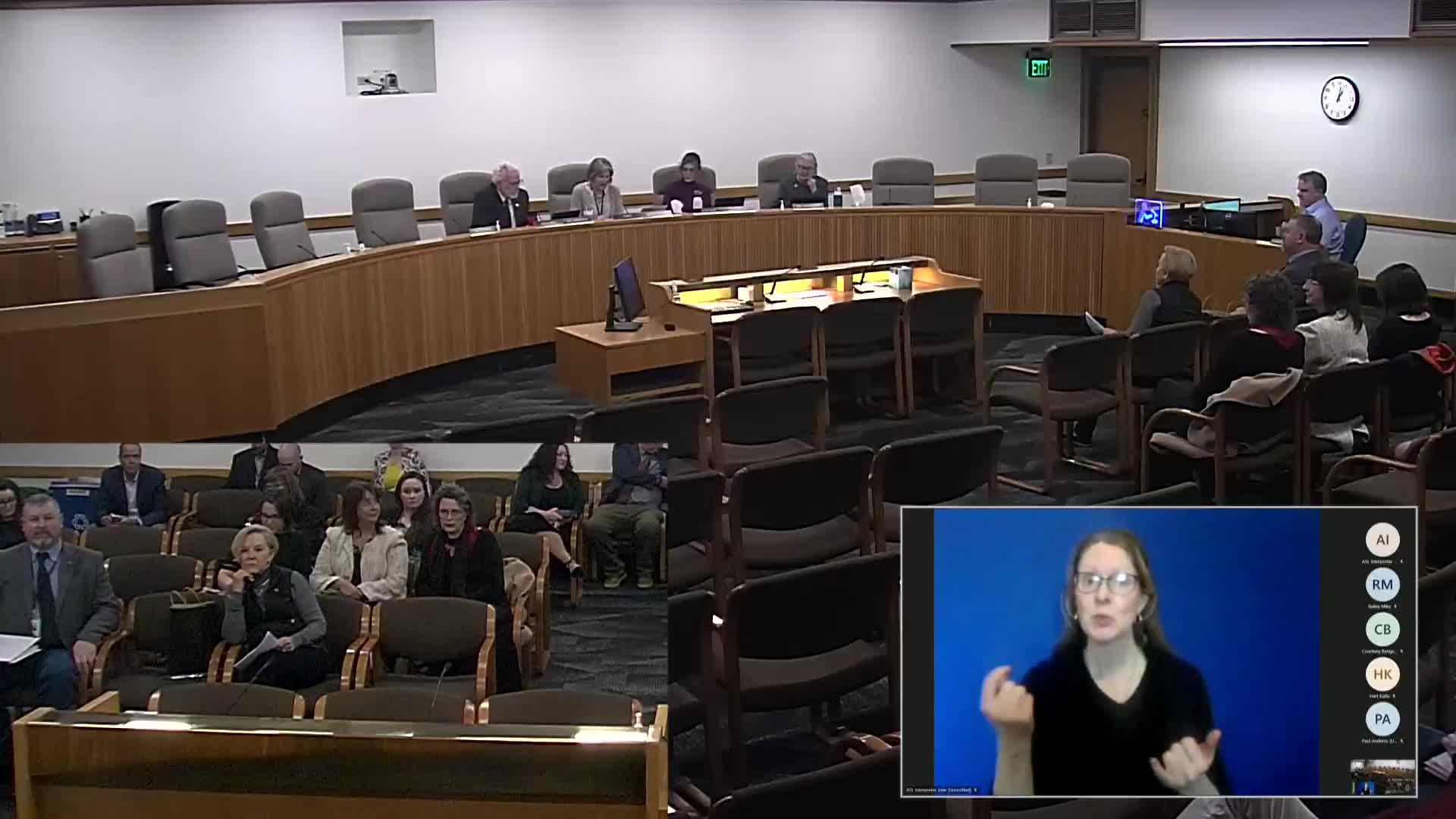
Chair Tara Reynolds opened a public hearing Tuesday on Senate Bill 779, which would appropriate $2,000,000 in general fund money for the 2025–27 biennium to support an endowment for the AGRISTRESS helpline.
The bill’s sponsors and supporters told the Senate Committee on Early Childhood and Behavioral Health that the helpline — launched in September 2023 — has filled a gap in mental-health access for farmers, ranchers, loggers and other natural resources workers and that a $2 million endowment earning 4% interest would generate enough annual revenue to operate the line in perpetuity.
Senator Todd Nash (R–SD 29), one of the bill’s sponsors, described the helpline’s start-up funding history and shortfall. "The 300,000 that went into an endowment, was just that. It earned 4% interest and that 4% interest wasn't enough to run the helpline that cost approximately $68,000 a year," Nash said, and credited private donations for covering operations to date. He said the $2,000,000 proposed by SB 779 "would return enough to run this in perpetuity and a little bit extra to advertise the program."
Representative Bobby Levy (R–HD 58), another sponsor, told the committee the helpline has fielded calls from 22 of Oregon’s 36 counties since its September 2023 launch and said the service is tailored to agricultural communities. "This ensures that every agricultural and natural resource worker in Oregon can access a trained professional wherever the need is helped without fear that funding will be disappearing," Levy said.
Dr. Allison Myers, associate dean for extension and engagement in the College of Health at Oregon State University, described the extension service’s role in operating and promoting the program. She outlined partners who have helped keep the helpline running — Eastern Oregon coordinated partners, the Roundhouse Foundation, Ag West and private donors — and gave a monthly operating figure: "the $2,000,000 that this bill would give us would make it absolutely certain that I can pay the $5,563 monthly phone bill, to be sure that a trained, human answers the phone," Myers said.
County officials and commissioners who testified supported the appropriation. Union County Commissioner Paul Andrus, speaking as co‑chair of a regional association representing counties east of the Cascades, said the helpline has produced "tangible evidence" of impact in his community and urged committee members to advocate for the bill as it moves to Ways and Means. Clatsop County Commissioner Courtney Bangs cited national suicide-rate data for logging and fishing occupations and said the helpline’s industry‑specific, 24/7, anonymous access addresses barriers — long hours, stigma and limited local services — that rural workers face.
Committee members asked operational and access questions. Senator Patterson asked whether helpline services are available in languages other than English; Myers and Levy said the line can be interpreted into roughly 160 languages via a language line and that work is underway to expand direct Spanish‑language capacity so callers do not always need a separate translator.
Chair Reynolds closed the public hearing on SB 779 and transitioned the meeting to an informational session on statewide crisis‑line services, including the 988 system and local call centers.
SB 779 does not include a recorded committee vote during this hearing. The bill’s supporters urged the committee to pass the measure and to advocate for the appropriation in Ways and Means so the endowment could be established for the 2025–27 biennium.
Looking ahead, supporters said the endowment would pair state funding with existing private and philanthropic support and would be specifically targeted to pay for ongoing phone service, staffing and outreach to agricultural and forestry communities.