Get Full Government Meeting Transcripts, Videos, & Alerts Forever!
Get email alerts on the Road Usage Charge topic
No spam. Unsubscribe anytime.
West Coast officials weigh road‑usage charges as long‑term fix for falling gas‑tax revenue
Summary
Officials from Washington, California and Metro Vancouver outlined work underway to assess replacing or supplementing the gas tax with a road‑usage charge, citing rising debt service, improved fuel economy and equity/privacy concerns. California proposed a multi‑thousand‑person pilot; Washington described a stepwise, stakeholder‑driven plan.
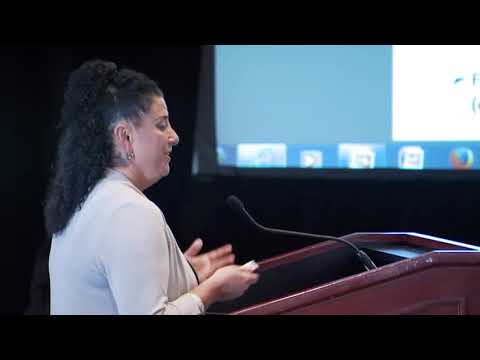
SAN JOSE — Rima Griffith, executive director of the Washington State Transportation Commission, told the California Transportation Commission on Wednesday that Washington has been studying a shift from the gas tax to a road usage charge (RUC) since 2012 and is preparing more detailed operational plans and possible pilots after several years of sequential, stakeholder‑driven study.
Griffith said Washington faces long‑term funding pressure because recent gas‑tax increases were paired with specific bonded project lists; over the next 13 years she said about 70% of the state’s net portion of fuel‑tax revenue is already obligated to debt payments. “It’s a very difficult political vote and a heavy lift,” Griffith said of gas‑tax increases, adding that the state has spent about $3,000,000 so far on planning and research.
Why it matters: officials from three jurisdictions said rising vehicle fuel economy and the growth of electric vehicles are shrinking fuel‑tax revenue just as states confront sizable maintenance and preservation backlogs. That creates a policy need to find sustainable long‑term revenue while addressing fairness, privacy, data security and rural‑urban equity.
Griffith described three operational concepts the Washington steering committee is focusing on: a time permit (a flat annual fee), an odometer‑based annual reconciliation at registration, and an automated distance charge using GPS to measure miles driven. For the commission’s business‑case modeling, Washington used a simplifying assumption that a RUC would replace the gas tax beginning in 2015 and estimated a revenue‑neutral rate equivalent to about 1.8 cents per mile. The analysis also showed RUC collection would initially cost more than existing gas‑tax collection (the gas tax collection cost was cited as under 22%), though a RUC could become more sustainable over time.
Griffith said Washington’s approach is deliberately incremental and stakeholder‑centered: the state created a 24‑member steering committee that includes legislators, commissioners and representatives from transit, cities, counties, industry and advocacy groups. The legislature directed the Transportation Commission in 2012 to assess feasibility and later to refine a work plan; Washington DOT and the state treasurer have also been tasked with related analyses. The commission is studying phased transition scenarios, including converting vehicles at annual registration or at title transfer (a 10–15 year horizon), and has begun an urban‑rural equity analysis using a statewide survey panel.
California’s account: Norma Ortega of the California Department of Transportation said California has not raised its base gasoline tax in roughly 20 years and is losing buying power and revenue to improved fuel economy. A state infrastructure working group has recommended studying RUC. Ortega said Senate Bill 1077 (introduced in February) would authorize a pilot under the California Transportation Commission; if the bill does not pass, the department plans to proceed administratively and stand up a technical advisory committee. Ortega said the department is considering a “large demonstration pilot” of roughly 5,000–6,000 participants, with a demonstration design period and a staged rollout that could include a 2016 demonstration development and a 2017 kickoff and evaluation reported by 2018.
Trans‑boundary perspective: Mayor Walton (Metro Vancouver), who chairs the Metro Vancouver mayor’s council and serves on the TransLink board, described how mobility‑pricing and tolling have developed in British Columbia, noting higher fuel taxes, toll bridges and a carbon tax. Walton warned that tolling and pricing can shift travel patterns and that “leakage” (drivers filling up across a border with lower fuel prices) can undermine expected revenue. He also said some regional toll bridges have produced lower traffic than projected, affecting revenue assumptions.
Concerns raised in discussion included how to protect privacy and choices for motorists, how to handle out‑of‑state drivers, effects on rural drivers who travel longer distances, and the political feasibility of replacing a familiar per‑gallon tax. Commissioner Madaffer and others urged an initial focus on higher‑mileage or alternative‑fuel vehicles as a transition group. Griffith acknowledged the gas tax still has life in it and said Washington’s legislature is concurrently considering another gas‑tax increase while the commission studies RUC options.
No formal statewide policy change was adopted at the meeting; the session focused on reporting research, options, pilots and next steps. California staff and the commission continue planning a technical advisory committee and a multi‑region demonstration; Washington staff said it may be ready for limited pilots in a year or two and is coordinating with western states and the federal dialogue on interoperability.
Ending: Officials from Washington, California and Metro Vancouver emphasized the need for further testing, public outreach and legislative decisions before any RUC is enacted. Griffith said the aim is to build public understanding slowly and to preserve consumer choice: “Providing drivers with the choice is critical,” she said, adding that a transparent, phased approach can help manage public concerns.