Get Full Government Meeting Transcripts, Videos, & Alerts Forever!
Get email alerts on the Road Usage Charging topic
No spam. Unsubscribe anytime.
Western states discuss road-usage charging; Oregon outlines pilot, privacy and cost protections
Summary
Presenters at a joint California–Washington Transportation Commission session described a Western Road Usage Charge Consortium, policy questions on out-of-state drivers, and Oregon’s planned per‑mile pilot that starts with 5,000 voluntary participants, a 1.5¢/mile charge and legal privacy limits including data destruction.
A panel of transportation officials and consultants outlined how Western states are studying per‑mile “road usage” charges as an alternative to the gasoline tax and described next steps for demonstration projects.
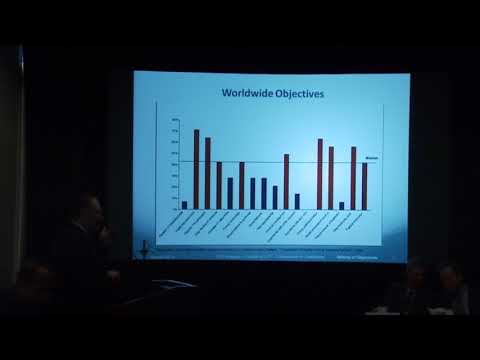
Jack Opiola of D’Artagnan Consulting said the central lesson from international and U.S. pilots is to let policy objectives — not technology — lead program design. “You let your policy objectives lead the program. You do not get sidelined with technology,” Opiola said.
Why it matters: presenters and commissioners tied the conversation to declining fuel‑tax revenues as vehicle fuel efficiency and electrification increase, and to an interest in testing options that protect privacy, limit cost and show the public how a per‑mile system would affect drivers.
The Western Road Usage Charge Consortium, described by Jeff Doyle, director of public‑private partnerships at the Washington State Department of Transportation and chair of the consortium, is a forum for state departments of transportation to coordinate research. “This organization was formed, not to implement or even pursue road usage charge, but it was designed to allow departments of transportation a forum to learn about road usage charging,” Doyle said. Member states have proposed a work plan of research projects; several states (Washington, Oregon, California, Texas, Montana and Colorado were listed among participants) have committed staff or funding to studies.
Doyle highlighted one ongoing study focused on how to treat visiting or out‑of‑state drivers if a state adopts a per‑mile charge. Policy options under analysis include: doing nothing different for visitors (leaving them subject to existing fuel taxes), creating a reconciliation or “shadow charge” between states, relying on fuel‑tax collection at the pump, time‑based permits (a vignette or permit for a day/week/month), or a distance‑based charge for nonresidents. He said the consortium expects an interim report to the steering committee in the fall.
Oregon’s approach: Jim Whitty of the Oregon Department of Transportation summarized more than a decade of Oregon pilots and the 2013 legislative directive that set a path toward a voluntary, operational demonstration before any mandatory phase. Oregon’s model will offer multiple reporting choices rather than a single government device and will use private‑sector account managers certified by ODOT.
Key features Oregon presented: - Pilot size/timing: a voluntary initial application of 5,000 participants planned to begin July 1, 2015, described as the final large demonstration before any mandatory phase. - Rate and fuel‑tax rebate: a 1.5¢ per‑mile charge with an automatic rebate/credit for fuel tax paid reported through mileage reporting devices or other reporting methods. - Reporting choices: “basic” reporting (miles only, no GPS), “advanced” reporting (miles by location using GPS), “switchable” options and a simplified flat option (a capped annual mileage assumption, cited at 35,000 miles/year) for participants who prefer a flat fee. - Privacy and data retention: the Oregon law constrains the use of personally identifiable information, limits access to payment chain actors, and requires data destruction. Whitty said the state negotiated data‑destruction language with the ACLU and described a 30‑day data‑destruction rule after the later of payment processing, dispute resolution or a compliance investigation. - Market and certification: ODOT will certify private account managers and technologies under an open architecture; one government account manager option is required and commercial account managers are expected to offer additional, value‑added services.
Costs and scale: Whitty provided pilot cost estimates from Oregon’s experience: the first pilot (2006–07) cost about $2.9 million (about $2.1 million federal); a second pilot was roughly $3.5 million; a third operational trial was estimated at about $5.5 million over two years. Oregon’s modeling indicated program administration costs fall with scale: at 10,000 payers the administrative share was roughly 50% of revenues in the estimate cited, at 100,000 payers about 10%, and at 1,000,000 payers below 5%.
Questions and federal role: Vice Chair Lucy Dunn and others asked about federal involvement. Presenters said U.S. DOT is studying the topic but lacks congressional authorization to implement a national system; federal research dollars are a common source of funding for state work. Jeff Doyle noted the Grow America Act contains pilot funding language that could support federal pilot activity, but stressed FHWA is constrained by congressional direction.
Concerns discussed: commissioners pressed on fairness for rural drivers and owners of fuel‑efficient or alternative‑fuel vehicles, potential double charging where tolls exist, and whether reporting could be non‑electronic (self‑reporting or odometer‑based reporting). Presenters said Oregon’s law and pilots were designed to offer a range of non‑GPS options and manual reporting (including use of inspection/registration miles where available). On weight and wear impacts, Oregon keeps a separate weight‑distance tax for heavy vehicles and plans a flat light‑vehicle rate rather than a per‑mile rate differentiated by vehicle weight.
What’s next: consortium members expect multiple research deliverables over the coming year; Doyle said several projects were close to funded status. Oregon expects to begin vendor negotiations and certification in the winter and to run an operational trial before the planned July 2015 launch of the voluntary program. No formal votes or board decisions were recorded at this session; the meeting was an informational briefing and question period.
Quotes in this article come from participants at the joint California and Washington Transportation Commission session and are attributed to speakers identified in the commission record.